
Most land managers are familiar with the typical native and commercial crop plants touted for their importance to Bobwhite quail as food. These include the native lespedeza species, partridge pea, beggarweed, ragweed, black cherry, clovers, and sesame. In addition, several other species, including many of the above, are also good for cover such as wild plum thickets, sumac, and beautyberry. Of course there are the native warm season grasses which are high-quality nest sites. It is great to familiarize yourself with these and other important plant species, but a whole suite of other plants are often overlooked when evaluating a property’s quail potential. Most landowners understand the importance of insects in a quail’s diet, but since 60-65% of a quail’s annual diet is also seeds and another 5% is green vegetative material, it is important to know what additional resources are available and at what times of the year.
Many of these underappreciated species include some of our native flowering plants, often commonly classified as “wildflowers.” For example, Pennsylvania smartweed (Polygonum pensylvanicum) is an annual that produces a cluster of white to pale pinkish-purple flowers from mid-summer to frost. Inside each tiny flower, a black seed is produced that ripens and is available to both quail and waterfowl during the winter months. Smartweed can withstand flooding and can be burned during winter, making it a great choice for both quail plots and duck impoundments. Wild geranium (Geranium carolinianum) is another food source often available in old fields. In fact, many farmers fight to eradicate it on agricultural fields because it spreads so easily. Its seeds are available in the Spring. Another bane of farmers is the maypop (Passiflora incarnate), but it too is considered an important wildlife food. Many species, including quail, will utilize its fruit and seeds to various degrees in the summer and fall while the plant itself is the larval host for at least five butterfly species. Doveweed (Croton sp.) is important to both doves and quail in the summer, but again, it is one of those plants you don’t have to encourage as it spreads well by itself!
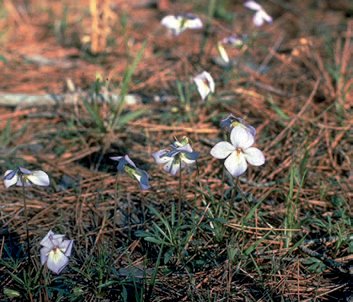
Possibly the most overlooked wildflower species that is important to a wide variety of wildlife species is the violet (Viola sp.). There are over 30 different species of violets, or wild pansies, and their seeds are important to quail during the summer months. In addition, several species of ants eat the seeds and wild turkeys are fond of the tuberous roots. Vetches (Vicia sp.) are ubiquitous weeds in the Southeast with many being non-native and invasive. Quail do not make a distinction, but for the sake of promoting native vegetation over exotics, the landowner should perpetuate only those that are of local origin. Vetch is an annual that produces seeds in late Spring. In addition, the foliage is eaten by quail, deer, rabbit, and turkey, and larval forms of at least two butterfly species. Although the wild peas and beans contain many members that are important to wildlife, several species such as Atlantic pidgeonwings (Clitoria mariana) are not because the seeds are sticky and not very palatable. Those species that should be encouraged are erect milk pea (Galactia volubilis), spurred butterfly pea (Centrosema virginianum), and trailing wild bean (Strophostyles umbellatus).
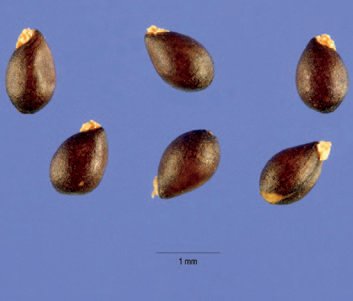
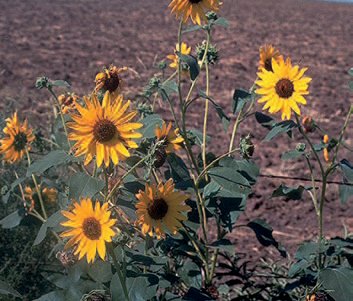
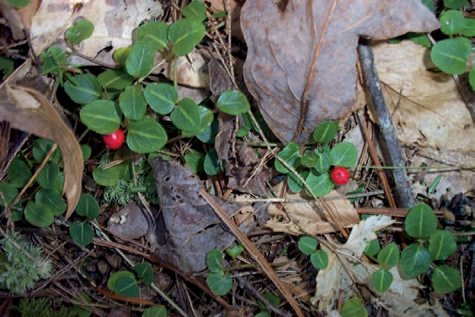
As with these and many other annuals, disking and light burning can be beneficial in maintaining or enlarging patches of plants. One of the best wildflower genera to promote are the sunflowers (Helianthus sp.). There are over 40 different species in the genus and they persist as either annuals or perennials, depending on species and site. Two of particular importance to wildlife are Maximilian sunflower (Helianthus maximiliani) and annual or common sunflower (Helianthus annuus). A wide variety of birds eat the seeds—cardinals, chickadees, grosbeaks, and titmice while it is still on the plant—and quail, doves, sparrows, and finches when the seeds fall to the ground. (Quail rely on sight to locate the seeds and insects and so they cannot be buried under leaf litter.) One other plant species often overlooked is the diminutive partridge-berry (Mitchella repens) with its tiny white flowers in spring and summer followed by red berries in the fall. In the Southern Appalachians, the berries and leaves of this perennial are eaten by ruffed grouse while region-wide, quail, turkeys, squirrels, and raccoons consume the berries. Do not disk or burn colonies of this species as it is a ground cover that spreads by stem growth.
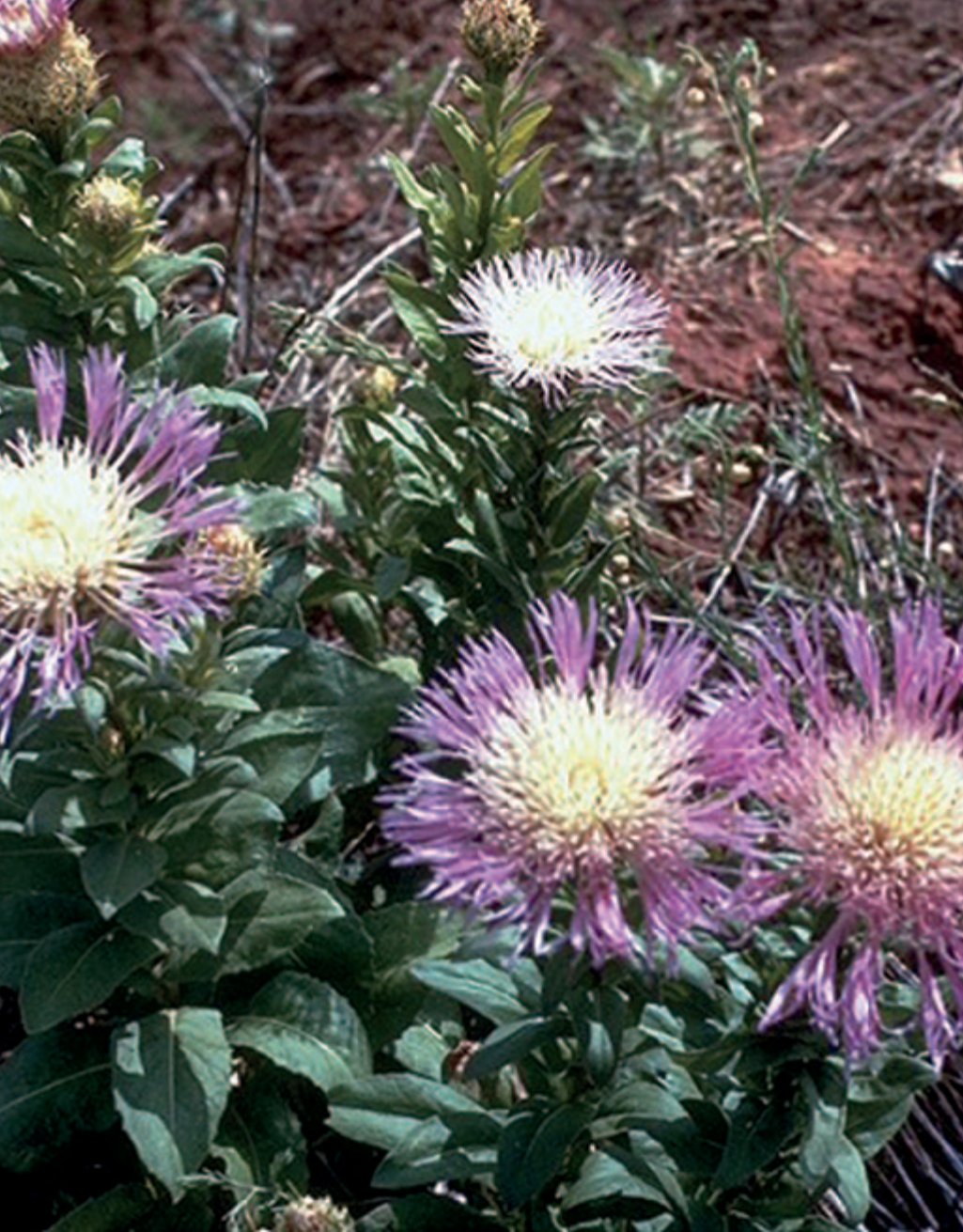
Still other wildflowers appear in the diet of quail according to availability during any given year. These include: bundleflower (Desmanthus sp.), pucoon or stoneseed (Lithospermum sp.), American basketflower (Centaurea americana), buffalobur (Solanum rostratum), prickleypoppy (Argemone sp.), lambsquarter (Chenopodium album), pencilflower (Stylosanthes biflora), primroses (Oenothera sp.), snow-on-the-mountain (Euphorbia marginata) and other spurges. The exciting thing is that many of the more showy native wildflowers are becoming commercially available, even to the level of local ecotypes are being offered. This can serve a two-fold purpose for the landowner: planting for quail and for aesthetically pleasing vistas of wildflower meadows, something in which our business has recently become involved. The nectar these flowering plants produce benefit pollinators such as hummingbirds, butterflies, moths, honeybees, and other insects that are in decline and in desperate need of this resource.
Seeds of still other species of flowering plants have been found in the crops of quail, but to a lesser extent. These include St. Andrew’s cross (Hypericum hypercoides), indigo bush (Amorpha fruticosa), Carolina indigo (Indigofera caroliniana) whitemouth dayflower (Setaria geniculata), erect dayflower (Commelina erecta), goat’s rue (Tephrosia virginiana), milkweed (Asclepias sp.), and even some of the nightshades (Solanum sp.) which are utilized by several different gamebirds. The shrub species like St. Andrew’s cross, indigo bush, and wild indigo cannot tolerate disking because the root system will be destroyed. In addition, burning is not advised. Goat’s rue, however, is often naturally found in pine stands used to disturbance so light disking and prescribed fire should not harm it. Dayflowers are also not harmed by fire or light disking.
There are even a few trees that may surprise you in their importance to quail and other wildlife species. Hollies (Ilex sp.), waxmyrtle, (Myrica cerifera), sassafras (Sassafras albidum), redbud (Cercis canadensis), Eastern red cedar (Juniperus virginiana), and even sweetgum (Liquidambar styraciflua)! Seeds and berries are often available from fall through winter and nourish quail during these lean times. All of these species are commercially available or can be transplanted from the wild, but most are usually already present in considerable numbers on a given property. Also, the waxmyrtle and sweetgum can become invasive. Often found in association with trees and shrubs is the climbing catbriers (Smilax sp.) which provide turkey, squirrel, raccoon, and over 40 species of songbirds with berries during the fall. Most likely quail utilize fallen berries as well. The vegetation is eaten by deer (foliage), rabbits (foliage and shoots) and beaver (tubers) and is also used as a nesting substrate for Northern cardinals and other birds.
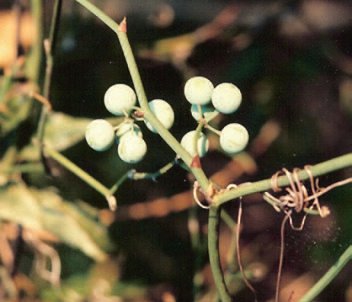
One final tree species that has importance in the sandy soil regions of the Coastal Plain is the dwarf species known as running oak (Quercus pumila). At only 18 inches tall, colonies of this tree spread out over the ground, providing some of the first acorns of the season for deer, turkey, squirrel, bear, and quail. It cannot be burned frequently or it will fail to produce acorns. Therefore, wherever this species is found, take care to rake around it before using a prescribed burn.
More research is needed to determine what other species may be regionally important in a quail’s diet and the crop contents deciphered as to whether the seed is truly preferred versus being the only thing available or is simply in abundance that year. There are many other common wildflowers that are utilized by songbirds but it is still unclear if quail use them as well. For example, black-eyed Susans (Rudbeckia sp.) and coneflowers (Echinacea sp.) are known to be important to the American goldfinch.
If you are beginning to think that there are more Latin words than English in this article, then you have probably caught on to the fact that a good wildflower identification manual would be a great asset to your personal library. There is no one book that tells all, so I suggest that you find several for your state plus the farther-reaching Forest Plants of the Southeast and Their Wildlife Uses by Miller and Miller (see references section below). These books and others will help you identify flowering plants as well as trees, shrubs, and grasses with potential wildlife benefits and how to encourage their spread. Also remember to check the crops of all quail harvested on your property to determine what foods are present.
References
Dillard, J. 1999. Sunflowers for Wildlife in the Cross Timbers. Texas Parks and Wildlife (www.wildlifemanagement.info/files/wildlife_plantings_7.pdf)
Georgia Department of Natural Resources. 2009. Small Game Management in Georgia—Bobwhite quail. (http://georgiawildlife.dnr.state.ga.us/documentdetail.aspx?docid=228&pageid=3&category=hunting)
Linex, R. 1999. Key plants for quail in the Rolling Plains. In Preserving Texas’ Quail Heritage Into the 21st Century. Symposium Proceedings. Texas Agricultural Extension Service and Department of Wildlife and Fishery Sciences, Texas A & M University System. Pp. 12-14. (textat.tamu.edu/symposia/quail/page3.pdf)
Miller, J. H. and K. V. Miller. 1999. Forest Plants of the Southeast and Their Wildlife Uses. Southern Weed Science Society. Craftmaster Printers, Inc., Auburn, AL. 454 pp.
Rosene, W. and J.D. Freeman. 1988. A Guide to and Culture of Flowering Plants and Their Seed Important to Bobwhite Quail. Morris Communications Corporation, Augusta, GA. 170 pp.
Shurette, G. R. 2009. Life cycle and seasonal influences on bobwhite quail diet. Wildlife Trends Journal 9(4): 4-8.