
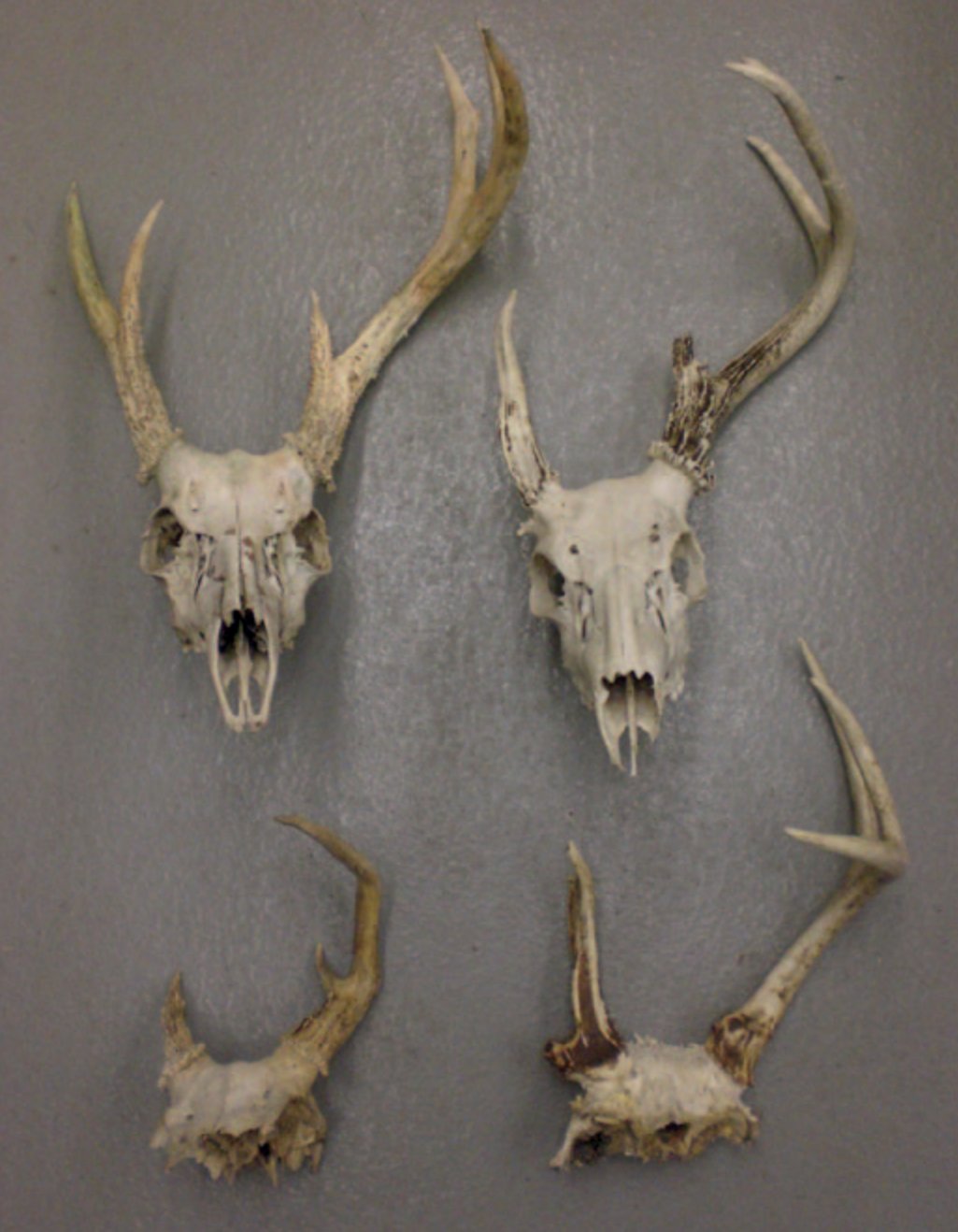
One of the biggest debates today amongst deer managers and hunters is how to deal with bucks that have an antler that is displaying normal antler development while the other is displaying less than desirable antler characteristics. In many cases these deer have a normal 4 points on one side and only a spike on the other. In other cases they have a malformed fork mirrored by a normally-developed 4- or 5-point frame. A common name for these deer is “Spike-On-One-Side” bucks…or SOOS bucks. Should these deer be culled? Should they be removed from the population to enhance the development of the population? Many deer enthusiasts believe that there is a genetic basis to deer with these antler conformations. However, published data suggest otherwise.
Antler development in white-tailed deer is genetically driven. As described in a previous issue of Wildlife Trends (Volume 7, Issue 1, 2007, Deer Management: Back to the Basics), a buck’s genetic makeup codes for antler size and physical characteristics. Spread, number of points, and angles of individual tines are all genetically-based. However, contrary to the belief of many, there is no such thing as a “right antler gene” or “left antler gene”. While our understanding of the details of how genes control antler development is still far from complete, we do know that a single set of genes codes for development of antlers. What this means is that in most cases where there is a malformed antler on one side is caused by some event that has occurred after birth. In short, a buck with malformed antlers does not have inferior genetics, and culling a buck with malformed antlers is not going to reduce the occurrence of this incident in other deer. In most cases, a brief assessment of the normal antler on the buck will give a good indication of the buck’s genetic characteristics. If the buck had not experienced some event that had caused the other antler to grow in a distorted manner, most likely both antlers would have been similar in appearance. So…what is the cause of these abnormalities?
The life of an adult, male white-tailed deer is filled with natural (and unnatural) events that can lead to development of antlers that may be described by many as malformed. During the period of antler development, the growing antler tissue can easily be damaged, and physical trauma during this period can lead to malformed development. Bucks often strike their growing antlers on trees and other solid objects, which can damage the growing antler. However, this damage normally does not cause the extent of malformation of which we are speaking and normally is only noticeable upon closer examination of a set of antlers. In addition, this form of damage is not normally expressed in subsequent sets of antlers: it is typically a one-year abnormality and subsequent antler sets will appear normal.
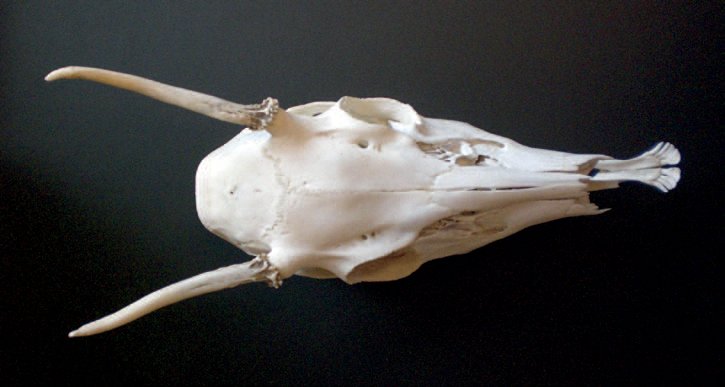
Many hunters are aware that a leg injury can lead to malformed development of antlers. Contralateral antler malformation is the technical term for antlers that exhibit abnormal development following an injury to a leg. An injury to the hind leg causes the antler on the opposite side to exhibit abnormal development, while an injury to the front leg causes the antler on the same side to exhibit the abnormal development. For example, if the left rear leg is injured, the right antler will grow abnormally. Gunshot wounds and broken legs are probably the leading causes of contralateral antler malformation cases. However, most hunters and landowners do not believe that this is the leading cause of malformed antlers. I hear all too often…”None of those deer we shot had broken legs or injuries.” I guess most skeptics are operating under the assumption that previous injuries are going to be obvious, when in fact the opposite is probably true. Identification of healed leg fractures and gunshot wounds requires training in proper necropsy protocol. The point is…you probably won’t be able to detect the injury in the majority of cases.

The seminal research on the frequency of contralateral antler malformation was published in 1972 and was conducted in Texas. Although these data have been available for over 35 years, biologists have done a poor job in educating hunters and managers regarding the frequency of this anomaly, and most hunters continue to believe that malformed antlers have a genetic basis. So….just how common are these leg injuries? In the Texas study they examined 32 hunter-harvested bucks that had deformed antlers. Twenty-two (69%) of these bucks had either healed leg fractures or old gunshot wounds on the expected leg, and identification of these old injuries required detailed necropsy procedures performed by trained examiners. So much for a genetic basis!!! It is generally believed that there is a neural link between the leg injuries and antler development. However, this is an area that still needs considerable research if our understanding is to improve.
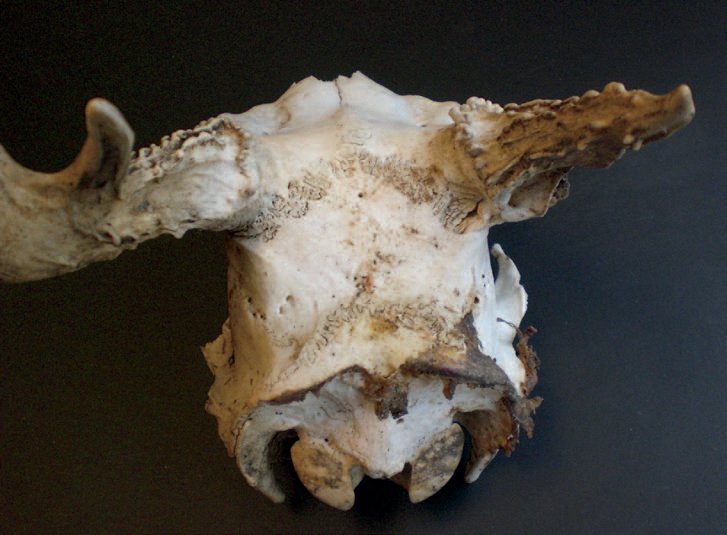
Pedicel damage is another common cause of antler malformation in white-tailed deer. The pedicels are the bony projections on the upper surface of the skull of male deer. The antlers grow from the pedicels. In buck fawns, the pedicels are visible as bumps in the fur on the top of the skull, and they continue to grow in diameter as a buck ages. If the pedicel is damaged, this can lead to antler malformation. There are two primary time periods during which pedicel damage can occur. The first is during the breeding season while the antler is solidly fused to the pedicel. While uncommon, physical stress on the antler pedicel juncture during the breeding season (e.g., fighting) can cause damage. Depending upon the extent of injury, subsequent antler malformation may occur. The second and more common time period during which damage can occur is during the period of antler shedding. Following the breeding season, testosterone levels drop, which signals the body to begin to dissolve the interface between the pedicel and antler base. When the antler-pedicel juncture is completely dissolved, the antler will drop of its own accord. However, any physical stress on the antlers during this period can cause damage to the pedicel. It is not uncommon to find shed antlers with a spur of bone attached…this is part of the pedicel and can cause permanent antler malformation in the future.
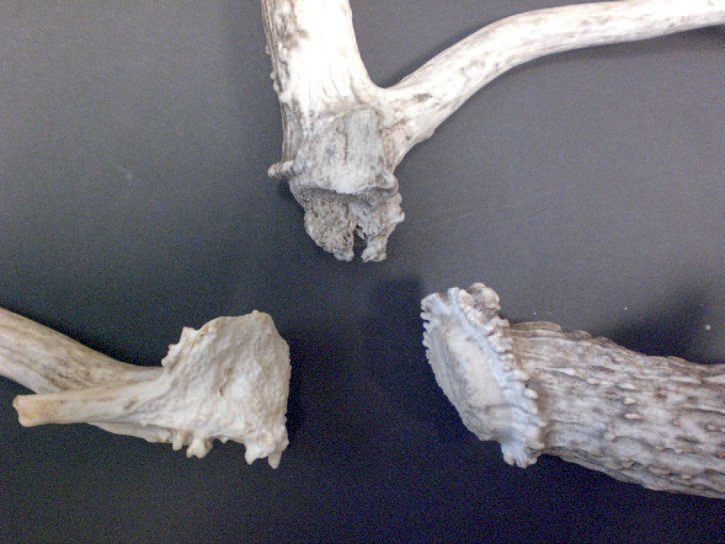
Pedicel injuries are most common during the period of antler shedding because the juncture between the antler and pedicel is weakened during this period. While trapping deer in Oklahoma during January 1995, we were frequently capturing bucks that had shed one or both antlers, as most antlers are shed in January in that part of the country. When trapping bucks with nets, the first thing you instinctively grab onto while trying to secure the animal is the antlers. In one case when we trapped a buck with two antlers, we accidentally pulled the antlers out of the skull. While one antler seemed to have detached from the skull normally, the other had a spur of bone approximately ½” in length and ¼” in diameter. Undoubtedly this caused considerable damage to the pedicel, but unfortunately we never had the opportunity to examine antler development in subsequent years. In regions such as Alabama, where a late breeding season occurs just before the period of antler shedding, pedicel damage may be common. I hypothesize that in populations where bucks are still competing for breeding opportunities while the juncture between the antler and pedicel is weakening, there exists a high prevalence of antler deformities. If bucks are still fighting while the antler is close to shedding, there is a high probability that the antler will shed abnormally.
The physical stress from fighting may lead to increased numbers of antlers that are shed prematurely and that cause pedicel damage.
A possible confounding factor in this process is the role of intracranial abscessation, or brain abscess. Some naturally-occurring bacteria that enter wounds caused by fighting, sparring, or antler shedding in the head region of deer, may cause damage to the pedicel. Brain abscesses have been found to be a significant cause of mortality in adult, male white-tailed deer. One study documented that 9.3% of natural mortality of male deer ≥2.5 years of age was due to brain abscess. Another study in Maryland found that 35% of radio-collared bucks that died due to natural causes had intracranial abscesses. What is not understood at this time is the effect that these bacteria have on skull/pedicel strength and integrity. We know that these bacteria can weaken bone tissue, so it stands to reason that infection in the pedicel region could lead to pedicel weakening and possibly even abnormal antler shedding and subsequent abnormal antler development. It is also possible that abnormal antler shedding may lead to these bacterial infections. However, more studies are needed to fully understand the role of intracranial brain abscesses on abnormal antler shedding.
Suffice it to say that there are numerous causes of abnormal antler development in white-tailed deer. Physical injuries are the leading cause of these abnormalities, and genetics does not seem to play a role. The next question is…should these deer be removed from the herd? Shooting SOOS deer does nothing to reduce the prevalence of these occurrences, and I contend there is nothing to be gained by removing these deer from the herd. In fact, I would argue that removing these deer is actually counter-productive to your management goals. The presence of mature bucks in a herd helps to stabilize social structure. Mature bucks are more efficient breeders, help to reduce the length of the breeding season, suppress breeding effort by younger males, and ensure that there are less late-bred does and late-born fawns. The more mature bucks in a population, the better the population. While a SOOS buck may never develop the antlers of a “trophy”, SOOS bucks do aid in stabilizing social structure. However, regardless of size, shape, or conformation, if the deer that you see in the crosshairs is going to put a smile on your face…then shoot it. A mature buck, even if it has a spike on one side and a normally developed antler on the other, is a trophy in my book.
But shooting it just because it will never be a trophy is a waste of a beneficial animal in your herd. The only people that should shoot these deer just to remove them from the herd are landowners that have an overabundance of bucks, and the only populations that I know of that have an overabundance of bucks is inside of a high fence.
In short, let these abnormally-antlered bucks walk unless they are a true trophy in your mind. They are not spreading bad genetics, and in fact, they are probably helping your herd.
Literature Cited
Baumann, C. D., W. R. Davidson, D. E. Roscoe, and K. Beheler-Amass. 2001. Intracranial abscession in white-tailed deer of North America. Journal of Wildlife Diseases 37:661-670.
Karns, G. R., R. A. Lancia, C. S. DePerno, M. C. Conner, and M. K. Stoskopf. 2009. Intracranial abscession as a natural mortality factor for adult male white-tailed deer (Odocoileus virginianus) in Kent County, Maryland, USA. Journal of Wildlife Diseases 45:196-200.
Marburger, R. G., R. M. Robinson, J. W. Thomas, M. J. Andregg, and K. A. Clark. 1972. Antler malformation produced by leg injury in white-tailed deer. Journal of Wildlife Diseases 8:311-314.