Start preparations for fall food plots.
It is difficult, if not impossible, to establish successful food plots without planning and adequate soil preparation. Planting quality food plots is a process that may span over several months, not a weekend. There are several factors that influence the success of a food plot program. Among the most important are establishing a well thought out food plot plan, ensuring proper soil fertility and pH, ensuring hardpan does not exist, preparing a firm, smooth seed bed, only planting under favorable conditions, and controlling weeds. Each of these activities plays an important role in the success of your food plots. Here are a few tips on planting this fall:
- Test soil early and apply required lime (preferably at least 6 months prior to planting). It takes time for the chemical process to take place and effectively change the soil pH. If you didn’t lime in spring or early summer, go ahead and apply it now…better late than never.
- Use the results of the soil test to create the best fertilizer blend for your specific soil needs. Many people use balanced fertilizers such as 13-13-13 because they are easy. However, it is well worth your time to custom blend fertilizer to match your needs verses applying a balanced fertilizer that often requires applying extremely high amounts of some nutrients to compensate for the lack of others in the soil – which results in wasted fertilizer and wasted money.
- Order seed and fertilizer as early as possible to ensure it is ready when you are.
- Ensure plots are relatively smooth. This takes time and should be done well ahead of planting dates. If you are broadcast planting, simply drag the field just before planting to loosen the soil to provide good seed-soil contact. Once broadcasted, cultipack the field to “press” the seed into the soil (If you’ve never seen or used a cultipacker, check them out. In my opinion it is a “must have” implement that has many applications in food plot planting). Do NOT drag food plots if they are somewhat unsmooth or if you planted small seed such a clover. Dragging will result in burying seed too deep.
- Have seed beds ready, but don’t fall into the trap of planting too early. September is often a very dry month. Mid-October is ideal in most areas of the Southeast. This is when we start getting regular cold fronts that bring rain. Planting too early normally results in disease (mostly army worms), poor planting success due to droughty conditions, or if you receive adequate rain the food plot is knee high and less attractive to deer by the time gun season arrives.
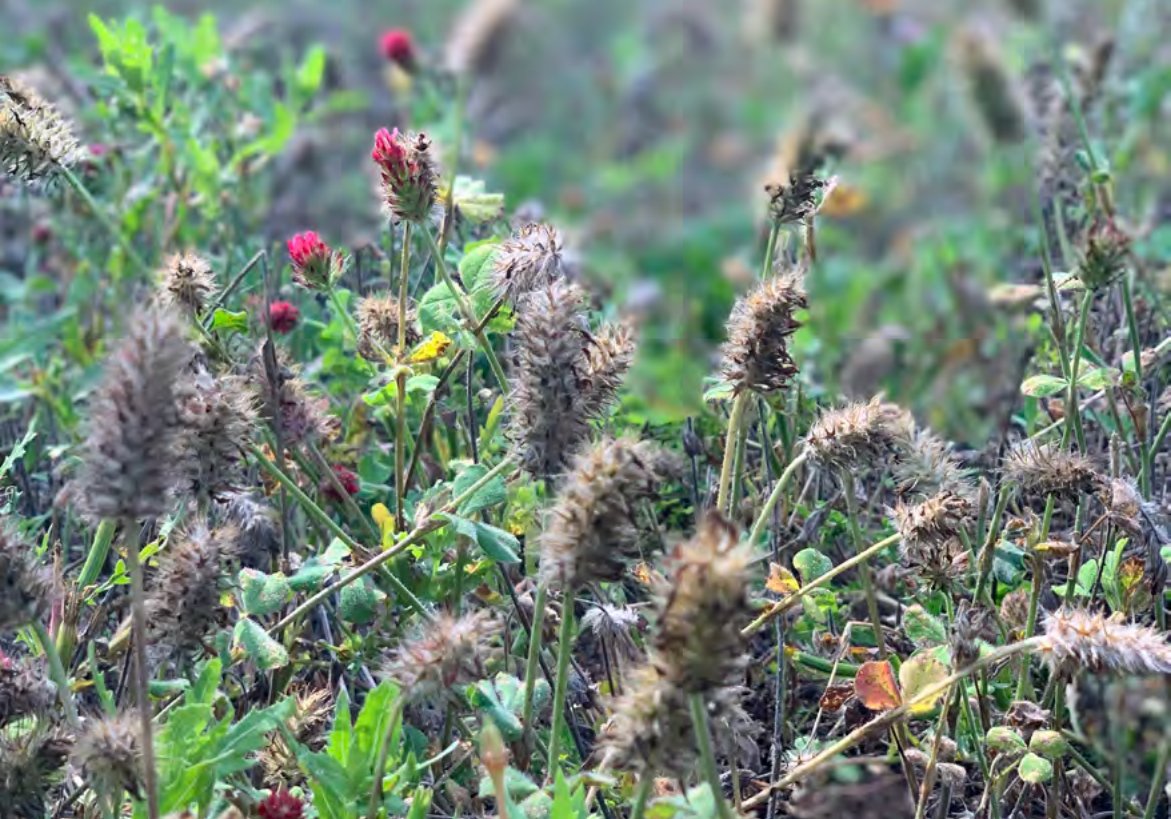
- Adding annual reseeding clovers such as crimson or arrowleaf into your fall plantings will increase the quality, nutritional value, and longevity of your food plots. With proper management, these clovers will produce food well into summer then regenerate again next fall which will save you money on seed costs.
- Use exclusion cages to monitor deer use and plot performance. An exclusion cage is a small “tube” of fence staked to the plot that prevents deer from eating the crop within the exclusion cage which allows you to assess plot growth and deer use of the plot. Cages are normally 2-3′ foot in diameter and 3-4′ tall. I’ve seen many food plots where the manager thought the crop did not do well, where in fact it did but deer simply mowed it down and never gave it a chance to grow.
“Limb up”/prune roadsides
Because the growing season is coming to an end, early fall is a great time to trim overhanging limbs from your property’s interior roadways. Interior or secondary roads can become a jungle in just one growing season if not maintained. Have you ever ripped the exhaust pipe off your tractor with an overhanging limb, or had a limb slap you across the face while driving a golf cart down an overgrown road? Trimming limbs to open the roadway up will help prevent equipment damage and/or personal injuries while using these roads. Removing these limbs will also help these roads dry out quicker by allowing sunlight and wind exposure on the road and in some cases will enhance natural wildlife foods along the roadsides due to the added sunlight. Of course there are many methods and strategies that could be used to prune roadsides. At our property, we put a person in the back of a side-by-side with a pair of loppers and/or a gas-powered pole saw. The side-by-side is followed by a couple folks that are walking behind picking up limbs and throwing or dragging them into the woods. This makes the process go relatively quickly depending on how many limbs need to be cut. While I can’t officially recommend this due to potential safety issues, putting a person in the bucket of a farm tractor is quite effective as it allows them to be raised up to higher limbs when needed. Pruning each year helps keep this task from becoming a significant project.
Begin flooding duck ponds in early September.
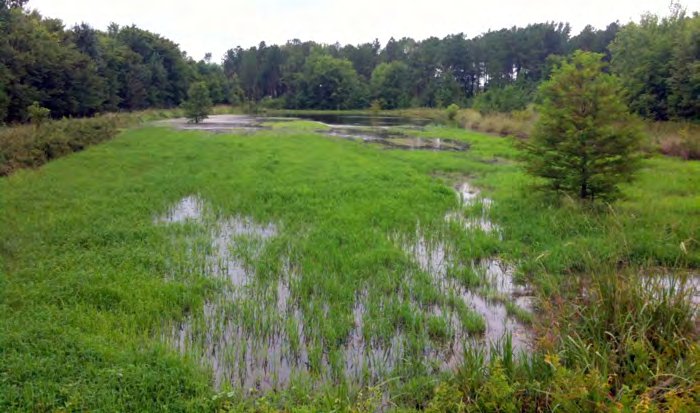
Teal are typically the first ducks coming down the flyways as they migrate south for winter. Although it depends on where your property is located, you should expect to start seeing teal in late August through mid-September. To accommodate these waterfowl and/or to attract them for the early teal hunting season, flood at least 30% of your duck pond(s). To be most attractive, make sure there are some open water areas within the flooded area. The main reason for not flooding the entire duck pond is to delay seed deterioration caused by flooding. Seed deterioration rates, or the amount of time it takes for a seed to breakdown after being flooded, vary among different plant species. Most native wetland plant seeds are well adapted to flooded conditions and will last up to 3 months under water. However, most agriculture crop seeds breakdown much quicker. Thus, you only want to flood enough of your pond to provide early arriving teal with a food resource. Begin flooding the remainder of the pond in late October for the main flight of ducks. This will ensure the seeds you’ve worked hard to produce will remain longer into the winter to provide food and attract ducks. If you have never shot early season teal, you’re missing out. Teal respond to calling and work decoys well and they fly in fast, tight flocks which makes for some fast and furious shooting – notice I said shooting and not killing!! – they are tough to hit!
If you added annual clovers to your food plots last fall, September is the time to apply management to regenerate the food plots.
Incorporating reseeding annual clovers into your fall plantings will allow you to extend the plot’s wildlife value by providing quality food sources through early summer. Without them, fall plots of small grain such as winter wheat and oats generally become less productive and thus less valuable for wildlife by early spring. If you have planted annual clovers such as crimson or arrowleaf clover, allow them to flower and seed out – which normally occurs in April – June depending on which growing zone you are in. The flowers are important for game birds, particularly quail and turkey poults. Flowers attract insects which are an important component in the diet (source of much needed protein) for very young turkeys that hatched in spring. Although plots generally get weedy after the clover has seeded out (which isn’t always a bad thing), leave these plots alone until early fall. About 3 weeks to a month prior to planting time, mow the plots as low as possible, allow a week or so for the weeds to start growing again, and apply glyphosate (RoundUp) to knock them out and prep the plot for re-planting. If weeds were thick, you may consider burning the thatch off to expose bare ground (burning also enhances clover seed germination). Once the weeds die (or have been burned off), spread fertilizer, lightly disk or drag the plot to expose bare ground and “stir up” the residual clover seed from last year, then plant annual small grains (wheat and oats). The key to the whole process is to not disk the food plot too deep. After the first planting, and if you’ve allowed last year’s clover to seed out, annual clovers will reseed and come back every year – which not only provides great nutrition and extends the life of your fall annual plots, but will save you money on seed.
Implement habitat enhancement plans.
Summer is a good time to implement habitat enhancement projects such as timber harvests, timber stand improvements via hack & squirt methods, Quality Vegetation Management (QVM) to stimulate desirable wildlife understory species via herbicide applications, roadside enhancement areas, and creating new food plots. All of these projects or activities will add wildlife value to your property. Although it has already gotten late in the growing season, I like to have these projects planned well ahead of time so that they can be implemented early in the growing season. This allows a longer time during the growing season for these areas to “recover”. Timber harvests or dozer work that is done late in the growing season often results in poorer quality wildlife habitat during the first year because plants have not had time to re-colonize. Additionally, these areas are not as aesthetically pleasing during the following winter. However, if you are running behind, I recommend getting these improvements in when you can. I’d rather get the improvements implemented late than to not have them done at all. You can think of it this way – you will be early for next year!
Manage dove fields in preparation for the upcoming season.
Unless you hunt deer in August in South Carolina, dove season is often the first hunt of the year in the Southeast. Dove field planting activities are normally dictated by the time it takes for the specific crop you plant to mature. Common dove field crops include dove proso millet, browntop millet, Japanese millet, sunflowers, grain sorghum, corn, and wheat; all of which have different seed maturing periods. The goal is to have mature seed available for dove a few weeks before the season starts to allow them time to find and begin using the field. If all goes well, most dove fields are nearly mature by mid-August. As the season approaches, here are a few techniques I have used to increase dove use of the field before a planned hunt:

- Maintain a clean disked strip or two of bare ground through the field. These are strips that you do not plant, rather simply keep plowed through the summer and into dove season. Dove find these bare dirt areas attractive because it is easy to walk in, exposes seeds, grit, and offers dusting areas. Disked strips offer access to seed from your plantings once they mature as well.
- If the field has a water hole or pond, make sure dove have access to it. In some cases, this means either mowing or burning the vegetation along a section of the shore will be needed.
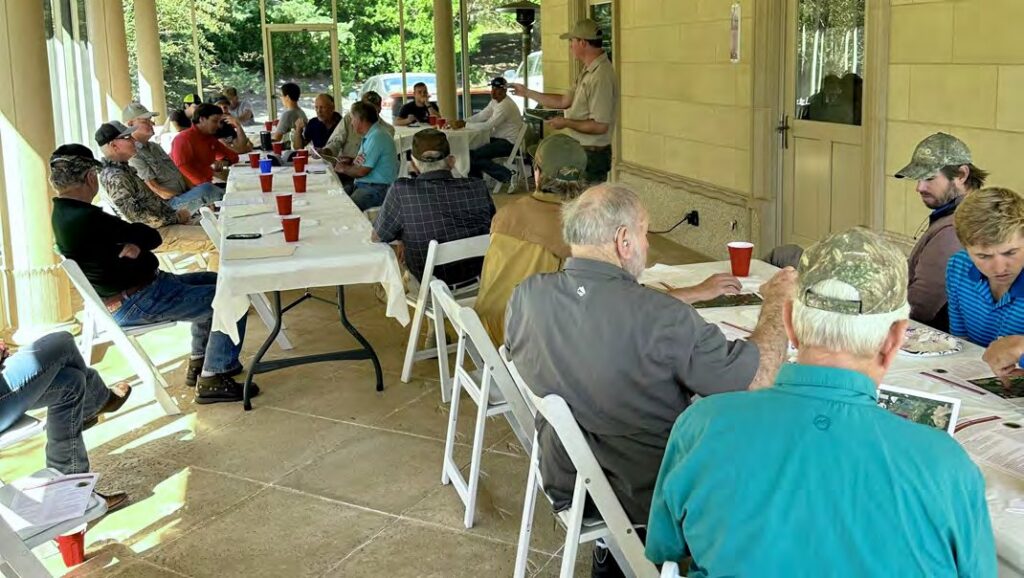
Now is a good time to hold a preseason meeting to ensure everyone is aligned on this year’s harvest plan, work needs, and rules.
As with most things, communication is the key to avoiding issues. A preseason meeting can help ensure everyone that will be hunting the property understands the goals, the plan, the rules, and any work needed before the season starts (e.g., food plot planting, stand management, gates/fences, camp prep, etc). This meeting is particularly helpful for those that are in leased hunting clubs (regardless of whether the club consists of 5 or 15 members). However, even if you hunt your own land with friends and family, a preseason meeting is helpful and simply provides an opportunity for everyone to catch up, relay info, and develop plans to prepare for the upcoming season. If you have a wildlife biologist helping you, this is a great time to have them join the meeting to share the status of the deer herd, trends in harvest or hunter observation data and provide recommendations for this season. This also allows folks the opportunity to ask the biologist questions about the management plan. I make the circuit to many clients during this time of year. We call them camphouse seminars. Not only do I share their data and harvest recommendations, but typically share and discuss topics that may be of interest for that particular landowner/club. I have found that when hunters understand why a recommendation is made, they are more apt to implement it. For example, let’s say I made a recommendation of harvesting 25 does this season. Without any other supporting info, a hunter simply hears we need to harvest 25 does. However, once I explain how balancing the sex ratio through doe harvest translates to healthier bucks with better antlers, they tend to more aggressively implement the recommendation.