

Ensure doe harvest goals are met
Based on observations during my travels this fall, many areas of the Southeast have experienced another abundant crop of acorns. Deer populations in these areas will have increased fawn production and survival. This means that increased harvest may be needed on some properties to maintain deer populations at desired levels. A very simple law of nature taught in college Wildlife Population Dynamics courses is that Population Growth = Births minus Deaths. Thus, with an increase in “births” (more fawns), some managers will need to increase harvest rates unless growth is desired.
Ideally, it is best to harvest does early in the season and/or before the rut. Doing so will save food resources for remaining deer and immediately improve the sex ratio for the upcoming breeding season which will conserve energy for your deer herd. An unbalanced sex ratio will result in an extended breeding season where bucks can lose up to 30% of their body weight from excessive breeding activities. Consequently, under these conditions, bucks enter spring needing to recover. The highly nutritious spring food then goes towards body maintenance verses body/antler growth for the following year. The extended breeding season associated with an unbalanced sex ratio also results in poor hunting due to the lack of breeding competition. That is, there are so many does that bucks do not need to compete. In this case, hunters generally do not see much breeding activity such as chasing, rubs or scrapes. We often refer to this as a diluted rut.
By the time you get this issue of Wildlife Trends it will be late in the hunting season in most states. If you have not met your doe harvest goals, get to work. If needed, recruit the help of friends. Holding a “doe harvest weekend” is a great way to get participation from club members or friends. Make a big deal out of it by having a cookout at the camp with “awards” for those that harvest the largest doe, oldest doe, or most aggregate weight.
Keep notes while hunting to help make adjustments as needed to deer stands
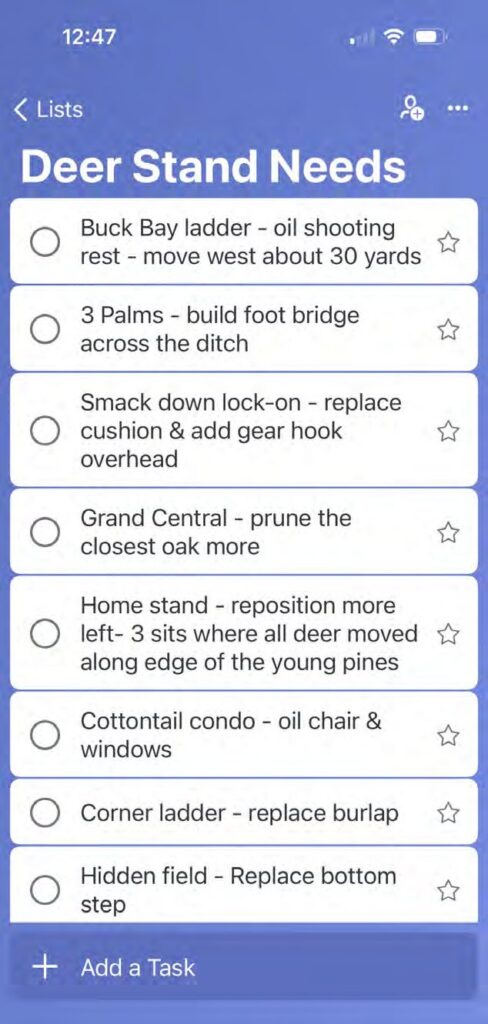
Although everybody makes “mental notes” of improvements needed when sitting/hunting in a particular deer stand, these needs are often forgotten when the time comes to work on stands. I find it extremely helpful to keep a running list of repairs or improvements needed to deer stands. At our property, we used to record deer stand notes in a spiral notebook that is kept at the camp. This allowed everybody to add their notes right after the hunt while it is fresh on their minds. We have now upgraded to using a “to-do” app on our phones where the list can be accessed and edited by the group. Stand repairs and improvements range from fixing a squeaky board to relocating the stand altogether. This is also where we record notes of new areas identified that need a stand. Once hunting season is over, we check our notes and go to work making repairs and adjustments as needed. Our goal is to do this work before spring green up – which also includes full-scale scouting missions to find (and install) new stand locations. By doing this work in late winter we significantly reduce the disturbance/pressure applied in preparing for the season next fall.
Perform preventative maintenance and calibrate sprayers in preparation for burning and early summer uses
Although you probably won’t use them for a couple months, late winter is a good time to overhaul sprayers. By overhaul I mean check all hoses, tubes, connections, filters, nozzles, etc. This is also a good time to calibrate sprayers so that everything is ready when early summer weeds become a problem in food plots. We commonly use the pistol nozzle of our sprayers to assist in prescribed burns. Be sure to check all parts and test the pistol nozzle, hoses, etc. if you plan to use it this winter during burning activities. Working on sprayers is a great mid-day activity while hanging out at the camp during a weekend of hunting.
Erect new wood duck boxes and/or clean out existing boxes in preparation for the nesting season
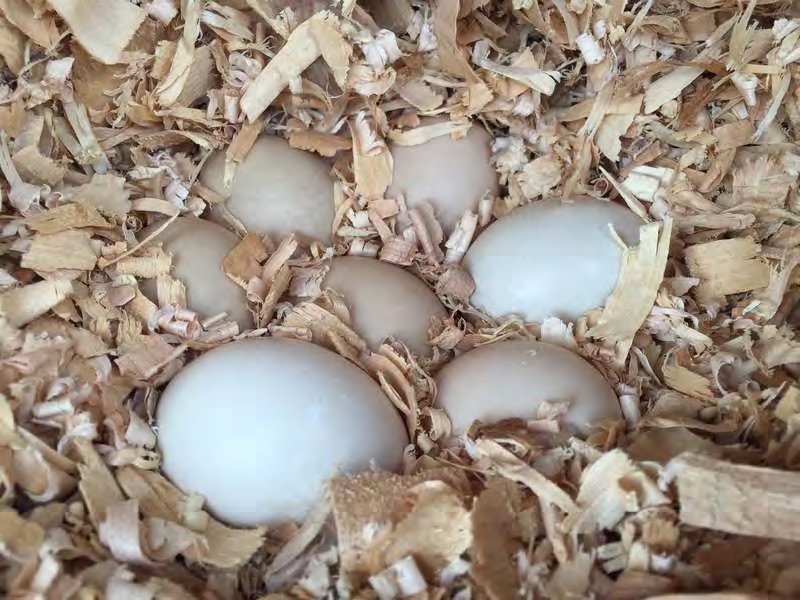
The first step in preparing existing duck boxes for this nesting season is to clean all the old nesting debris out. A good nest box design allows an easy way to clean the old nesting debris out. Common designs may include a drop floor or a side door where debris can be pulled out. Once clean, place 4″-6″ of sawdust or wood shavings in the bottom of the box for nesting material. I prefer shavings verses sawdust because they do not absorb moisture as easily which causes rotting and mold – check with a wood shop that uses a planer for shavings. Cedar chips that are used for dog bedding can be good nesting material as well and can be purchased at pet stores. Erect new boxes before February in highly visible areas near good brood rearing habitat. Adequate protective cover is essential for brood survival. Brood habitat should include a dependable source of water with plenty of shrubs and emergent vegetation for food and cover. These areas are generally along the perimeter of a pond or swamp. Wood duck boxes should be cleaned out and inspected every year just before nesting season. Word of caution – always be careful when opening wood duck nest boxes. Many other animals use the boxes. Animals that are commonly found in wood duck boxes include gray squirrel, flying squirrel, rat snakes, screech owls, wasps, bees, and spiders. Building wood duck boxes, putting them out, and checking them after nesting season to monitor use is always an adventure and gratifying. This is also a great project to include children. Managing wood duck boxes provides lots of hand on work and makes them feel good about helping animals…plus it teaches them good stewardship.
Provide supplemental feed for deer.
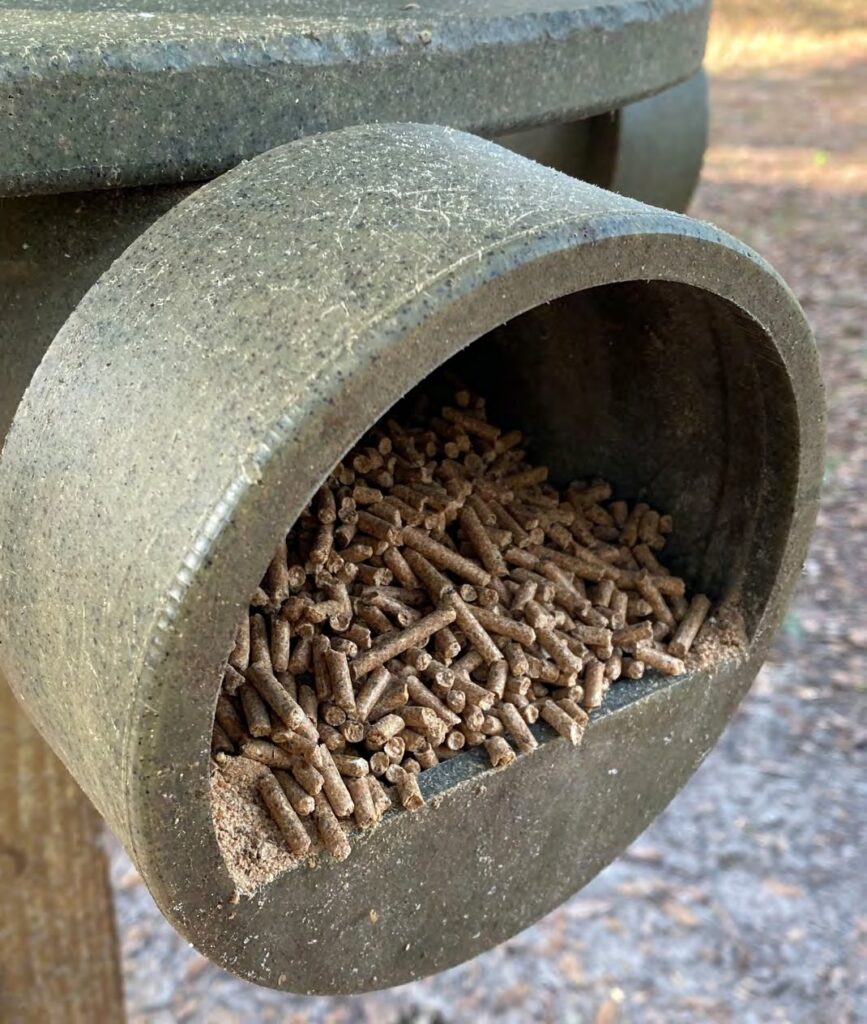
Even in the South, late winter can be a nutritionally stressful period for deer. They have endured the rigors of breeding season and natural food sources can be limited. Providing supplemental feed during this time can boost energy and nutrition. This recommendation/activity is directed towards landowners or managers that have done a good job managing the natural habitat, food plots, and deer herd conditions. That is, before thinking about starting a supplemental feeding program for deer on your property, you need to take care of foundational things first. In other words, you cannot hang shutters if you do not have a house – and you will not grow big bucks and a healthy herd with supplemental feed alone. It is a supplement to other management strategies and activities. However, when done in combination with other core management practices, supplemental feeding can be valuable for deer. Be sure to check your local game laws before providing feed on your property. Many states do not allow the use of feed during hunting season. Ideally, providing supplemental feed throughout the year is best, but supplemental feed will be most used and most valuable for deer in late winter and summer. These are periods when natural food availability is at its lowest. So if you have a limited budget and cannot or do not want to feed throughout the year, provide it during the periods deer need it most.
Scout now for next duck season
Doing a little homework this season, even if it means missing a hunt or two, will help you have better duck hunts next year. By this I mean take time to watch and glass wetlands, moist soil impoundments, beaver ponds, lakes, and flooded fields to find new areas to hunt. While food sources and water can change from year to year, in most cases ducks will be attracted to the same areas each year. Simply stage yourself somewhere that you can see the area you are scouting without spooking ducks. In most cases, a high vantage point that offers a landscape view is best as it often allows you to see where ducks are coming from as they approach and which direction they go when they leave. Good vantage points are often hills, highways, bridges, barns, and sometimes deer stands. The point is to get as high as you can so that you can see the sky where ducks are flying. I can’t tell you how many times I have set up and scouted like this and found an even better spot by being able to see flocks from a landscape level verses getting into the actual area (tight) where I thought ducks would be. In some cases, you may not see ducks go down but notice that lots of flocks headed in a certain direction. Relocating closer to the area you saw ducks headed on the next scouting mission will often reveal a new honey hole. As you begin to pinpoint areas ducks are using, close in tighter and start learning exactly where ducks want to be and how they approach when coming in. If it is still duck season, this is when I like to hunt the spot a couple times. Doing so will help you identify exactly where to build a blind this summer. So, by next season, you will be sipping coffee after putting out your spread of decoys while waiting on daylight and ducks to start flying.

Strip disk areas to promote food and desirable habitat for wildlife.
Strip disking is simply one of the easiest, cheapest, and most effective management practices to implement to create high quality food and cover for wildlife. Strip disking is as simple as it sounds. To strip disk, you merely drop the disk far enough into the soil to lightly break the surface of the ground. Lightly disking the ground will provide enough disturbance to stimulate the natural seed bank of wildlife friendly “weeds” the following spring and summer. Heavy disking like you were preparing a clean seedbed for planting a food plot is not needed. One pass is generally enough to stir the ground up and expose bare soils that will promote germination of desirable weeds. While not necessary, I often mow areas I plan to strip disk ahead of time. This makes disking more effective if vegetation is relatively thick or tall. It also knocks back/reduces competition of the undesirable or overgrown plants I am trying to replace. Strip disking can be done in thinned pine plantations, relatively open mature pine stands, roadsides, along the edges of food plots, or in open fields. Basically, anywhere sunlight can reach the ground will work. To optimize the benefit of strip disking, avoid disking straight lines. A serpentine pattern that winds through the habitat will provide the most edge and diversity. However, consider following the contour of the land to avoid creating potential erosion issues. Make the strips 8 – 25 feet wide, and separate them by undisked strips 60 to 100 feet wide. Make the strips as long as possible. These strips can be thought of as a rest-rotation system. After a year, disk another swath next to the previously disked strip. This develops a mosaic of vegetation that is one to three years old. Strip disking at different times of the year will result in different plant communities. While disking can be conducted any time of year, it is normally done in spring or fall. Fall/winter disking normally results in a broadleaf plant response, while spring/summer disking promotes native grasses. Altering the season in which you strip disk will add diversity to your property that will benefit various wildlife species.
Identify roads on your property that need attention.
Winter is often very wet in the Mid-South which makes this a great time to identify and assess problem areas along roads where work will be needed next summer. Make notes or identify areas on maps that you can refer back to when you start to repair roads next spring or summer. You will be glad you did. Once your property dries out, it can be difficult to remember and/or find the areas that were bad during the hunting season. Although many landowners/hunters access properties during hunting season on 4-wheelers, electric carts, or other gas-powered ATV’s that will certainly get through wet and slippery roads, roads are an important part of managing a property. If you are actively managing your property, you will need to be able to drive or transport large equipment such as spreader trucks, tractors, and agriculture buggies throughout the property. Thus, having good roads is essential.
Trap and remove nest predators
If managing for wild turkeys and quail are goals on the property you hunt, don’t overlook the value of removing nest predators such as raccoons and opossums. Having said this, attempting to control predators should not be a priority if you are not actively managing the land to promote quality turkey and quail habitat. Creating and maintaining quality habitat should be the highest strategy on the list for managing game birds. Wild turkey is a species that responds quickly to good habitat management such as thinning timber, burning, understory control, food plots, roadside management, etc. However, research has clearly demonstrated that nest predators, particularly raccoons, can significantly impact nesting success rates and thus turkey population growth. Not only will they eat the eggs, but they may even kill the vulnerable hen turkey while incubating the nest. Winter is a great time to trap and remove nest predators. This is also when hunters spend the most time at a property. Trapping offers a great mid-day management activity during a weekend at the camp. The key in being successful and efficient is to pick good trap locations. Water sources, feeders, and food plots can be good places to start. There are many effective traps available. The most common are live traps (cage traps) and steel traps (leg hold traps). If you use leg hold traps, I recommend “soft-catch” or offset jaw traps. These traps do not damage the foot of the trapped animal in the event that you catch a dog or other non-target critter. If you have never trapped before, you will learn a lot by trial and error. I recommend doing a little homework by surfing the web and YouTube to learn effective techniques. One more thing to know is that nest predators are prolific and have relatively high reproductive rates. This means that populations can rebound quickly. To be effective in controlling nest predators and helping turkeys and quail, you must significantly reduce nest predator populations and continue to aggressively remove them each year.