
What squirrel hunter hasn’t stood in a fall woodland listening for the tale-tell sound of acorns being cut or leaves rustling? Maybe there is the low-pitched, harsh bark of a fox squirrel here, the flurry of a gray squirrel tail there, or even a lively chase through the canopy. Luckily, squirrels are one of the easiest wildlife species to manage for since they can adapt to a variety of habitats including subdivisions and golf courses. In addition, since squirrel habitat requirements also benefit many other game and non-game wildlife species, managing for the community as a whole can yield greater diversity on the landscape. Particular species that benefit from squirrel management include: hawks, owls, wild turkey, wood duck, raccoon, deer, woodpeckers (including the endangered red-cockaded woodpecker), and various songbirds. Though there are several species of tree squirrels in the Eastern United States, the Eastern gray squirrel (Sciurus carolinensis) and fox squirrel (Sciurus niger) are the two that typically interest sportsmen.
The Eastern gray squirrel has been split into 5 subspecies while fox squirrels have been subdivided into as many as 10 species. However, unless a subspecies is listed as threatened or endangered (i.e. Delmarva Peninsula fox squirrel, S. n. cinereus) and therefore off limits, most hunters would not notice any differences. To understand how to maintain a healthy, huntable population of squirrels on a property, a little knowledge of their life history and behavior is required.


Descriptions and habits of the two species
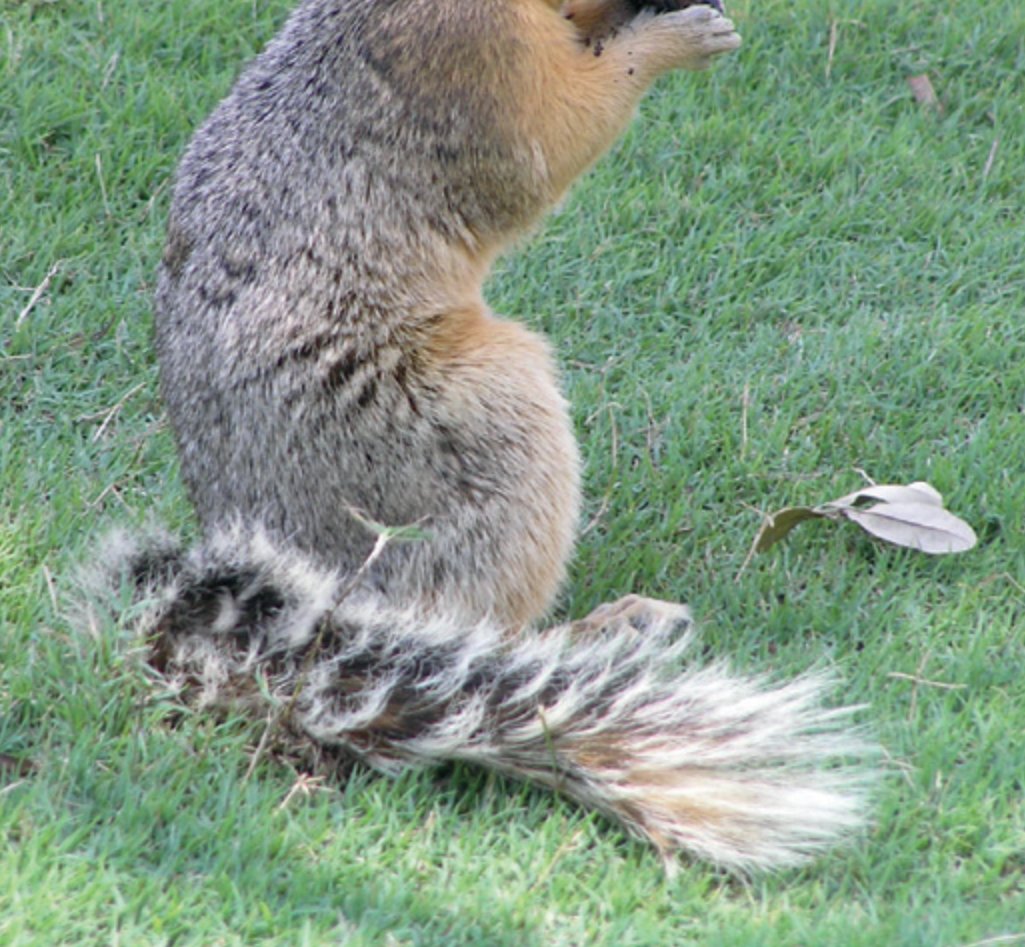
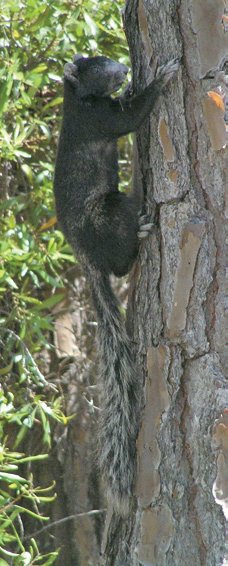
Eastern gray squirrels have grayish-brown pelage above with an underside that is white or tinged in a yellowish-brown. Coat colors can vary as well as sizes with larger individuals more common in the North. Fox squirrels are larger than Eastern gray squirrels and are, in fact, the largest tree squirrels we have in the United States and certainly the most varied in coloration. Pelage ranges in color from almost solid black to grizzled gray with all combinations in between. The fox squirrel got its name from the resemblance of its typical coat coloration of yellowish-red to that of the red fox. (Personally, I think it resembles one of the Deep South’s red-sided gray foxes.) Biologists do not seem to know why there are so many color variations in the fox squirrel but speculate that it may assist the animal with blending into its environment. For example, darker specimens are often found in fire-maintained longleaf pine forests, cypress swamps, and mangroves. Some researchers believe that the fox squirrel’s large size, especially in the Southeast, helps it tackle the large cones of the longleaf pine.
Both squirrel species are diurnal and are also active during wet weather. Most individuals rest during the heat of the day during the summer months as well as when food availability is low, thus conserving energy. Squirrels rely on a variety of foods: flowers, dogwood fruits, berries, buds, grapes, persimmons, cherries, maple samaras, pine cones, yellow poplar seeds, beech nuts, walnuts, acorns, bark, sugar maple sap (where available), fungi, roots, and some animal matter (bird’s eggs, nestlings, and insects). Salt is often sought in the fall and spring while calcium and other minerals are gleaned from discarded antlers, bones, and turtle shells found on the forest floor. Squirrels, in general, do not need large amounts of surface water since they utilize succulent plants and dew to fulfill their moisture requirements. Gray and fox squirrels cache acorns and other nuts in scattered hoards for use during times of low food availability and tend to recover as much as 1/3 to 9/10 of these nuts by scent rather than memory. Those nuts that aren’t recovered often sprout, helping to regenerate the forest.

Home ranges of gray squirrels are between 1.5 and 8 acres but are smaller than the ranges of fox squirrels. Scent glands are used to mark home ranges, but mostly males engage in this practice. Males dominate females and juveniles but age and experience also play a role in establishing the hierarchy. Male home ranges may overlap female home ranges but not other males’, and dominant individuals often have the largest. Squirrels are not very social but dominance hierarchies form in high densities such as 3 or more squirrels per acre. Fox squirrel densities are typically 1 squirrel per acre with 5 squirrels per acre possible in good quality habitat. When areas become overpopulated or when food resources are scarce due to drought or spring frosts, squirrels will undergo a mass migration to new areas. Sometimes these emigrations are dramatic with literally hundreds of squirrels exiting an area in search of new quality habitats. Gray squirrel migrations are much more common and impressive than those of the fox squirrel. The void left behind can take 5 years to fill to pre-migration squirrel densities.
Both species make use of tree cavities and leaf nests for shelter and raising young. Two to 3 den cavities per acre are needed in optimal squirrel habitat. These cavities tend to occur in 40-50 year old hardwood trees where a limb scar has rotted out or a woodpecker or fungal invasion has created a cavity that is at least 12 inches deep. Favorite den trees include: ash, oak, maple, bald cypress, hickory, sycamore, sweetgum, and beech. In addition to the multiple den cavities, several leaf nests may also be utilized so that each squirrel may actually maintain up to 6 nests. However, young raised in leaf nests tend to have a lower survival rate than those in cavities, sometimes by as much as 40%. Young can be born at any time of the year but the reproductive peaks are usually in winter/early spring and again in summer. Two litters averaging 2-4 young are produced per year. Because the testicles of male (boar) squirrels are kept inside the body cavity until the mating season when they descend, it is widely rumored that dominant males castrate their subordinates. Obviously, this is not true.
It is probably a good thing that squirrels are prolific since about 60% of first year gray squirrels die while the population as a whole is reduced by 50% each year. A full 1/3 of fox squirrels are also lost each year due to hunting, collisions with cars, and natural predation from owls, hawks, bobcats, raccoons, foxes, and rat snakes. Food shortages caused by or in addition to inclement weather can also affect squirrel populations. Both gray and fox squirrels harbor their fair share of internal and external parasites such as worms, mange mites, ticks, fleas, lice, and botfly larvae. Either squirrel species can only expect to live about 6 years in the wild.

Despite their many similarities, Eastern gray and fox squirrels differ markedly on their habitat preferences. Eastern gray squirrels tend to prefer closed canopy oak-hickory forests or bottomlands with understory shrubs and smaller trees whereas fox squirrels prefer more open, park-like habitats in mature pine-oak woodlands with open understories. Because of their preponderance to spend more time on the ground than gray squirrels, fox squirrels prefer woodlands that border grasslands or agricultural fields where they can forage. However, fox squirrels can and do utilize oak-gum-cypress stands as well.
Management recommendations
Gray and fox squirrels clearly occupy different niches and therefore need different habitat types. Gray squirrels inhabit the dense woods while fox squirrels prefer the edges or more open stands. However, both do have some similar requirements such as a general need for mast-producing hardwoods. Both species also benefit from the addition of 1 or 2 nest boxes per acre in areas where there are less than 3 den trees. Often, the older trees that make good den sites are cut and are therefore no longer available to the squirrels. Boxes should be constructed out of hardy woods like cypress or cedar. They should be attached to the side of a suitable tree approximately 12-25 feet above the ground and filled half full of dry leaves or straw as bedding material. Use a crimped wire to help hold the box in place and still leave room for the tree to grow.

For those landowners who are preparing to harvest hardwood timber yet want to preserve some habitat for squirrels in the process, there are a few recommendations to follow. Locate and protect good den trees in the area. Since hard mast tree species are required by squirrels for food, leave mature beech, hickory, oak, and walnut trees in patches of 10-40 acres. Turkey oaks are a favorite of fox squirrels in the Southeast. Clear out around the selected trees so that the crown has more room to grow and increase mast production. Also leave corridors of trees to connect patches as clearcuts are often a barrier to squirrel dispersal across the landscape. Streamside Management Zones make good corridors as they are often wide and left intact during a timber harvest. Overstory and understory tree composition is very important in the habitat because diversity equals variety in terms of what foods are available and when. In areas where pines dominate, allow 5+ acres of hardwood patches to persist. Pine-hardwood stands should be on a 60-100 year rotation so that mature trees are available for nesting and foraging. After a thin occurs, 40-60% of the remaining trees should be 25-30 years old so that mast production continues on site.
When a landowner has already clearcut a tract and is preparing to replant, there are ways to recreate squirrel habitat that was lost during the harvest. When planting to pines, consider longleaf where suitable in order to provide habitat for fox squirrels. Many other species of wildlife such as Bachman’s sparrow, red-cockaded woodpecker, Southern hognose snake, and Bobwhite quail are in desperate need of longleaf pine ecosystems across the landscape. Make sure to prescribe burn on the recommended rotation for the specific pine species. Fox squirrels can tolerate a burn every 5 years and benefit from the fact that the understory is cleared in the process. Also, while determining where to plant pines, consider planting patches of hard and soft mast-producing trees such as oak, persimmon, and cherry.
At any one time, 1/3 of the tract should be in 50+ year old mixed pine-hardwoods or hardwoods to maximize squirrel usage. Where woodlands meet openings, fox squirrels can benefit from the landowner thinning the timber along the edge to open the canopy. Also, leaving waste grain or crop residue like corn and soybeans along the wooded borders of agricultural fields or dove fields would greatly benefit this species by providing additional forage.
A word on fox squirrel conservation
Gray squirrels are doing quite well across their range while their larger cousins, the fox squirrels, are declining, especially in the Southeast. In the Northeast, most fox squirrel populations have been extirpated. Causes for decline across the fox squirrel’s range include urban development, the exclusion of fire which opens the understory, shorter stand rotations, and the conversion of suitable stands to pine monocultures or other types that attract gray squirrels. Where the two species occur together, the gray squirrel often outcompetes the fox squirrel. Though fox squirrel females have been known to displace female gray squirrels for nest sites during the breeding season, gray squirrels have a higher reproductive rate and, in general, the species has been found to be more adept at finding food. This may contribute to the exclusion of the fox squirrel from some habitats. In addition, during the hunting season, fox squirrels in isolated stands may get overharvested. Some states such as South Carolina do not allow fox squirrels to be harvested on Wildlife Management Areas and are considering creating separate hunting regulations for the species. Not a lot is known about the current distribution and abundance of fox squirrels so until more information can be obtained from sighting surveys, etc., their conservation status will remain a concern to natural resources agencies. In the meantime, perhaps landowners can make a special place in their management plans for this specific species.
References
DeBerry, D. and L. Dunleavy, eds. 2007. Forest Ecosystem Conservation Handbook. American Forest Foundation, Washington, DC. 100 pp.
Guynn, D., J. Edwards, S. Guynn, J. Barnes. 2005. Southern Fox Squirrel. In South Carolina’s Comprehensive Conservation Strategy, Species and Habitat Accounts. South Carolina Department of Natural Resources.
Lawlor, T. E. 1979. Handbook to the Orders and Families of Living Mammals. Mad River Press, Inc. Eureka, CA. 327 pp.
North Carolina Cooperative Extension Service. 2009. Working With Wildlife #2: Eastern Gray Squirrel. Forest Stewardship Program. www.ces.ncsu.edu/depts/hort/consumer/agpubs/squirrel.pdf
Patterson, B.D., G. Ceballos, W. Sechrest, M.F. Tognelli, T. Brooks, L. Luna, P. Ortega, I. Salazar, and B.E. Young. 2003. Digital Distribution Maps of the Mammals of the Western Hemisphere, version 1.0. NatureServe, Arlington, VA, USA. http://www.natureserve.org.
Whitaker, J. O. and W. J. Hamilton, Jr. 1998. Mammals of the Eastern US, 3rd ed. Cornell University Press, Ithaca, NY. 583 pp.
Yarrow, G. K. and D. T. Yarrow. 1999. Managing Wildlife. Sweetwater Press, Alabama Wildlife Federation, Montgomery, AL. 588 pp.