
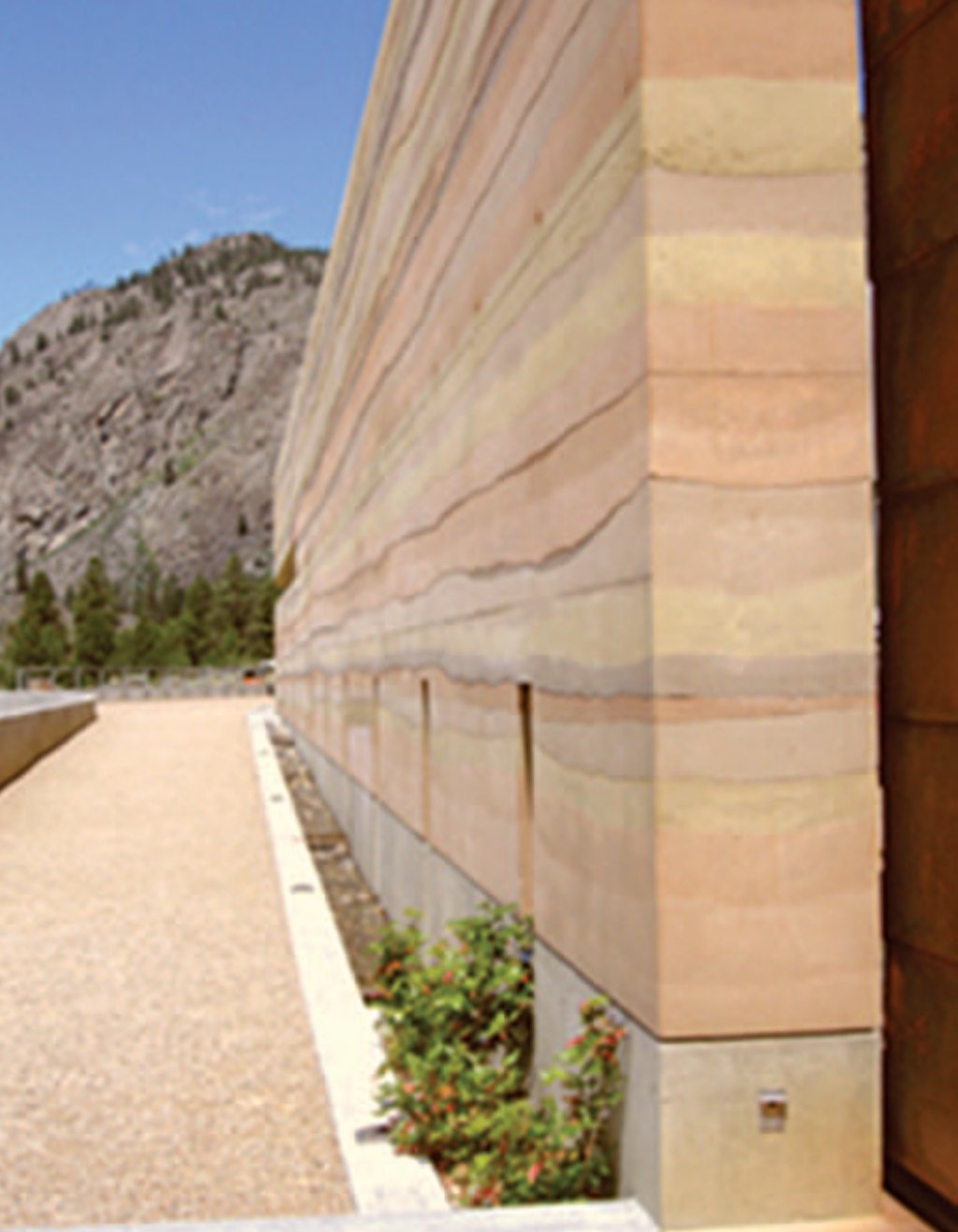
In the never ending search for cost effective, yet substantial construction techniques, I am forever finding that our predecessors had perfected cost efficient, locally supplied buildings long before modern construction technology entered the scene. In fact, one of the oldest, most long lived erection concepts is the use of dirt. That’s right, soil when compacted to 50% of its normal volume becomes 60% the strength of concrete and lasts, well, practically forever. This ancient building type has been employed for thousands of years. Sections of the Great Wall of China, churches, plantation houses and garden walls have used this method throughout human history.
In the United States, rammed earth structures were exposed to the public through a book by S.W. Johnson named “Rural Economy” in 1806. Rammed earth buildings lost popularity and were soon forgotten as a construction method after World War II when there was a need for quickly constructed houses and manufactured material costs dropped significantly due to industrial output for the war effort.


Today there are the same sound reasons to employ rammed earth technology in constructing a shelter or fence/wall as in the past – it is your materials from your land, it is very energy efficient, uses only locally supplied resources (it is sustainable) and fast (taking 2/3’s the time of typical masonry structures) and is very durable (you are making man made sedimentary rock).

What you need to know:
- Soil type – The best is 70% sand, 30% clay with low organic content. Georgia soil is ideal as long as there is not too much clay.
- Testing soil for suitability – Form a ball of mud and drop from 3′-0″. The amount of disintegration indicates its viability.
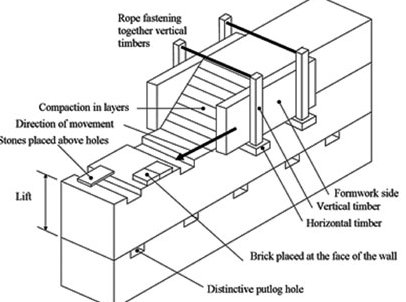
- Formwork (see diagram) – Two 3/4″ plywood forms or metal concrete pan forms. Very well braced.
- Tamping (Ramming) – Use pneumatic tamping devices, compress soil to 50% of its original volume.
- Time Costs – Four people can erect 300 square feet per workday
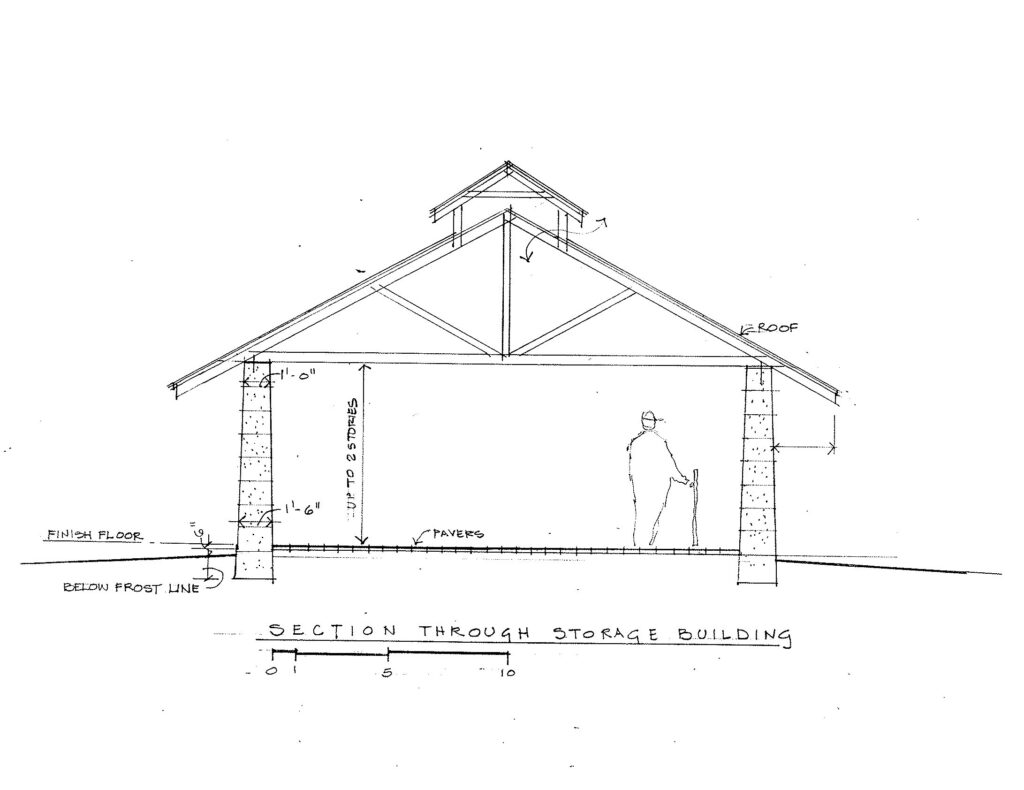
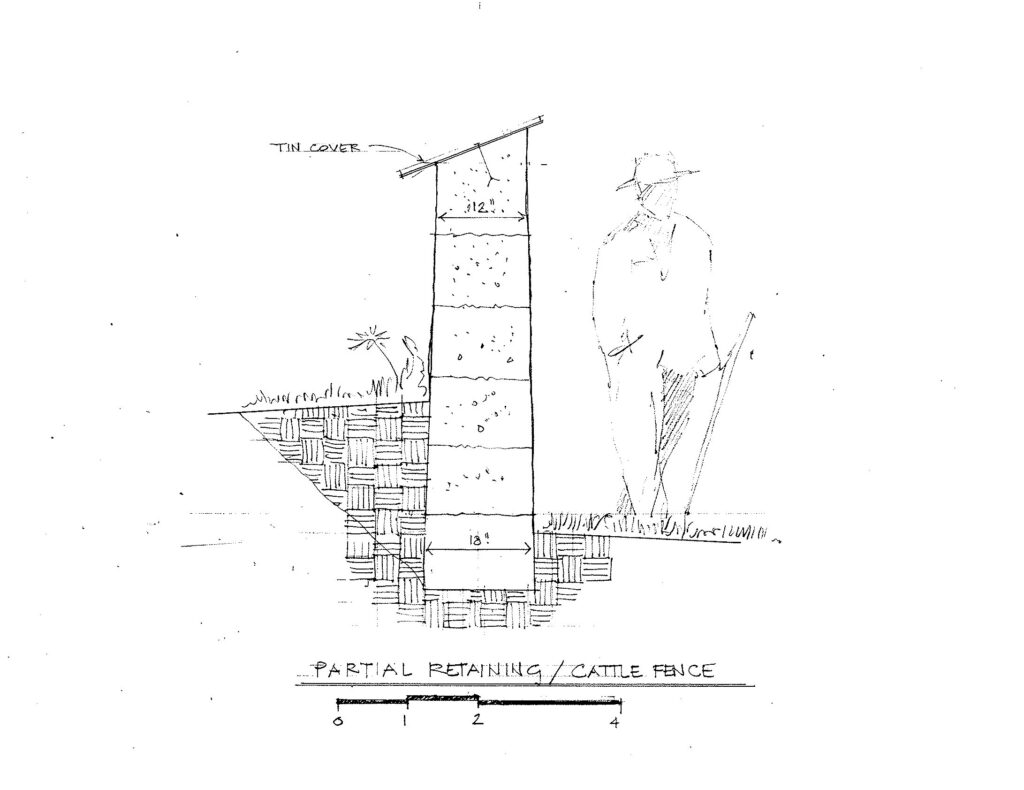
Where to learn more:
Easton, David. The Rammed Earth House. Chelsea Green Publishing Co., 1996
McHenry, Paul Graham. Adobe and Rammed Earth Buildings: Design and Construction. University of Arizona Press, 1989
Rammed earth structures can provide an exciting, cost efficient alternative to purchasing manufactured materials and also provide a unique flavor to your rural landscape. In this time of economic uncertainty, you can always count on your land, your soil and your efforts to build structures that last.