
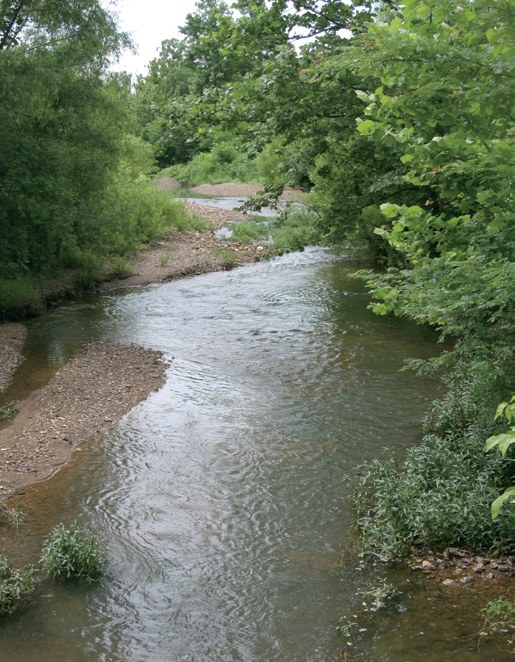
When we purchased the first part of our property about 35 years ago it had a year-round, spring-fed creek running through it, one of the reasons we loved the property. Luckily the property was so run down, fences gone, that it had not been grazed, nor had other intensive agricultural practices on it. The old well on the farm was no good, so we spent the first summer bathing in the creek, until we got a new well. The creek water was deep and cold. Some time later, we purchased an adjoining piece of property, just up stream. That property had been heavily grazed and row-cropped. The creek had filled in with gravel, even washing a great deal of it downstream into our original creek section. As we increased our own farming practices, it became evident we needed to protect the creek. We also intensively manage our farm for wildlife and the creek is a major factor in our wildlife populations.
Some of the most important water sources for both wildlife and mankind are streams. In the drier, western portions of North America, riparian zones (areas along the banks of natural waterways or lakes) are extremely critical to wildlife survival. These wooded corridors help control erosion and filter sediments. Protection and/or creation of riparian corridors is a major factor in providing good water sources for wildlife and quality water for human use as well. Riparian corridors may consist of grasslands alone, however, in most instances, even in dry country these corridors consist of woodlands of some sort in addition to grasslands. A good number of wildlife use these areas for all or a part of their habitat, and some animals and birds spend their entire lives in these zones. Riparian corridors provide a steady supply of food, cover, nesting places, dens and wildlife travel lanes. Our creek provides lots of enjoyment, from skipping rocks with kids to exploring for wildlife tracks and observing wildlife, not to mention fishing and hunting.
Fence Off the Area
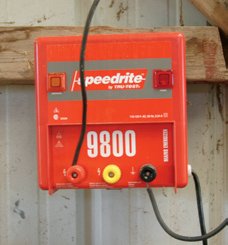
The first step is to fence off the area. We’ve done quite a lot to preserve our creek or the riparian zones on our property. Missouri is the second largest cattle-producing state and our county is the largest cattle producing county. Cattle are a way of life in our part of the country and have always been important in our family. But cattle can be extremely destructive to woodlands and especially to riparian corridors. In fact, soil erosion may increase as much as 110 times on heavily grazed woodlands. This is due to the compaction of the soil and the removal of leaf litter and understory vegetation. Fencing off the corridor protects it, including wooded areas, from livestock damage such as vegetation destruction and erosion caused by the denuding and destruction of the banks. We have spent the last few years establishing an intensive grazing system utilizing high-tensil electric fencing and a charger capable of handling 100 miles of fence. Over a mile of creek is fenced off on both sides using the system. This type of fencing is economical and very easy to install, in comparison to standard barbed or hog wire fencing. High tensil fencing also can more easily follow a meandering corridor, using wood or steel posts at turns. The fence is set about hip high. We’ve discovered the fencing does not stop wildlife such as turkeys or deer from crossing it. In fact, deer can be a problem during the rut when they are chasing as they often run right through the fence. We’ve learned to check our fences daily during the rut. The rest of the season deer simply jump over. Two crossings, using polywire and wire tape have been left so the cattle can rotate from one side of the creek paddocks to the opposite. There is both technical and monetary assistance for this type of fencing.
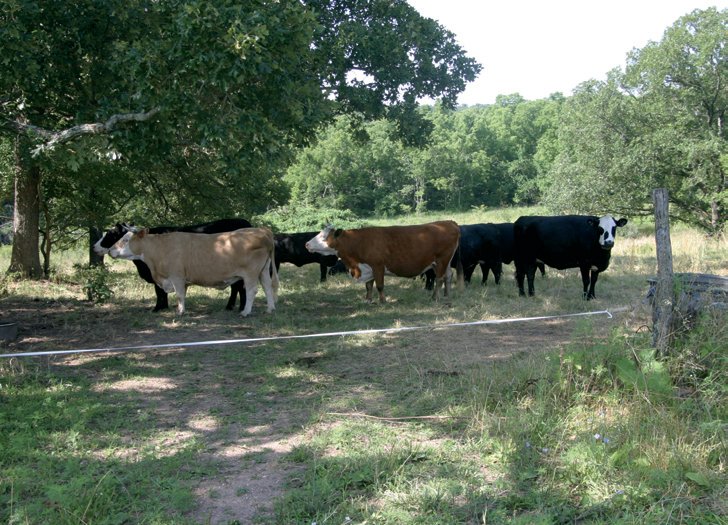
With the stream fenced off, the second step is to develop alternative watering sources for livestock. Adding alternative sources may be as simple as creating an area of limited access to the stream for livestock. More sophisticated systems may use solar pumps to pump water to a stock tank. Wells can also be economically developed. We built a pond, with a frost-free tank below for water and fencing off the pond. This not only provides an alternative water source, but another wildlife habitat. Our ponds provide great fishing and wildlife such as waterfowl, furbearers, deer and turkeys regularly use them. Unfortunately the folks heading up erosion control don’t see ponds as a viable solution, so funding is no longer available for them, although they will provide technical assistance. Instead, funding programs are available for spring development, even for digging wells for livestock water sources.
Vegetation Management
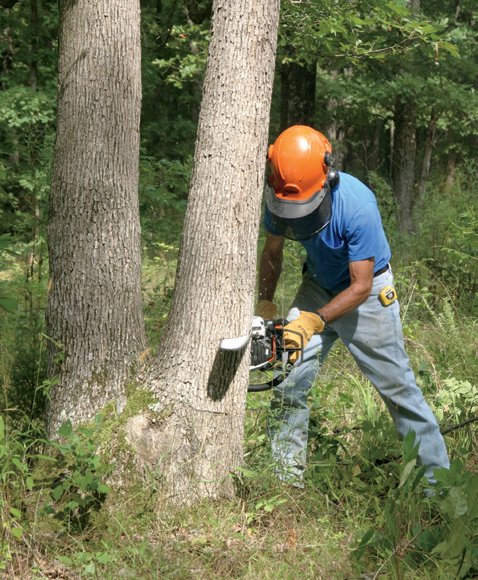
One major step is to practice timber-stand improvement (TSI) on the area. At least a one- to two-hundred foot wide corridor of trees should be protected or planted to protect the zone. The trees and brush slow down the water in a flood, reducing erosion of the banks and adjoining bottomlands. The slowed-down water drops much of its sediment within the stream corridor, rather than on the bottomland fields. Woody debris that would also end up in the bottomlands is trapped in the stream corridor. The tree canopy, as well as the leaf layer also protects the soil from the force of falling rain and acts as a sponge to trap rainwater. The root system of trees growing on the stream banks further protects them from erosion. Trees that do fall in the stream slow floods and create fish habitat.
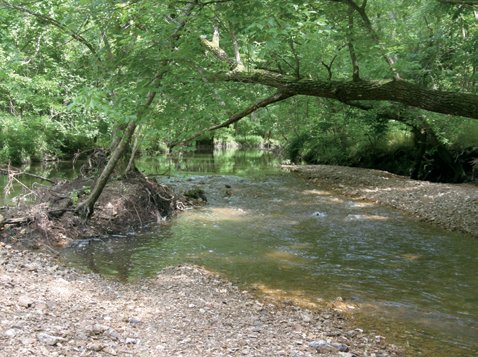
Because these bottomlands usually have excellent soil, they can often produce valuable hardwoods that can be managed for both monetary gain and wildlife habitat. We have walnuts and pecans planted in our corridor. Timberland improvement using standard woodland management practices such as TSI can be used to manage the woodland corridor. It’s important not to overcut or clear cut any areas of a riparian corridor, and timber cuts should minimize the loss of important snag and den trees. When you make a timber cut, don’t remove only tall trees such as walnuts, cottonwoods and sycamores. Cutting out all of the tall trees encourages understory trees such as mulberry and redbud to grow more thickly, preventing the growth of the new tall-tree seedlings. Some soft mast, such as mulberry, redbud, persimmon and others, however, is desirable. Even if the timbered zone is not as wide as one- to two-hundred feet, fencing it off and allowing natural succession will result first in woody shrubs and vines, followed by sapling growth and finally timber growth. The faster-growing trees in the South and Southeast include walnuts, cottonwoods, green ashes, willows, silver maples, sycamores, elms, sweet gums and yellow poplars.
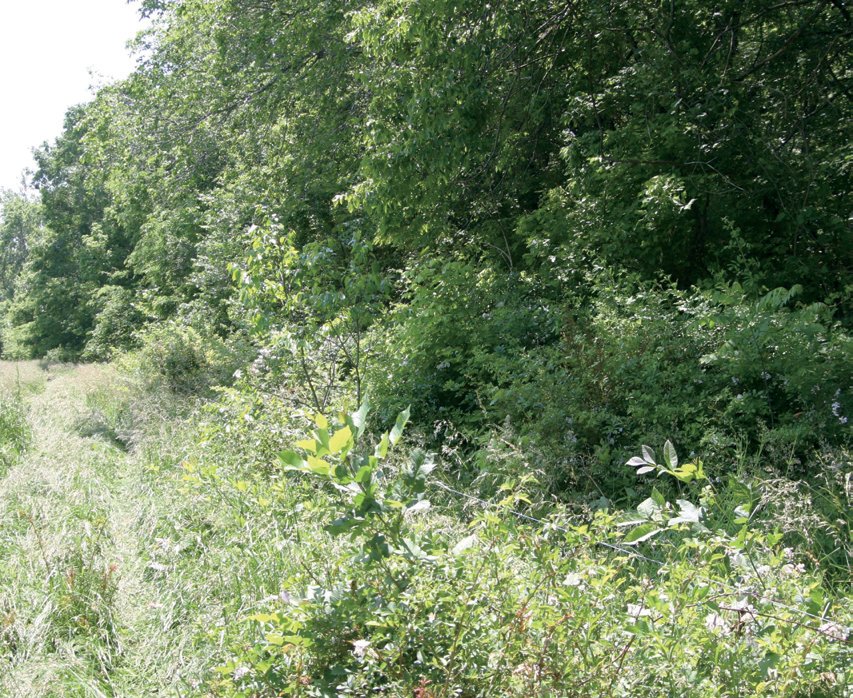
Basically, you should treat the riparian corridor as any other woodland edge. The ideal situation is to feather or partially cut edge trees, allowing them to fall over, but stay attached to the stump. You can also plant shrubs, followed by a strip of native warm season grasses. A strip of native warm season grasses can add even more value to the corridor as they add more diversity and further prevent erosion and remove sediment and chemicals before they reach surface water. Turkeys, quail and other ground-nesting birds will use the areas for nesting and deer, especially big bucks like to bed in them. Warm season grasses and forbs have very deep roots, some species with roots extending four to eight feet into the soil. Non-native grasses such as Kentucky blue grass extend only a few inches into the soil. Native plants can withstand long periods of dry weather, even a serious drought.
Protect the Stream Banks
It’s important not only to protect or plant vegetation along the stream but to protect the stream banks themselves. Some past practices are not only ineffective, but can create even more problems. The first is channelizing or straightening a stream. A common practice several years ago, channelizing involves straightening a stream to create a channel to move water faster. Faster water eliminates major fish and wildlife habitat. Since the water flows faster it also causes faster erosion of banks and stream bottoms, deepening the stream. This pushes the eroding gravel against the banks. Removing gravel and placing old car bodies or other junks on the streams banks are also ineffective. The latter is not only ugly, but can cause pollution. Don’t remove trees that have fallen over into the stream or those that appear ready to fall. The fallen trees help slow the current, hold the bank in place, and also create important wildlife habitat. Don’t create or enlarge stream crossings except where necessary, and then choose areas where you’ll do the least damage, such as natural low-water crossing areas. Areas with high banks that must be cut will wash out each time there is high water. One crossing on our property was made on such a bank by the previous owner and the cut has washed almost 15 feet into the field. Make sure the crossings are at right angles to the stream banks.
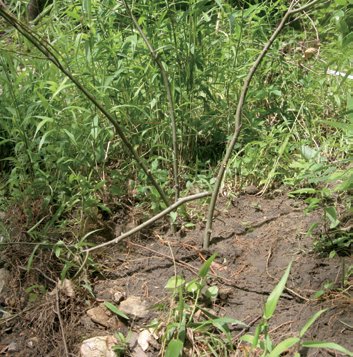
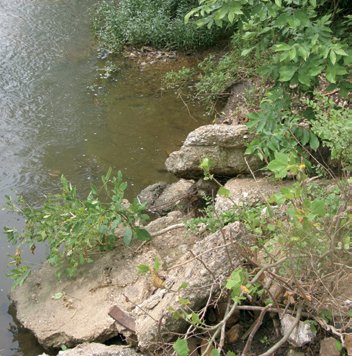
In some instances you may need to stabilize the stream bank to prevent further erosion problems. One way to do this is to simply cut switches from willows and stick them into the bank. A good number will sprout and create a natural bank cover. Sometimes a revetment may be needed and this may consist of several practices. One practice is using rocks to create riprap to prevent erosion. Special revetment bars are also available for this type of stream protection. These are driven into the stream bank at an angle to help hold the banks. Cedars are often placed in these revetment bars for further help in controlling the water flow.
Again, a number of riparian corridor practices are available. Check with your local county extension office, Soil and Water Conservation office as well as local fish and game departments.
A riparian corridor along your stream can not only protect your property, and add invaluable wildlife habitat, and a lifetime of quality fishing, hunting and wildlife watching.