

December 2008/January 2009
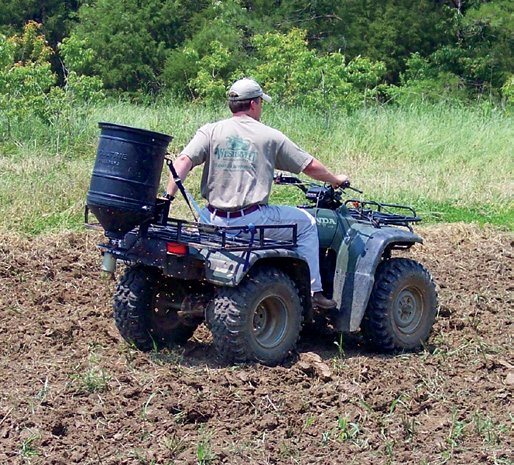
additional growth in the plants. A common application rate is 100 lbs/acre of 34-0-0 or ammonium nitrate. Many land managers do not fertilize fall food plots again once they are planted because it is an added cost. However, the added boost of nitrogen will not only increase forage production, but deer and turkeys are attracted to plants that are nutritious and actively growing which will result in better hunts on your property. Although fertilizer has significantly increased in cost this year, nitrogen is the cheapest of the primary elements to apply (Nitrogen, Potassium, Phosphorus)
If you intend to plant trees this year, now is the time to start planning, ordering supplies, and planting.
Besides actually planting the trees, site preparation is important to reduce competing weeds to enhance tree seedling survival during the first growing season. There are a number of fruit trees you can plant that will benefit wildlife on your property. A few I have had good success with include sawtooth oaks, Chinese chestnuts, pears, apples, persimmon, crabapples, autumn olive, and plums. Fruit tree plantings not only provide additional food resources for wildlife on your property but can provide exceptional enhancements to the aesthetics. Areas commonly planted in fruit trees include road intersections, roadside management areas, and in or along the edge of fields or food plots. The key is to plant them in areas they will receive sunlight. Some trees require cross-pollination to produce fruit so, if needed, be sure to plant them in small groups. Ordering trees/shrubs and supplies well ahead of time will ensure they will be ready when you are.

Host a cookout with adjacent landowners and/or game wardens.
This is a great way to meet your neighbors and local game wardens. The cookout provides opportunities to exchange ideas on deer and habitat management as well as harvest strategies. If you are trying to convince an adjacent landowner or hunting club to practice quality deer management, this is a great time to show them some of the success you had. Pictures of harvested bucks and/or scouting camera pictures is usually all it takes to convince others to join your efforts. These cookouts often result in long-term relationships between landowners or hunting clubs that is mutually beneficial.
Strip disk areas to promote natural, desirable weeds for wildlife.
Lightly disking the ground will provide enough disturbance to stimulate the natural seed bank which will often result in a diversity of wildlife friendly weeds the following spring and summer. Although this is a common practice used to produce quality quail habitat, many of the resulting forbs will be used by deer and turkeys. Strip disking at different times of the year will result in different plant communities. While disking can be conducted anytime of year, it is normally done in spring or fall. Fall/winter disking normally results in a broadleaf plant response, while spring/summer disking will result in more native grasses. Altering the season in which you strip disk will add diversity to your property. Strip disking can be done in thinned pine plantations, relatively open mature pine stands, along the edges of food plots, or in open fields. Basically anywhere sunlight can reach the ground will work. To optimize the benefit of strip disking, avoid disking straight lines. A serpentine pattern that winds through the habitat will provide the most edge and diversity. Also, to stimulate desirable wildlife friendly weeds, you do not need to disk like you were preparing a clean seedbed for planting a food plot. One pass is generally enough to stir the ground up and expose bare soils that will promote germination of desirable weeds.
Assess and flag or mark wildlife clearcut areas, new food plots or plot expansions, new roads, and roadsides that will be widened.
Because temperatures are cool (or cold) and the leaves are off trees where you can generally see better in the woods, winter is a great time to assess and mark areas where trees will be harvested or dozier work will be needed. Having the leaves off is certainly a big help because you can see what you are doing and visualize areas that you are flagging. Projects that may need to be marked or flagged include small bedding areas that will be created with chainsaws, new food plot areas or expansions on existing plots, areas along roadsides that need attention next spring, etc. Besides flagging areas that will require heavy equipment and drier conditions, winter is also a good time to flag areas that will be planted in wildlife friendly orchards, supplemental hardwoods, areas to plant hedgerows for quail through fields, etc. Marking these areas in winter will not only be more pleasant for you and allow you to see what you are doing, but will ensure you are ready to tackle these projects when conditions are right. Also, flagging in winter gives you time to think more about the areas you have flagged out before the project is implemented. The last thing you want is to be flagging just ahead of a logging crew and having to make hasty decisions on where you want a new food plot to be created.
Prepare dormant season prescribed burn plans and initiate burns as weather permits.
As many of you know, prescribed fire is an exceptional tool for managing wildlife habitat. However, burn plans need to be well thought out and completed well ahead of time. With the exception of longleaf pine/coastal plain areas, most understory burning in the Southeast is conducted during the winter dormant season. Acceptable relative humidity, temperature, fuel moisture, and steady, persistent winds often occur during this period. Cool season burns are generally conducted between December and spring green up. In the deep south, try to conduct burns before March 15 to avoid destroying turkey nests. Cool season or winter burning is not only a good way to reduce fuel loads and control undesirable hardwoods in a pine stand (which reduces the chances of a wildfire that can be detrimental), but is also a great way to stimulate new understory plant growth which will result in quality food sources for wildlife. Fire rotations (interval of time between burning the same area again) vary depending on your goals and habitat types but are generally every 2-5 years to promote quality wildlife habitat. It is also a good idea to strategically plan your burns so that you always leave some areas unburned. How much area to burn will depend on your specific property and habitats. However, do not feel that you have to burn large areas (50-100 acres or more) to make a difference and create quality wildlife habitat. Relatively small burn areas in the 5-10 acre range are easily done in a couple hours and will make a difference. Always check local burning laws and consult with an experienced burn manager before lighting a woodland fire. The U.S. Forest Service or your state forestry commission are great sources for obtaining more information regarding burning in your area. Check with the US Forest Service for information regarding prescribed burning as well as examples of a burn plan. It is also a good idea to coordinate your burns with a professional land manager who has experience burning.
Mow or manicure quail hunting areas to enhance access and create additional quail habitat.
Mowing lanes within quail habitat makes for a more enjoyable experience for hunters. This allows hunters to work through the field or woods while hunting without staying tangled in vegetation. This also promotes safer hunting by reducing the possibility of tripping while carrying a gun. If possible, avoid mowing straight lanes. Serpentine cuts through the habitat will create more edge and a more natural look for wildlife. Not only does this technique increase the quality of the quail habitat and enhance hunting access, but it can also reduce predator success.
Collect hunter observation and deer harvest data.
This information is the “backbone” of your deer program and allows you monitor/assess its success and make sound management decisions/adjustments if needed to reach your deer management goals. Collecting this information each year is important because it will allow you to assess trends in the harvest and observation data which will help you determine if your program is working. Without this information, you are simply guessing and are less likely to achieve your goals.
Apply a boost of nitrogen to your food plots in December (not on perennial legume/clover plots).
Top-dressing your fall annual food plots of small grains (wheat, oats, etc) with a boost of nitrogen will enhance the nutritional value as well as promote
Create and/or recharge mineral licks for deer.
If minerals are lacking in the native habitat (or in the soils), deer will readily use mineral licks you create throughout the growing season (spring/summer). If deer on your property do not use the licks, don’t worry. This probably means that they are acquiring adequate minerals from native plants and do not need supplemental minerals. There are many commercial products available to use in mineral licks that are pre-mixed or you can create your own. A recipe I often use is 50# Dicalcium Phosphate, 50# Calcium Carbonate, and 50# Trace Mineral Salt. This mix will be enough to create about 3-4 mineral licks if you are mixing the minerals into bare ground. A good rule of thumb is to establish 1 lick per 200 acres.
If possible, collect fetal data from harvested whitetail does.
If your breeding season or rut occurs before or around Thanksgiving, and your hunting season extends into late December of January, you should be able to find and measure fetuses. The age of the fetuses is determined by their length. A fetus scale is very helpful in determining the age of the fetuses. Once you know the age of the fetus and the date of the harvest, you can determine the day of conception. This information can provide much insight into your deer herd’s reproductive performance as well as the length and peak of the rut in your deer herd. This not only helps you determine when to put in for vacation next year, but the length of the breeding season will shed light on the adult sex ratio of the herd. A tighter sex ratio will result in a shorter more intense rut due to increased competition for mates, while an unbalanced sex ratio will likely be represented by a long, weak rut due to less competition and the length of time it takes bucks to “service” the abundant doe population. This information, along with hunter observation data, is a great way to assess the status and success of your deer management program.
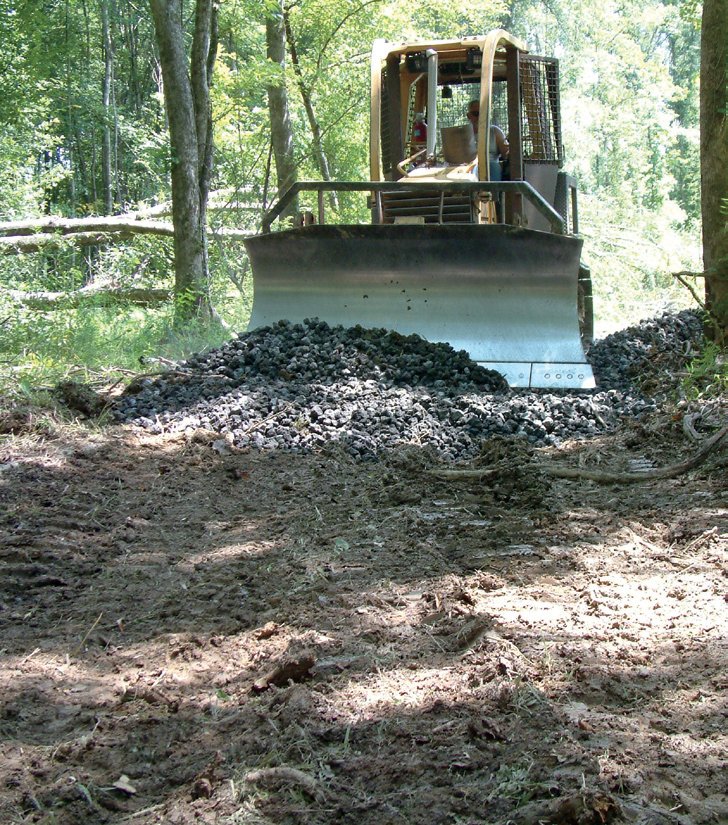
Identify roads on your property that need attention.
Winter is often very wet in the mid-south which makes this a great time to identify and assess problem areas along roads where work will be needed next summer. Make notes or identify areas on maps that you can refer back to when you start to repair roads next spring or summer. You will be glad you did. Once your property dries out, it can be difficult to remember and/or find the areas that were bad during the hunting season. Although land owners/hunters access properties during hunting season on 4-wheelers, electric carts, or other gas powered ATV’s that will certainly get through wet and slippery roads, roads are an important part of managing a property. If you are actively managing your property, you will need to be able to drive or transport large equipment such as spreader trucks, tractors, and agriculture buggies throughout the property. Thus, having good roads is essential.