
In the last article, we covered many of the basics of prescribed fire or controlled burning including smoke management and other liability issues and basic terminology. In this article, we will cover issues regarding growing season burning.
In reference to burning, “winter” or “dormant season” burns can be considered those fires conducted between Dec – March 31 when the woods start to green up substantially. After April 1st, most trees, shrubs and understory vegetation have started to fully leaf out and shade the ground. This is the time frame when most prescribed burn practitioners consider their burning season at an end. However, there are a lot more burning days available through the remainder of the summer for those willing to try burning under a little different conditions.
Growing season or summer burns (GS burns) are not that much different and, in a lot of ways, a lot easier to conduct and control than winter burns. Fires tend to be more “well behaved” and are not constantly trying to get out of the burn block, cross firelanes or burn the neighbors. The basics of burning still apply. Securing downwind sides of burn blocks, burning ridges first, no ring fires, etc. all still need to be considered.
Also, certain areas should not be burned with GS fires. Older timber stands, especially old longleaf that has not been burned in the last decade or more should not be burned in the growing season until a couple of winter “fuel reduction” burns have been conducted. Heavy fuel buildup near the bases of these older trees allow feeder roots to grow into the lower duff layers and these feeder roots can be damaged in summer with fire and lead to high mortality rates. Also young longleaf that is less than 15-20′ tall are susceptible to high mortality with GS burns. In any areas of high fuel loads and/or ladder fuels, a couple of winter fires to reduce this fuel load are warranted before a GS burn is considered.
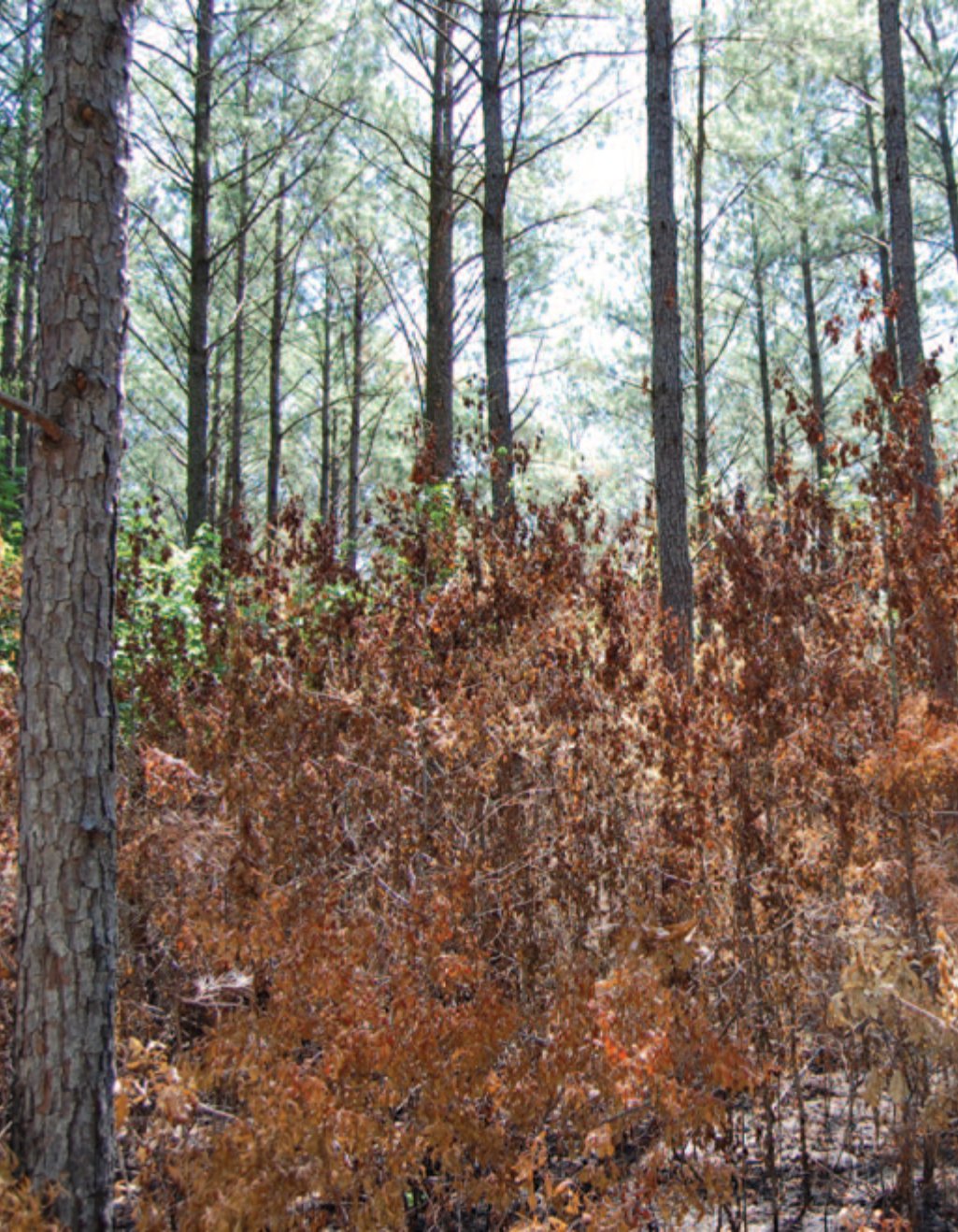
The major benefits of GS burning is 1) extending the burning window allowing a lot more acres to be burned in a season and 2) GS burns do a significantly better job of controlling understory hardwoods and shrubs and provide a much higher impact on woody cleanup. Sweetgum, especially, is a problem in pine stands in the southeast and GS burning can provide much more “knock down” power than winter burns. Often, gum reaching 4-5″ diameter and 20’+ height can be top-killed with a GS burn. While mortality of these hardwoods may still not be significant, the removal of these stems out of the mid-story of a pine stand is substantial. Full kill of the roots of top-killed gum in a winter burn is virtually 0%; mortality in a summer burn may reach 10% on a good burn. So, regardless, you will have a hard time removing gum with fire at any time of year.
We, typically, prioritize our annual burning schedule with the following considerations. Young (<10 yrs old) longleaf plantations are scheduled first in Jan – March. Maintenance burns in pineywoods that have a minimal amount of hardwood sapling problems and a lot of good nesting cover (grasses, etc) are prioritized next (Feb – Mar), as are any hardwood burns. Burns with weak fuel conditions, little pine overstory and places that would have a hard time burning later, those with extremely high fuel loads as well as those primarily to attract turkeys for hunting season are next on the list. Finally burns with good fuel conditions and in need of hardwood mid-story control are scheduled for after April 1.
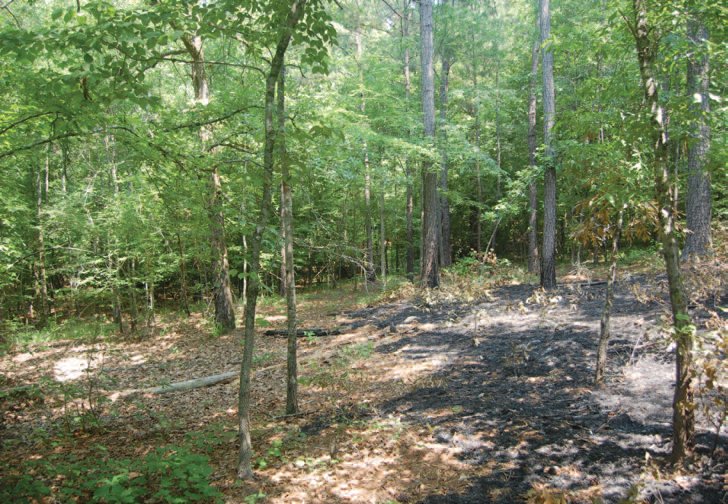
Good fuels for GS burns are also similar to winter burns. Even “greened-up” broomstraw still has all the dead grasses from last year available for burning. Pine straw carries a fire nearly all year. Interestingly, hardwood stands seem quite fire-proof in the GS. If there is no or little pine overstory or little grass growing in a hardwood stand, GS burns will rarely burn through them under normal conditions. Of course, in extremely dry conditions when you should not be burning anyway, fire will enter hardwoods and can result in significant damage and mortality. Shady conditions and higher humidity levels under the canopy seem to do a good job of protecting hardwoods in drains and other areas where they dominate the overstory.
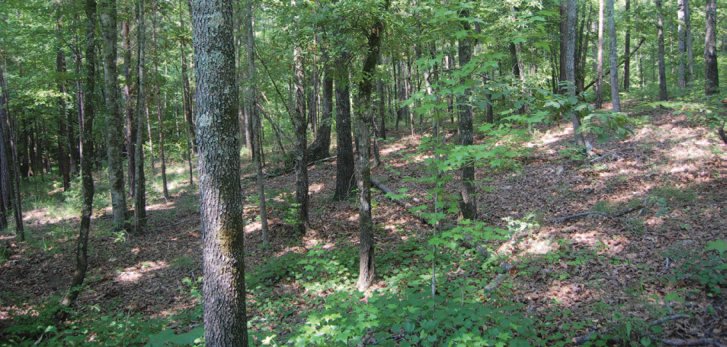
Fuel loads do have a major impact in GS burns. Areas with weak fuel coverage, full shade conditions, weedy areas, thin grass coverage or those with light pinestraw will often burn poorly or not at all with a GS burn. These burns need good fuel loading to carry well and do a good job. Also, even though GS burns are best for removing gum from a pine stand, if you allow the gum to grow thick and tall and completely fill in the midstory canopy developing full shade conditions on the ground, you will have a hard time getting the fire to carry.
Concerns about nesting wildlife, especially turkeys and quail, are justified. However, the areas where GS burns are most needed and used (pine stands choked up with hardwood saplings and other shrubs with little or no grasses available for nesting) are usually poor nesting habitat and rarely selected by turkeys and quail for nesting anyway. In addition, those rare nests that are destroyed in a GS burn are replaced due to strong renesting instincts in these birds. Ideally, one of the objectives of these burns is to create good nesting habitat in future years by removing hardwood midstories and, ultimately, the habitat will be better in years to come, more than making up for an occasional nest loss. In addition, these burned areas become excellent brood habitat for young chicks later in the summer as growing vegetation begins to produce insects and the ground is open enough for young chicks to move through it and find food.
Humidity, temperature, and fuel moisture conditions are usually quite different from winter fires. Ambient air temps are often quite high and can result in uncomfortable conditions for burners as well as making fires a little hotter. However, is these higher air temps that help in killing hardwood saplings. It is a lot easier for a fire to heat the inner cambium of a hardwood sapling to lethal levels when the air temp is already in the 80’s and 90’s.

Humidity is typically higher during the GS which usually leads to these fires not being as erratic and hard to control as during the winter. Higher humidity leads to higher fuel moisture, especially fine fuels like grasses and pine straw which tend to dry quickly. Commonly, lowest humidity levels at mid-day run 30 – 45% on most summer days.
Slow and cautious is often the word for summer burning. Using creepy backfires, short spots and head fires usually gets the job done. Burning too hot and fast can lead to the heat reaching lethal levels on the pines also. Shifts in the wind can lead to spots of pine mortality as can using ring fires. Don’t expect to get all ground to be burned like in a winter fire since there will usually be thickets, hardwood draws and canopied hardwoods with poor or no fuel that will stop the fire. If the burn block is well broken up with hardwood areas and mixed pine hardwood that will stop or slow down a fire, then a lot of fire may be able to be strung throughout all the ridges and allowed to go out on its own.
In addition to the better control of hardwood saplings and other shrubs with GS burning, these later fires also promote some variety in plants returning on the site during the following summer months. Later growing legumes like desmodium and lespedezas grow well in summer burn sites with the reduced competition. These plants are excellent deer browse, and increase insect production for turkey and quail chicks. They are also excellent seed producers for various birds who depend on them.
Native grasses like broomstraw that don’t do well with competition also come back very well with later burns. Broomstraw and other native grasses are highly important to wildlife for cover and nesting. Quite often, trying to develop a good broomstraw stand in a pine woods can be problematic. Summer burns are an excellent way to encourage broomstraw coverage in these stands. Although they get a late start in growing, they usually do most of their development in late summer anyway and tend to regain full height if burned by July.
While GS burning is certainly not for all areas and takes a little different set of conditions to conduct, it certainly adds another powerful tool to the managers list of options. It extends the annual burning season and certainly is best for removing gum coverage in pine stands. Give it a try, you may find it suits your management regime!