
This article originally appeared in the July 2026 issue of Georgia Outdoor News. For more stories from GON, visit gon.com.
The next giant. The next county record. The next big buck contest winner. He might be taking his first breath right now in a briar patch somewhere near you.
Most hunters spend summer thinking of the rut and the big buck to be chased, but June and July are crucial for the future deer herd.
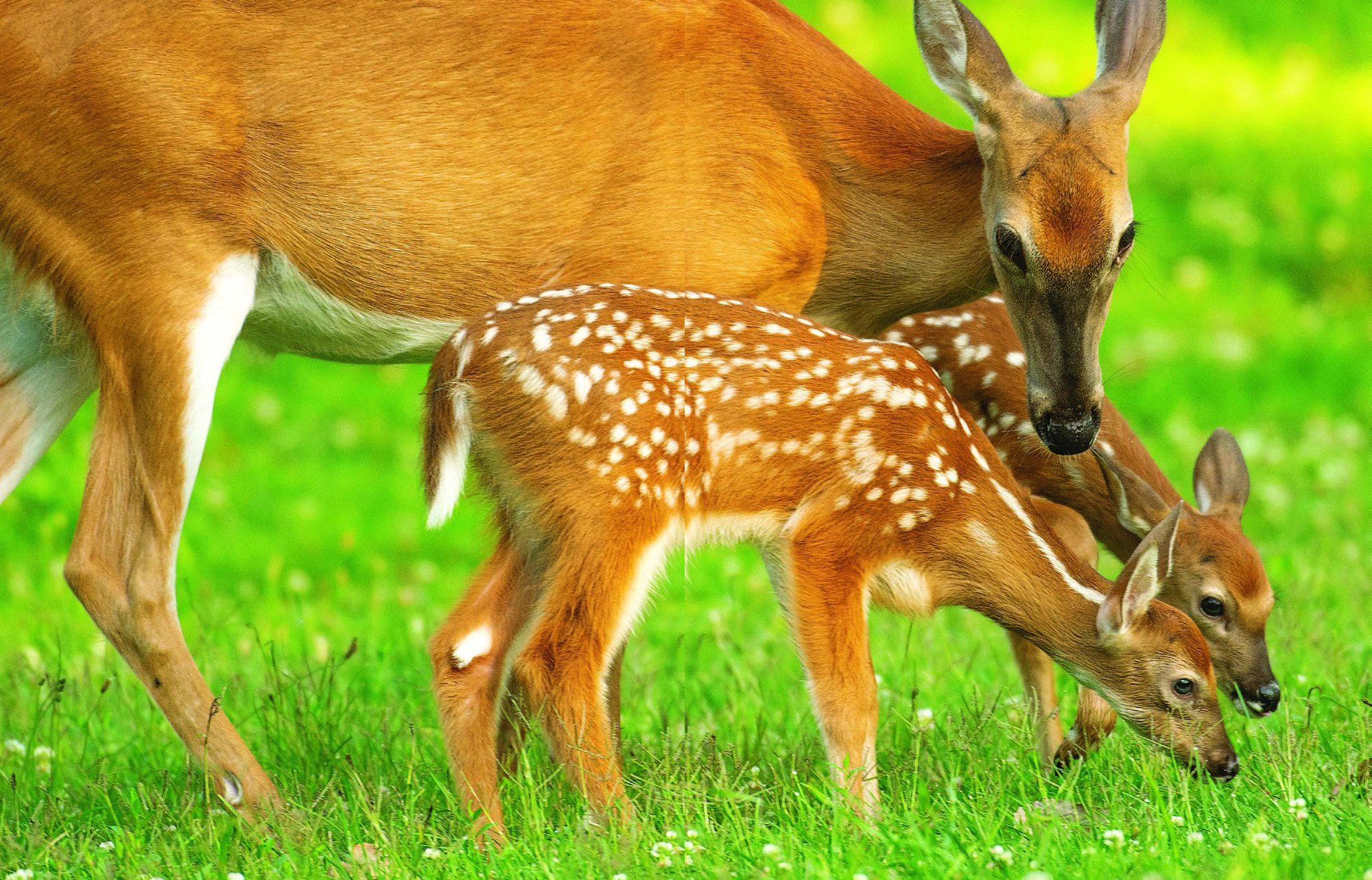
Somewhere in some briars or a thick spot of overgrown grass, a little spotted fawn is taking its first breath. If the tiny brown thing is a buck, a lot of hunters won’t think much of him come next fall.
Give him four years to grow.
That nice mature buck that you’re showing your buddies and losing sleep over. That bruiser is developing right now during fawning season.
That’s why so many hunters preach the same message every summer: don’t mow.
For many hunters, protecting fawns is almost as important as protecting deer during hunting season. The reason is simple—today’s fawns are tomorrow’s deer herd.
Though the ideas and principles discussed herein are applicable across the Southeast, this article focuses on some specific characteristics about the state of Georgia.
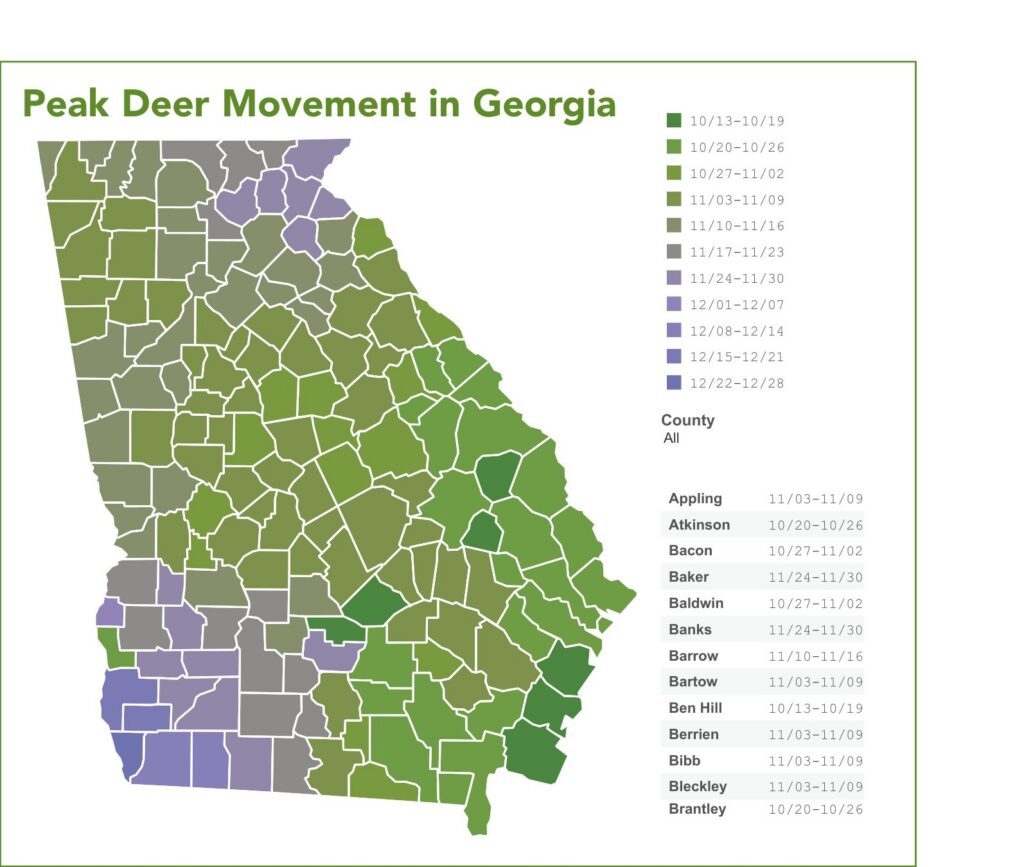
Georgia has one of the most unique and varied deer reproductive cycles in the country. Georgia’s unusual rut timing is often attributed in part to historical restocking efforts that introduced deer from several regions of the country, though researchers also point to differences in day length, or photoperiod, across the state. Whatever the reason, fawning doesn’t happen everywhere at the same time.
In the Blue Ridge and Piedmont regions, peak fawning generally occurs from late May through June. In southwest Georgia, where breeding occurs later, fawning can stretch into July and even August. The reasons behind Georgia’s varied rut timing could fill an article of their own, but the short version is this: Georgia’s rut can occur anywhere from mid October to late December—and in some places, even into January.
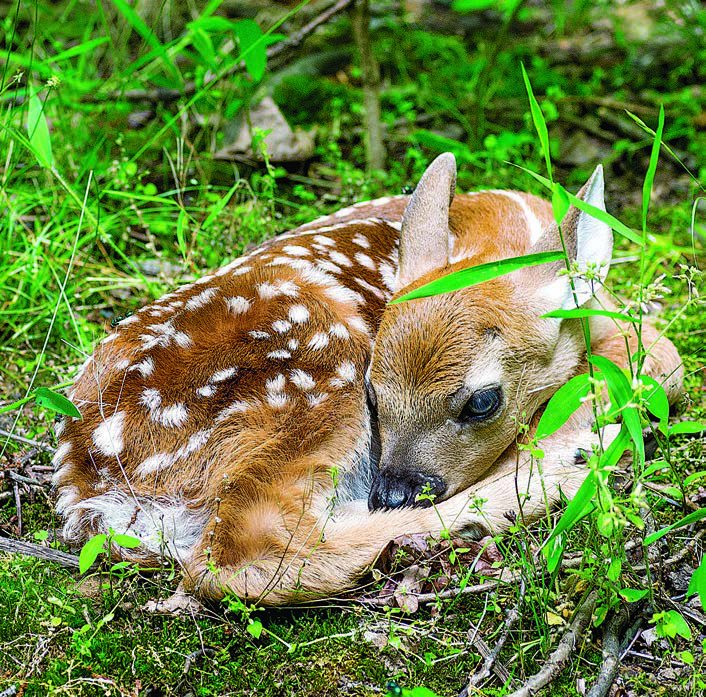
When it’s time to give birth, a doe will often leave the herd and seek isolated pockets of dense cover. Old fields, briar thickets and stands of native warm-season grasses provide the security they need to raise newborn fawns away from disturbance and predator attention.
That caution is necessary because predation is generally considered the leading source of mortality for newborn fawns. Researchers have found that when quality fawning cover is limited, predators may focus their efforts in those areas, making survival even more difficult for newborn fawns.
The first month of a fawn’s life is critical. During those first 30 days, every instinct and behavior is centered around survival.
Days 1-3: The Immobile Phase
Newborn fawns are weak and spend nearly all of their time bedded on the ground. Their best defense isn’t running—it’s remaining perfectly still.
Days 4-10: The Hider Strategy
Does spend most of their time away from their fawns to avoid drawing attention to them. If a doe has twins or triplets, she’ll often separate them to reduce the chance that a predator finds all of them at once.
Days 11-21: Building Strength
As fawns grow, they become stronger and more mobile, spending increasing amounts of time with their mother.
Days 22-30: The Ruminant Transition
By about four weeks old, a fawn’s stomach begins transitioning toward digesting vegetation. It will still nurse for another month or two, but it’s beginning to become a true ruminant.
Unfortunately, making it through those first 30 days isn’t easy.
While many animals will opportunistically prey on newborn fawns, Georgia’s three primary predators are coyotes, bobcats and black bears. Of those three, coyotes are generally considered the most significant threat because of their abundance and their ability to cover large areas while searching for food, though bobcats and black bears can also have significant impacts in some areas.
Coyotes are especially effective during a fawn’s first few weeks of life, when hiding—not running—is the fawn’s primary defense. That’s one reason many hunters support predator management efforts.
Predators aren’t the only challenge fawns face.
Weather can play a major role in fawn survival, just as it does with many wildlife species in Georgia. Extended periods of extreme heat can reduce forage quality, stress nursing does and increase the energy demands placed on young fawns. Add drought conditions to the equation, and the outlook becomes even tougher.
Then there’s us.
Hunters and landowners can have a significant impact on fawn survival, often without realizing it. That’s why you’ll hear so many people say, “Don’t mow.”
Freshly dropped fawns rely on their instinct to remain motionless when danger approaches. Unfortunately, that strategy doesn’t work very well against a tractor and bush hog. Mowing also removes the very cover fawns depend on to stay hidden from predators.
If possible, consider delaying bush hogging for a month or two until fawns have had time to grow, gain mobility and develop their ability to escape danger.
In some areas, targeted predator control has been shown to improve short-term fawn survival, particularly when conducted immediately before and during fawning season.
So why does all of this matter?
Because deer management is a long game.
A fawn born this summer will be a 1.5-year-old buck during the fall of 2027—the young deer you see pushing does around during the rut. That same deer won’t reach true maturity until around 2030.
In other words, the decisions we make today affect the deer herd hunters will see several years from now.
A poor fawning season doesn’t just affect this year’s deer population—it creates a noticeable “hole” in the herd for years to come. Fewer fawns this summer means fewer yearlings next year, fewer 2.5-year-olds the year after that and, ultimately, fewer mature bucks down the road.
Fawn recruitment is one of the most important indicators of a healthy deer population. Simply put, fawn recruitment is the ratio of fawns to adult females (ages 1.5+).
According to research conducted by the Georgia DNR Wildlife Resources Division during 2023-2024, fawn recruitment has remained relatively stable over the past decade. However, recent data suggest a downward trend, which could have long-term implications for Georgia’s deer herd.

“Georgia saw the most significant drop in fawn recruitment from around 2000 to 2017,” said Charlie Killmaster, a deer biologist with the Georgia DNR. “We reduced either sex-days in a lot of the state during some of those years to acclimate to lower recruitment.”
To understand the importance of recruitment, it’s helpful to look at Georgia’s deer population as a whole.
While deer density varies greatly by region, Georgia’s overall deer population has declined since peaking at approximately 1.8 million deer in the mid to late 90s. Much of that decline was intentional, driven by management strategies that increased antlerless harvest opportunities to bring deer numbers in line with available habitat. By 2004, the state’s deer population had stabilized around 1.2 million deer, where it has generally remained ever since under the framework established by the DNR Deer Management Plan. Right now, the deer population sits around 1 to 1.3 million.

“Overall, the population and recruitment are stable, but there are many counties with increasing or decreasing populations,” said Charlie.
Even with a relatively stable statewide population, opinions about deer numbers vary widely depending on where you hunt, which is consistent with what information DNR has obtained from processors.
Through Georgia Outdoor News’ annual reader survey, hunters expressed concerns ranging from too many deer to not enough deer.
“I believe the doe limits are too high in the areas I hunt.”
“John’s Mountain WMA does not need doe days. Deer population on John’s has dwindled down so bad, it’s painful.”
On the other hand, some landowners and farmers reported the exact opposite concern.
“I’m in a severely overpopulated deer area and I farm, so I feel the effects financially as well as the other farmers around me.”
“Deer are overpopulated and not being managed. Farmers need more permits.”
As you can see, deer management isn’t a one-size-fits-all issue.
Despite differing opinions across the state, the Georgia Wildlife Resources Division (WRD) has done an admirable job balancing the needs of hunters, landowners and the resource itself. While there are certainly pockets of Georgia with higher or lower deer densities, the statewide population has remained relatively stable for years.
That’s especially important when you consider the pressures facing deer habitat. Georgia’s human population continues to grow, hunter participation remains strong and land-use changes continue to reshape the landscape. Although forest land still covers roughly 67% of Georgia’s land area, corporate ownership of timberland has increased significantly since 1982, creating greater potential for land fragmentation and development.
Through ongoing research and monitoring, WRD continues to manage Georgia’s deer herd with both biological sustainability and hunter success in mind.
“We’ve never been able to track county-level populations effectively, but UGA will soon be working on a new model that will really improve that now that we have a solid decade of county-level harvest data from Game Check,” Charlie said.
At the center of all these management decisions is Georgia’s ecological carrying capacity—the number of deer the landscape can support while maintaining healthy habitat conditions. Based on research and input from regional biologists, WRD biologists estimate Georgia’s deer population is currently near levels that can be supported by available habitat on a statewide basis, which some research indicates to be 1.1 million.
That brings us back to fawns.
Fawns are the future of Georgia’s deer herd. They replace the deer lost each year to predation, hunting pressure, vehicle collisions and natural mortality. Without adequate recruitment, the population cannot sustain itself over time.
Although recruitment has generally stabilized in recent years, Georgia is producing fewer fawns per doe than it did several decades ago, making fawn survival more important than ever. While hunters can’t control every factor that affects fawn mortality, they can influence some of them through habitat management, predator control and simple decisions like delaying summer mowing.
At the end of the day, protecting fawns isn’t just about saving a few deer. It’s about ensuring that Georgia continues to have a healthy, sustainable deer herd for future generations of hunters.
So do your part for the fawns.