
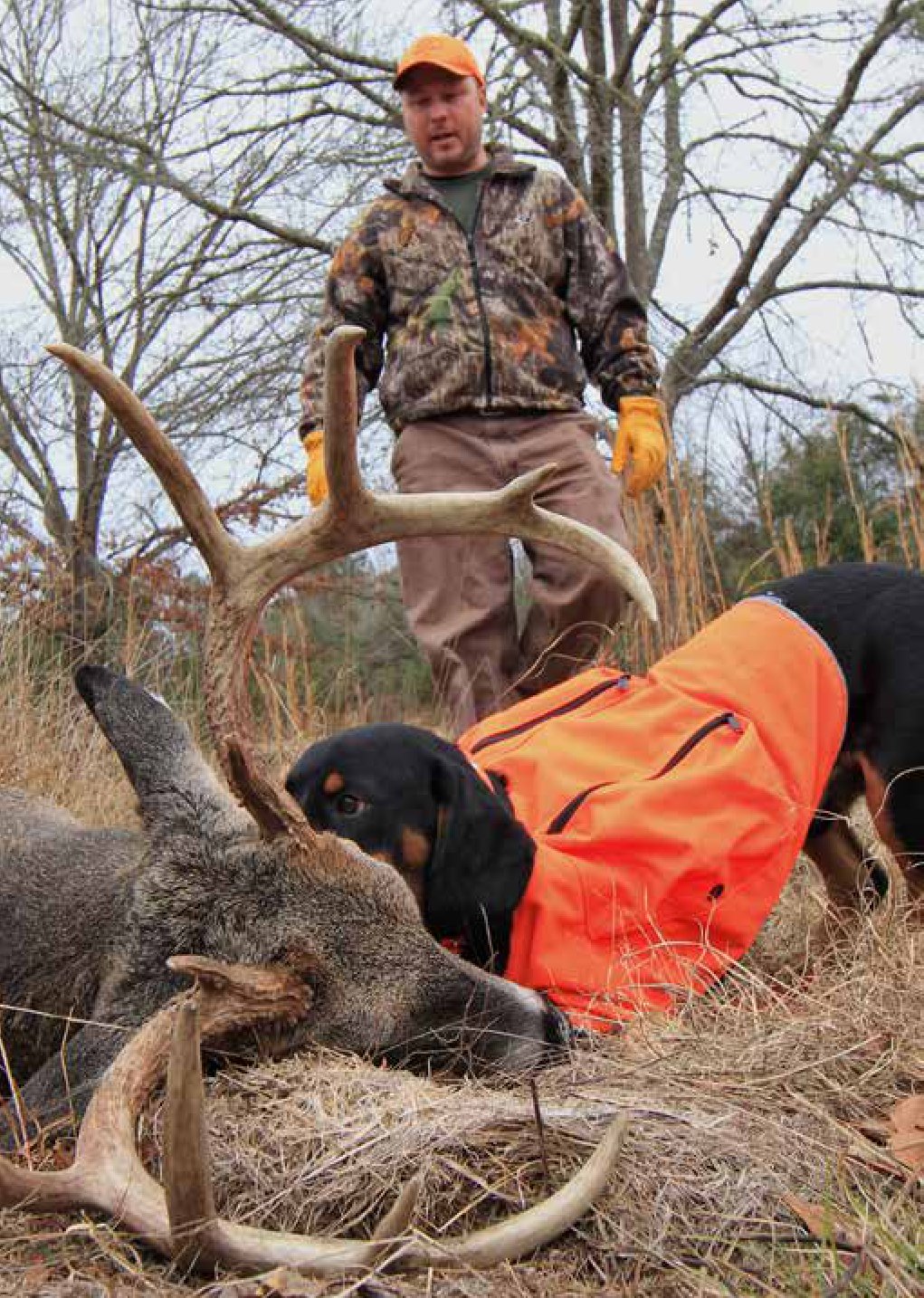
There is nothing more humbling or humiliating than making a marginal shot on an animal you have worked days, months or even years to get in your sights. You may have scouted your land and found the perfect place for a stand. You may have managed your land with good timber practices that produced the perfect food and cover that a mature buck called home. You may even have planted the perfect food plots that attracted a trophy buck to your land. In the end, all these efforts do not matter is you muff the shot.
In 2010 our management efforts produced a buck we named Little Joe. We had done my homework and put a hang-on stand in the perfect tree. We had watched him grow into the largest buck we had ever seen on our east-central Alabama farm.
On a crisp November morning everything was perfect to hunt that stand. I did everything right getting to it and in it. Little Joe did everything I expected as he approached from upwind to a distance of less than 30 yards. When he entered the shooting lane I had prepared and stopped broadside, I settled my 30-yard pin behind his shoulder just below mid-body. I did my mental preparations of focus, breath, squeeze the release trigger. Then the arrow flew 6 inches left of target.
What followed was two of the worst days of my life as a hunter. I tried everything I knew to allow the arrow to do its job. That 8-hour wait was torturous. Not finding the buck at the end of a five-hour search set the stage for a long, sleepless night.
The next day’s all-day effort only made the situation worse. A speck of blood here, a speck of blood there, but no Little Joe. Finally, the next day, my wife, Tes, found the coyotes had left of that beautiful 145″ Alabama buck.
You may have never experienced the gut-wrenching ordeal of making a bad shot but if you hunt long enough you will. I would not wish it on anyone, but everyone should know it can happen. At the end of my Little Joe nightmare I decided it would never happen to me again. There had to be a better way of following a blood trail.
Three Professionals
My search for a solution to wounding and losing a deer led to blood trailing dogs. When I shot Little Joe, I did not know anyone in my area who had a dog capable of finding wounded deer. I did, however, know Bobby Culbertson. Culbertson is the head guide at Tara Wildlife in Mississippi.
Tara is a first-class bow-only operation that harvests over three hundred deer each season. Blood dogs play a huge role in the hunter success that has made Tara a premiere bowhunting destination.
Bobby Culbertson—Vicksburg, Mississippi
“We use Labrador Retrievers, mostly male dogs,” said Culbertson. “Our dogs are the big Labs and very few females have the stamina and drive to cut it here. We try to have at least one six-to-eight-month-old pup to start each season. Our hunters have specific instructions to not trail a wounded deer. If a deer dies in sight of a hunter, he can go look at his deer but he is not to move it. If we have a young dog, we allow him to find that dead deer. It’s all about repetition!”
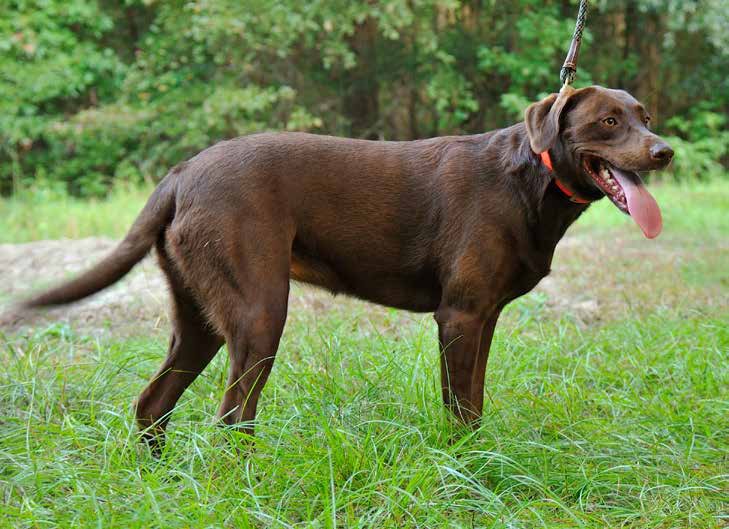
“These dogs are like family. They go with us everywhere we go. They work hard and by the end of the season they are pretty lean. Their chest and face are bald from the briars. These dogs often recover six, seven, eight deer a night! When a young dog is proficient at finding deer we know are dead we start letting him run with an old dog on a more difficult track. It doesn’t take long for the pup to catch on. Normally, after one season the pup has developed a legitimate blood trailer,” said Culbertson.
“These dogs are like pets most of the day. We attach a cowbell to their collars before turning them out on a track. The sight and sound of the bell flips a switch in these dogs. They are all business from that point on. We also use tracking collars in case we lose contact with the bell.”
“We put one tracking dog on the track and hold another dog on leash. This dog is the catch dog. He is usually a big male that has a lot of grit. If the tracking dog jumps or bays a wounded deer we turn the catch dog loose. We can usually tell early on if we have a mortally wounded deer,” said Culbertson.
“The dog just acts different. He has his nose on the ground and is all business. I believe mortally wounded deer give off a unique scent and the dog recognizes this scent.”
I asked Culbertson to explain to me just how valuable these dogs are to Tara’s success. He summed it up by saying, “At the end of November last season we had shot 76 bucks at Tara, 28 of those died in sight of the hunter. We put the A-string dogs on the 48 bucks that ran out of sight. We took 43 of those bucks to the skinning shed. These dogs can do more on a track in five minutes than we can with a light in an hour. I’d have to say these dogs are invaluable!”
Brian Sheppard—Pine Mountain Georgia
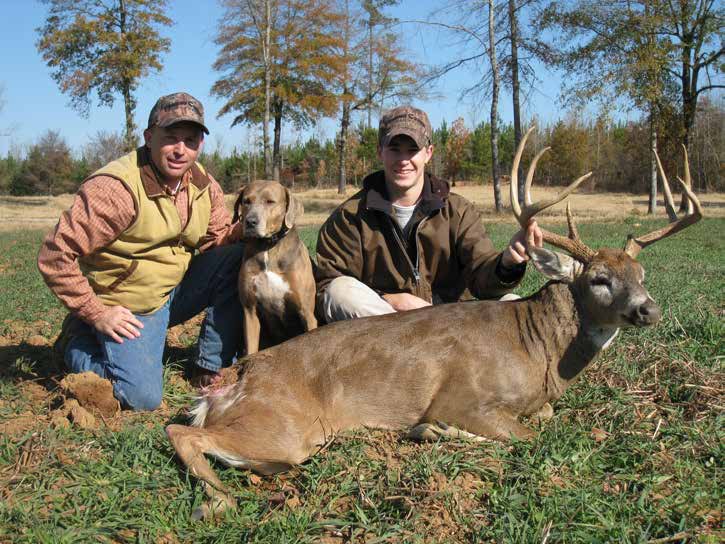
Brian Sheppard is a for-hire tracker who lives in Pine Mountain, GA. He covers Alabama and Georgia and uses Hindes breed dogs to trail wounded deer.
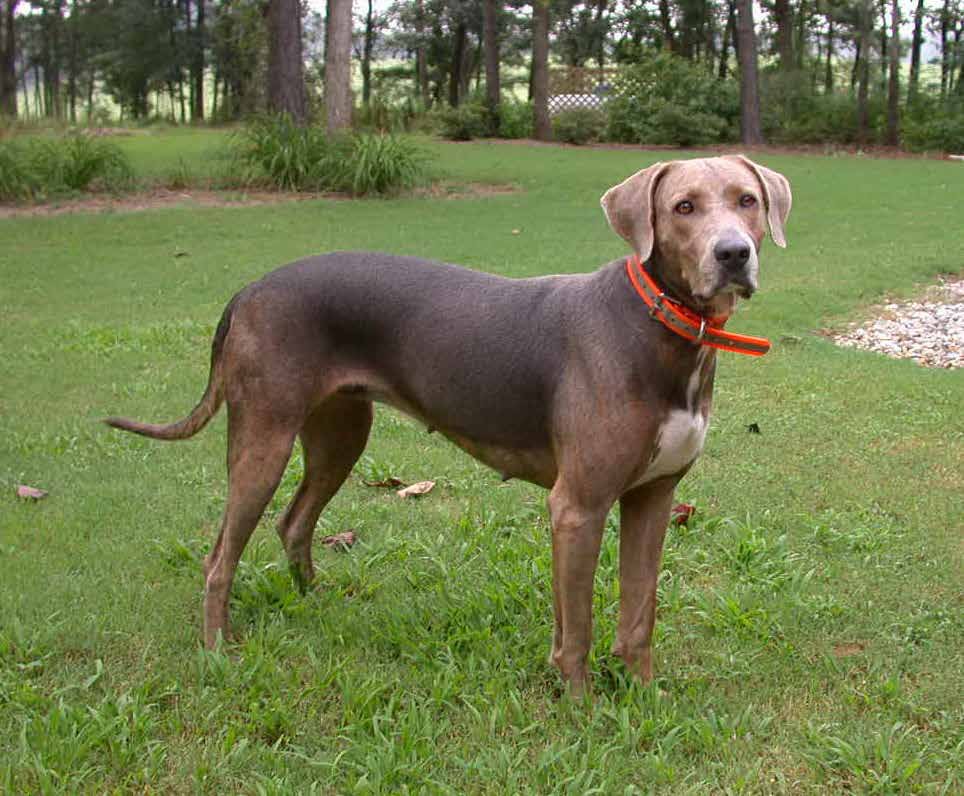
“My dogs go back to the line of dogs bred by the Hindes family in Texas,” said Sheppard. “These dogs are a mix of Blue Lace, Black Mouth Cur and Catahoula Leapord Cur. They have tremendous grit and are very good at finding wounded deer. They have found literally hundreds of deer that hunters could not find.”
“I start my dogs by first making them my friend. I keep them with me as much as possible and let them know when they do things that please me. When you do that, they instinctively learn what is expected of them. Short, easy blood trails created with a deer leg sprayed with deer blood is how I start them. I start a dog at six months old and make the trails progressively more complicated. These dogs are bred to trail blood so it only takes a short while and positive reinforcement for them to understand what their job is.”
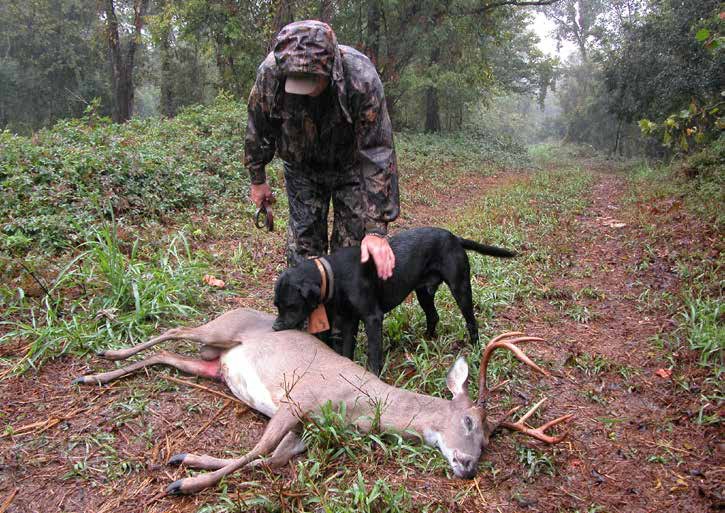
“When a hunter calls me to help find a wounded deer, I ask specific questions,” said Sheppard. “Was the shot with a gun or a bow? Where did you hit the deer? How long has it been since the shot? Have you tried tracking the deer and did you jump it? The hunter’s answers to these important questions determine how I approach recovering that animal. I like to wait three hours before turning my dog out on a gun shot deer and four or more hours on a bow shot deer. Shot placement plays a huge part as does an undisturbed trail.”
“As a hunter you owe it to any deer you shoot to make every effort to recover the wounded animal. Sadly, calling in a blood dog is often the last resort. It should be the first thing you do if you suspect your shot was marginal. A good dog on an untainted trail greatly increases your chance of recovering your deer. Whether the dog finds your deer or not, you know you have done everything possible to recover it.”
Harold Kawolski—Tuskegee, Alabama
In 2015, Harold Kawolski had a bad experience in the deer woods. He shot and did not recover the best buck of his life. After days of futile searching, Kowalski vowed that would not happen to him again. The following spring, he tackled the task of purchasing and training a dog that could help him avoid the nightmare of losing another wounded deer.
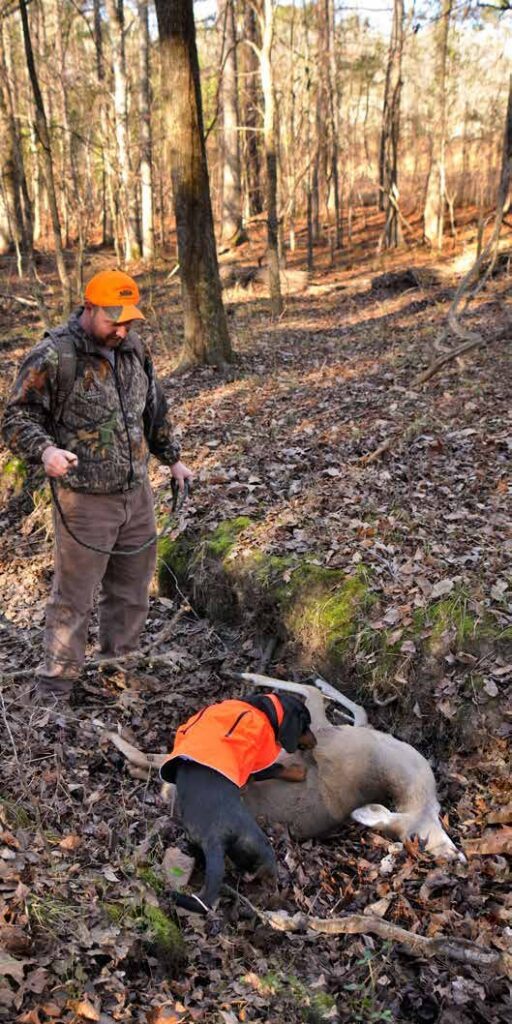
Kowalski traveled from Alabama to Illinois to choose a pup he hoped to train into a blood dog from a litter of Slovensky Kopov puppies. He had done his homework and knew these puppies were descendants of a long line of blood trailing dogs. When he headed home to Alabama, he had chosen a male he named Otis.
The first few months were spent bonding with his new student and teaching basic commands such as sit, stay and come. When Otis was 6 months old Kowalski began the process of introducing Otis to blood trails. Since that time Kowalski has added a second dog to his kennel and started a business that helps other hunters recover wounded deer.
Here is Kowalski’s advice should you decide you want train a blood dog of your own.
“There are five essential traits every good blood trailing dog must have. Some you can teach, but others must come in the dog’s DNA,” says Kowalski.
- Drive—Probably the most important trait for a tracking dog. Drive can’t be taught. He either has an intense desire to hunt or he doesn’t. To insure a dog has drive purchase one from a litter of proven hunting dogs that have been bred for the purpose of hunting. Drive is what makes a dog want to please you and succeed.
- Grit—A good tracking dog needs to have grit. Grit is the ability to get down and dirty when the situation calls for it. Whether the trail leads into the nastiest swamp or the ugliest briar thicket, a dog with grit will not quit until the handler calls him off.
- Social Skills—Tracking dogs need to be friendly and well socialized. They will be around new people on the track and at hunting camp. Obedience training is key. Commands such as come, stay, leave it, hunt and sit should be taught using positive reinforcement such as treats and praise. Later, the reward for a job well done is chewing on a recovered deer.
- Intelligence—Tracking a wounded deer is like a puzzle the dog is required to solve. A dog needs to have the ability to learn, remember what he has learned and apply it to the situation. When a dog is needed, something has gone wrong. The dog needs to have the ability to focus on the problem and figure it out without the handler’s help.
- Nose—Almost any dog can trail a lung shot deer spraying blood everywhere 30 minutes after the shot. Only dogs with the exceptional ability to smell will be able to track a deer shot through the guts 24 hours earlier and leaving no blood sign.

Breeds such as Labrador Retriever, Cur, Slovensky Kopov, Bloodhound, Lacie, Drahthaar and German Wire-Haired Dachsund are bred to have these traits. With proper training these dogs can be made into excellent blood trailing deer dogs.
These pros differ on breed of dog but agree on methods of training and characteristics needed in a good blood dog. Not all dogs are created equal regardless of breed. Some dogs are just better than others. If the dog you have chosen as your blood trailing deer dog does not have what it takes you will know within a year.
Mistakes Hunters Make
As a hunter, there are several things you can do to improve the odds of a blood dog finding your wounded deer. All three pros agree a dog can do just so much. What the hunter does or does not do can determine success or failure. Here are the five top things a hunter should or should not do to make a blood dog’s job easier.

- Do not disturb the evidence. Often trails are contaminated by hunters who are anxious to find their deer. Walking the blood trail scatters the scent. Once the scent is on your boots a dog can smell it wherever you go making it difficult for the dog to determine the right trail.
- Always mark where the deer was standing when the shot was taken. Also, take note of the direction the deer ran and the last place you saw it. This gives the dog and the handler an advantage in solving the riddle.
- Know your land and who owns the land around your property. Be ready to call for permission if the trail leaves your property and goes onto a neighbor.
- Be prepared to track at night. A good light will help you move through the woods at dark and aid in following the trail. Be prepared to mark the trail and your progress. Marking the trail give you a place to return to if you lose the trail.
- Do not push the deer. If you think you have made a marginal shot, wait at least 30 minutes and mark where the deer was standing. Call your blood dog handler and listen to his advice. It may be hours or even the next day before he can get there but do not worry. A good blood dog can follow a track many hours after the shot. Pushing the deer will often result in a lost deer.
A blood dog will not always find your wounded deer. They do, however, increase your odds of recovering a wounded deer exponentially. All three of the pros interviewed agree that if the dog does not find your wounded deer that deer is probably not mortally wounded. That may be a bitter pill to swallow but believe me, it is far less agonizing than wondering the fate of an animal.
Conclusion
There is no doubt that a trained blood dog greatly increases the chances of recovering a wounded deer. All dogs can smell infinitely better than humans. When trained to follow the scent of blood, regardless of breed, these dogs are a great tool for solving the mystery of blood trailing wounded deer.
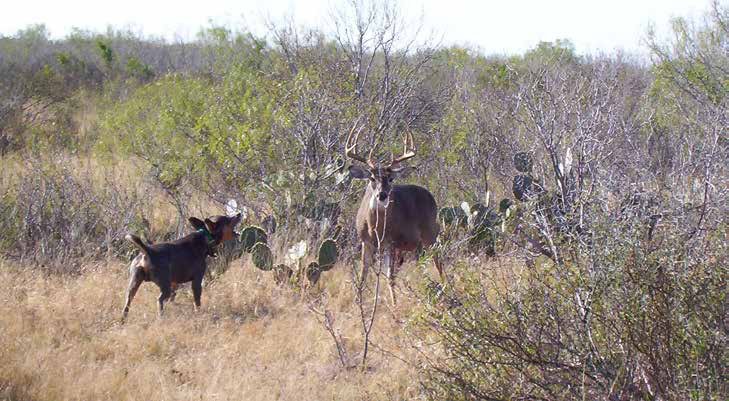
Regulations on the use of blood dogs vary from state-to-state. Some states require the dog be maintained on a leash. Other states allow blood dogs to roam free. Is it legal to use a blood dog at night in your state? What is a legal way to dispatch a wounded deer if the blood dog bays it?
Always consult your state and local regulations before employing a blood dog to recover a wounded deer. In Alabama there is no leash law and you can use the dog at night. You cannot use a firearm to dispatch a wounded deer unless gun season is open. A good handler will know what is legal and what is not.
In the age of the internet, a good blood dog could be as near as a short Google search. Simply type in blood trailing dog, your state and county for results. I advise locating a blood dog before you are in a situation where you need one. Call that handler and discuss his rates and availability.
If you are comfortable put his number in your phone.
If you are looking for a high-quality archery hunt in the South you cannot go wrong at Tara Wildlife. They can be reached at 601-279-6506. If you live in Alabama or Georgia and need the services of a professional blood dog handler Brian Shepard can be reached at 706-718-1690. Harold Kowalski has dependable blood dogs ready for service in the Macon County, Alabama area. He can be reached at 334-421-1811.
These are the guys I met and interviewed for this article. I am certain with a little effort you too can locate a blood dog in your area that could salvage your hunt of a lifetime!