
Most of us feel confident that we can separate fact from fiction when it comes to the natural world, especially if we grew up in the woods hunting, fishing, and watching wildlife. However, myths get their start somehow, and the truth may not be as clear-cut as we think. If you touch a songbird’s eggs or chicks, will the mother abandon them? Are there really monster hogs roaming the woods? Can gray foxes climb trees like a cat? Can you age a rattlesnake by the number of rattles on its tail? Do black widow spiders always kill and eat their mates, hence the name? Is there such a thing as an old, barren doe? Do newborn fawns have a scent? See which of these 7 questions you can answer correctly, but be warned…not all have clear-cut yes or no answers!
A bird’s sense of smell
As a child, many of us were told not to touch the eggs or young of birds or the mother would smell the human scent and abandon the brood. Just how well can birds smell, and can they detect human scent? Researchers have noted that raptors that attack and eat skunks seem not to notice the stench. Conversely, turkey vultures use their sense of smell to hone in on carrion. Some pelagic seabirds use odors as a weapon against predators. They can emit foul-smelling secretions from their bill tubules to deter predators who try to attack them while nesting. Two duck species — eiders and shovelers — even defecate on their eggs if spooked in hopes of making their eggs less palatable to would-be predators. Petrels seem to be able to locate their young in nest burrows by smell while the crested auklet uses a citrus smelling perfume to attract mates.
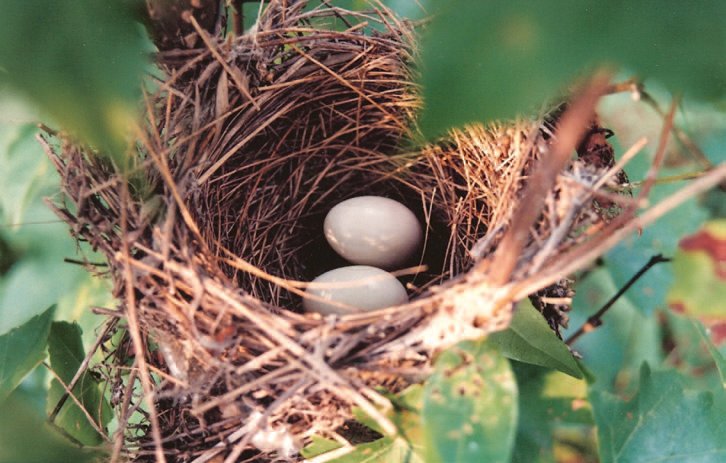
Despite these avian exceptions, most of the songbirds that nest in our yards (robins, bluebirds, etc.) cannot smell any better than humans. The myth probably got started because the threat of abandonment would hopefully dissuade young children from disturbing a nest, lest they be the cause of the poor babies’ deaths. It is also illegal to handle songbird eggs and nests so what better way to keep people away? The fact is, some birds will abandon their eggs (but rarely their young) if they are disturbed by a predator, but they are using visual cues to make that decision. Some birds, upon arriving back at the nest, can tell if the eggs have been moved. Others silently observe the predator/human at the nest and decide not to continue the effort if the resulting brood would be vulnerable to more such visits. So if a nest tips over in your yard and the babies fall out, placing them back in the nest and securing it in the tree is still the right thing to do.
Record size “wild boar”
Currently, there are over 2 million feral hogs (Sus scrofa) living across 19 states. Every so often, the news media reports that a “giant pig” was taken somewhere in the Deep South that breaks all the records. For example, in Alapaha, Georgia, a hog was killed that weighed 800 pounds and was 7 or 8 feet long. His tusks were 28 inches and 19 inches long. “Hogzilla,” as he was called, turned out to be a hybrid between a domestic Hampshire pig and a wild boar. Then there was “Monster pig,” from southern Georgia that was reported to weigh 1,051 pounds and be over 10 feet long. Because the pig was processed for meat, its size could not be verified.
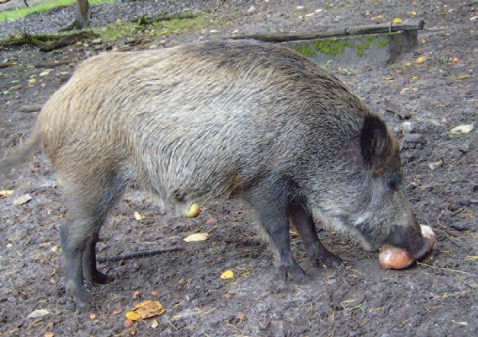
Obviously, some tales get exaggerated and photos can be misleading or even manipulated. However, some large specimens are taken but they aren’t pure Eurasian wild boar. There are three types of wild swine living in the United States: Eurasian wild boar (and sows), feral hogs, and hybrids of the two. The Eurasian wild boar or “Russian boar” as they are sometimes called, were imported and released (sometimes illegally) in some areas as a game animal. These populations increased and some were recaptured and relocated to new areas. At the same time, feral hogs—those purposely released to range openly or those that escaped captivity—live in many of the same parts of the US. Where the wild boar and feral hog populations meet, interbreeding often occurs, creating hybrids. There are all kinds of combinations out there, some with more wild boar ancestry and some with more feral hog ancestry.
The confusion gets worse when various sporting magazines make erroneous claims that the three wild swine types can be distinguished from one another by certain morphological characteristics such as coat coloration as well as behavioral characteristics such as level of aggression. One of the common misconceptions is that wild boar are always solid black. However, pure Eurasian wild boar are often light brown to black with light tips on the bristles. In addition, the undersides are lighter in color than the rest of the body. Also, the piglets of all three types can have the striped pattern so often held as the hallmark of true wild boar lineage. Feral hogs have a wide variety of coat colors and patterns. The most common breeds of domestic pigs to which feral hogs can trace their ancestry include the white Landrace, the red Duroc, and the spotted or belted Pietrain and Hampshire. Hybrids can have any and all combinations of coat colorations, patterns, and bristle lengths. As for temperament, even domestic male and female swine can be extremely dangerous. Some sportsmen think that if the hog is huge, it must be a Russian boar. Actually, some of the domestic breeds such as the Hampshire can get much larger than any Eurasian wild boar so body size cannot be used to indicate genealogy. The majority of wild swine range in size from 77 to 440 pounds with females being smaller than males and larger specimens found further north than those living in lower latitudes. Habitat quality can also determine hog size.
In truth, research has shown that it is extremely difficult to differentiate among the three types, even when comparing chromosomes. The ancestral number is 38 but all three swine types can vary between 36 and 38. Perhaps mitochondrial DNA studies can sort out the differences. However, at present, there are some slight morphological differences among the three species. The two most reliable measurements are the length of the hind foot and snout length which are longer in wild boars than in feral hogs or hybrids. In summary, if you kill a 300 to 450 pound hog in the South, consider it a good day’s hunt and don’t worry about trying to label it; just call it a wild pig.
The gray fox’s tree climbing abilities
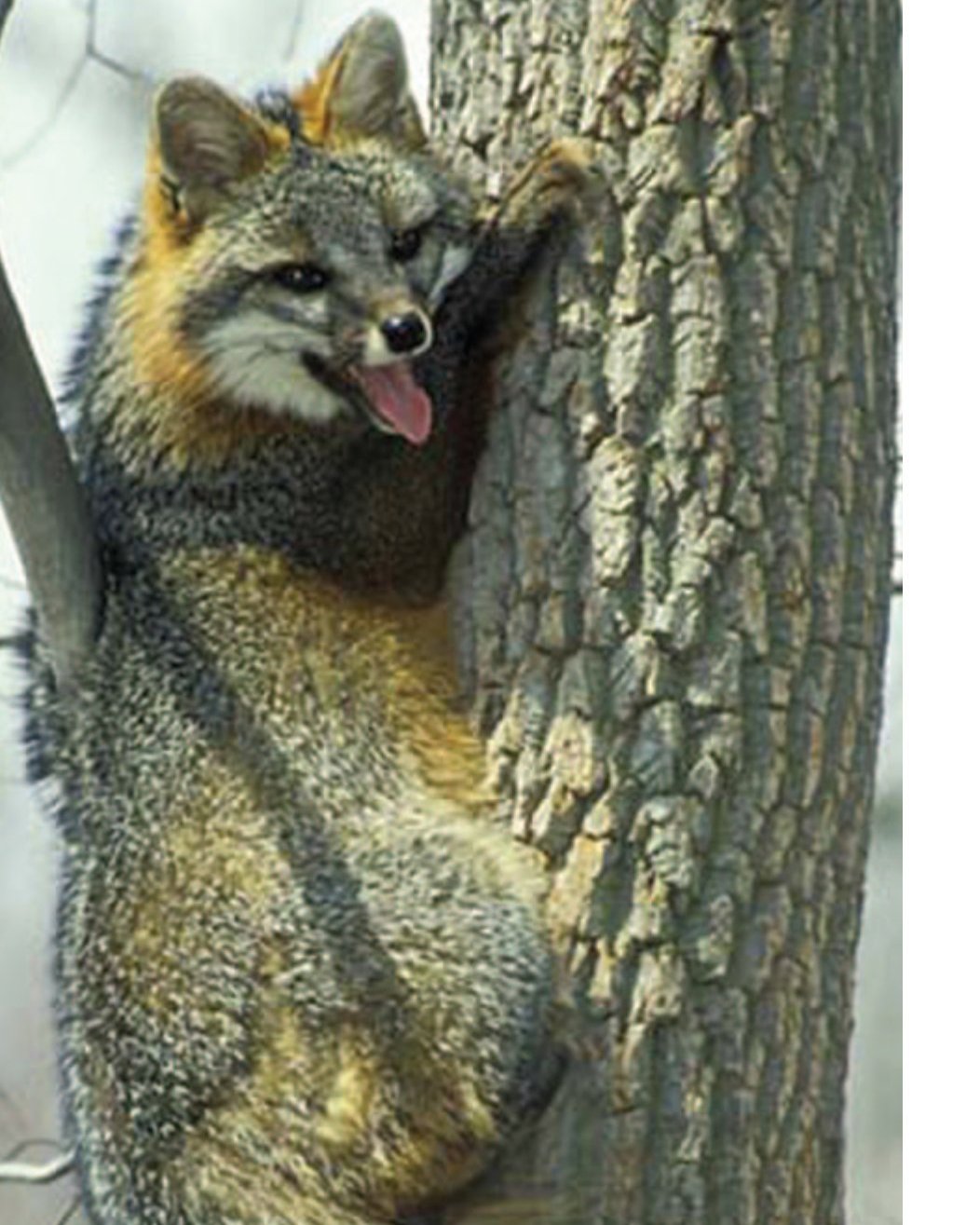
Can gray foxes, a canid, really climb trees? Absolutely, and they are good at it. In fact, they are the only North American canid that is able to climb trees. Researchers have documented gray foxes using their recurved front claws to grasp vertical, branchless tree trunks to ascend while using their hind feet to push themselves upward. Once among the branches, they can jump from one to another until reaching a site to forage, rest, or simply escape from predators. Some claim that gray foxes will even use old hawk and owl nests as a resting platform. This may be true since documentation exists of gray foxes resting comfortably 60 feet off the ground and even raising litters in hollow trees 25 feet above the ground. To descend a tree, the fox simply backs down or runs headfirst if the tree trunk slopes.
Many early settlers that were used to the European red fox putting on a good chase for their hounds were not interested in pursuing our native gray foxes that simply ran up a tree or went to ground when disturbed. That is why many red foxes were imported to the Southeastern United States back in the 1750’s. Red foxes in western regions of the US and farther north are thought to be native to North America.
Aging a rattlesnake by its tail
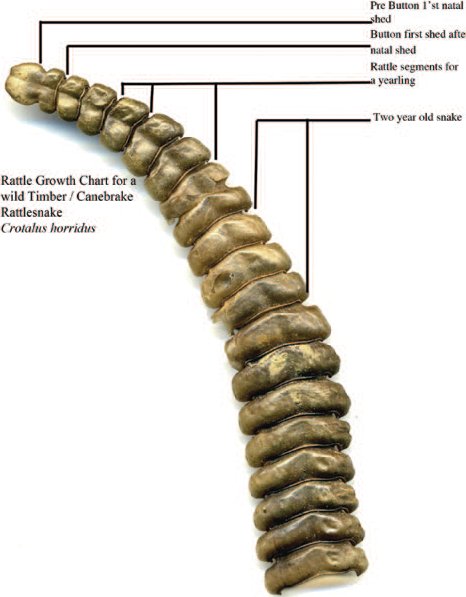
Many people claim that if you count the buttons on a rattlesnake’s rattle, you can determine the age of the snake. This is both true and false. Simply counting each segment and saying that number equals the age of the snake is false. There are many factors to take into consideration such as counting the pre-button they are born with, the health of the snake, the climate and latitude where the snake lives, and whether any buttons have broken off over time. If you know how often a snake sheds, then yes, you could possibly estimate the age of a rattlesnake. Here’s how:
A timber/canebrake rattlesnake (Crotalus horridus) is born with a pre-button. The first time the snake sheds, it forms another full button. The third shed produces yet another button and the preliminary sounds of a “rattle” (more like a buzz) when shaken. Each subsequent shed adds yet another button. However, snakes can shed many times a year so one segment does not equal one year. Young timber rattlesnakes average 2 sheds per year in mountainous areas while older and larger individuals in the same area often shed only once. Young canebrake rattlesnakes in the Piedmont and Coastal Plain shed much more frequently—3 or 4 times a summer—with older, larger individuals shedding only twice. Snakes in captivity that are held in less than adequate conditions (too wet or too dry) may shed many more times in a year than healthy, wild snakes. Since most rattles break before they reach their full potential, a 20 segment rattle, for example, would be a rare sight. Counting segments (buttons) is not an easy means of aging a snake. Case in point: In some parts of the Southeast, a 10 full button + pre-button rattle could appear on a 2 year old snake. (See illustration.) The longest lived rattlesnake on record was a Maryland specimen who lived to be 42 years old in captivity. I doubt that what was left of his rattle after that many years would have been enough to adequately age him!
A black widow’s appetite for her mate
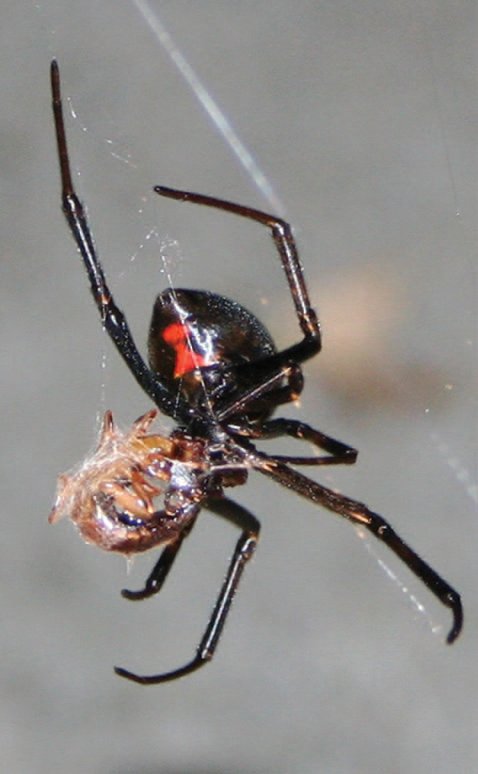
The name “black widow” (Latrodectus spp.) is a misnomer. Although it is possible that the female of the species may eat the male after mating, it is not the rule. It is true that since the females of this predatory species are much larger than the males, courtship rituals help insure that the male lives to mate again with other females or even the same female. There are some documented occurrences of males and females even sharing the same web or living space. A well fed female is also less of a risk to the male when he comes courting.
Doe fertility and fawn scent
Have you ever heard a hunter say that they shot an obviously old doe that needed to be culled because she was probably barren? It is fine to shoot older does but don’t be fooled into thinking that doe isn’t still reproductively active. There is no such thing as an “old, barren doe.” Captive does have demonstrated the ability to have fawns into their late teens. Of course, health and age do influence the number of young produced during a season. For example, female fawns or yearlings breeding for the first time typically only have one fawn. Older adult does (that are healthy) tend to produce twins yearly. Triplets are rare.
When a fawn is born, the mother leaves it hidden for most of the day, only returning 3 or 4 times to nurse it during that time period. The doe’s behavior has a purpose. The mother’s scent and her constant presence would lure predators to where the helpless fawn is hiding. This is how the myth got started that “newborn fawns don’t have an odor.” If you think about it, the idea is ridiculous. Every animal has a scent, regardless of its age. Also, the mother doesn’t know where the baby is hiding (it doesn’t always stay exactly where she left it) and so she calls for it in the general area. When the baby appears, she recognizes her offspring by its unique odor. It is true, however, that the mother’s odor is stronger than the newborn’s and so she distances herself as much as possible so that the baby has a better chance of staying undetected by predators. By the end of the first month, the fawn is following its mother some but is definitely her constant companion by the end of the second month. Rumination begins at 2 weeks of age and the fawn is able to be weaned anywhere from 2 to 4 months of age (3 to 4 months is typical) although it still continues to follow its mother after this time.

Another myth is that if a human touches a fawn, the mother will abandon it. This is false. Many researchers who have captured, tagged, and released newborn fawns can testify to the fact that the mothers will return to their offspring. If the fawn is injured or sick, this builds a better case for abandonment.
Fiction is entertaining but facts are often even more interesting!
Resources
Butfiloski, J. 2011. Furbearer Biologist, South Carolina Dept. of Natural Resources. Personal communication via email.
Challinor, D. 2007. “Can Birds Smell?” Smithsonian National Zoological Park: Migratory Bird Center. http://nationalzoo.si.edu/scbi/migratorybirds/science_article/default.cfm?id=36
Hall, M. 2009. Wildlife Biologist, South Carolina Dept. of Natural Resources. Personal communication via email.
Mayer, J. J. and I. L. Brisbin, Jr. Distinguishing Feral Hogs from Introduced Wild Boar and Their Hybrids: A Review of the Past and Present Efforts. 2010. Texas National Wildlife. http://agrilife.org/texnatwildlife/feral-hogs/distinguishing-feral-hogs-from-introduced-wild-boar/
Miller, K. 2009. Senses and Communication. Quality Deer Management Association presentation for Deer Steward I Course. Columbia, SC.
Morse, J. 2011. Entomologist, Clemson University. Personal communication via email.
Murphy, B. 2009. Whitetail Biology and Behavior. Quality Deer Management Association presentation for Deer Steward I Course. Columbia, SC.
National Trapper’s Association. 2011. http://www.nationaltrappers.com/grayfox.html.
Orr, Z. R. 2011. Herpetologist. Personal communication via email.
Salwey, M. K. 2009. “Feral Pigs.” Wisconsin Department of Natural Resources website. http://botw.dnr.state.wi.us/org/land/wildlife/PUBL/wlnotebook/Pig.htm
Snopes.com. 2011. “Hogzilla”.