
Many of us can remember when finding a good place to hunt simply required asking permission from a landowner. Permission was usually granted with a few reasonable rules of land use and often a location of the best opportunity for game. Unfortunately, this once common practice is rare or even obsolete. Many factors have contributed to this situation. Unlike Montana that has 30 million acres of public land; many states have very little public land available for hunting. Furthermore, the limited amount of public land is usually heavily utilized.
As the population has grown, the quantity and quality of private hunting land has declined. In addition, rural land values continue to rise being driven by hunting or recreational trends rather than agricultural production potential.
SPORTING COMMUNITY CONCEPT
One answer to the hunting land dilemma is a shared ownership concept I call a Sporting Community. Several people own lots in a rural subdivision that is a part of a larger hunting and fishing property. The subdivision is usually located in some aesthetically favorable area; perhaps around a lake or on a bluff overlooking the hunting ground. Each owner purchases a lot in fee and has shared ownership in all remaining land. Although this is not a completely new concept (I developed Dunaway, a 3500 acre project in TN nearly 20 years ago), it is becoming more prevalent. Sporting Communities have been developed in several states in recent years. White Oak Valley Plantation (WOVP), a 2,850 acre project near Birmingham, Alabama exemplifies many of the things that need to be included when developing a highly productive Sporting Community.
LOCATION
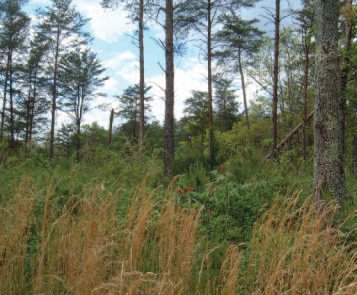
A Sporting Community has to be developed in an area that works for people as well as wildlife. Just any old piece of land won’t do the trick. WOVP developers took into consideration such things as climate, topography, water, habitat, aesthetics and convenience. Located about 30 miles south of Birmingham, it lies at the south end of the Appalachian Mountains. The moderate climate and beautiful lay of the land make it both aesthetically pleasing as well as productive wildlife habitat.
GOALS AND PROJECTIONS
WOVP, like other Sporting Communities, was developed to offer a limited number of people an opportunity to enjoy hunting and fishing at a level not obtainable on public land. WOVP was specifically designed for 29 owners. In addition to providing a beautiful building site for each owner, a major goal of the developers is to offer the best deer hunting in the South. Turkey and quail hunting as well as trophy bass fishing and horseback riding are also part of the master plan.
HIGH FENCE OPTION
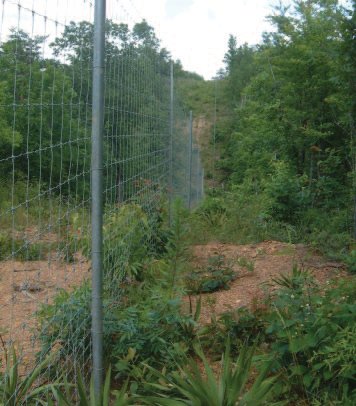
A high fence around 2250 acres not only provides security for the property but offers the opportunity to use enhanced deer genetics and management techniques.
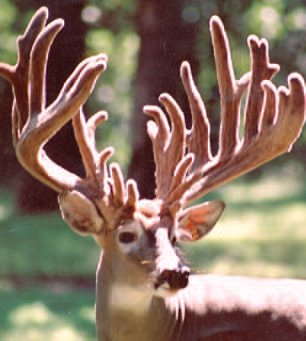
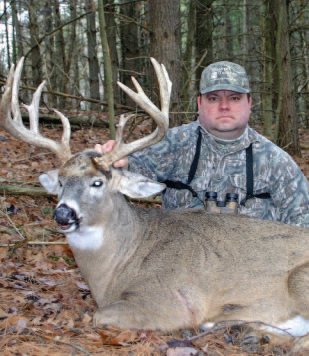
The deer in this region of Alabama include white tail genetics introduced from several northern states and Texas in the 1950’s. No deer have been brought into the project from out of state. However, new genetic lines from the best deer breeding programs in the USA have been introduced into WOVP using artificial insemination. Using the Maxbo (362″ at 6 years old) genetic line from Texas, it is expected that WOVP deer will score 160 at 4.5 years and 170 to 200 at 5.5 years.
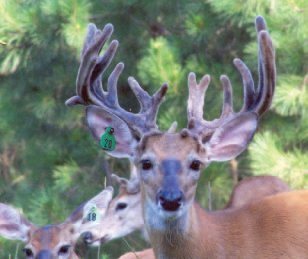
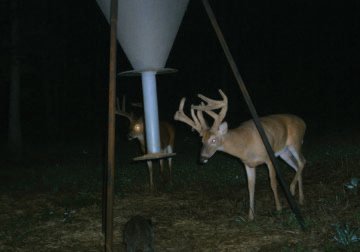
The high fenced property also allows controlled nutritional management for the deer herd. High quality forages such as white clover and alfalfa have been planted throughout the habitat and additional protein is supplied with strategically located feeders. Mast producing trees and shrubs have also been planted throughout the property.
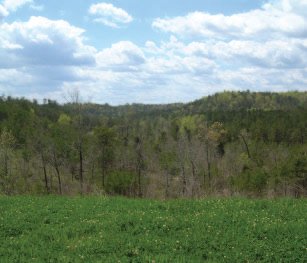
All hunting within the high fence area meets Safari Club International’s fair chase requirements. Results to date have been up to owners’ expectations.
Habitat and terrain are perfect for turkey on WOVP. Several flocks roam the grounds utilizing the extensive mast as well as planted chufa.
Quail habitat is being developed on ridge tops and in convoluted open areas. Longleaf pine is being planted to enhance the quail habitat and add value to the land.
A high fence virtually stops trespassers and poachers. This gated community security amenity adds value to a project like WOVP.
WATER
Water is a critical component of a Sporting Community. Ample water will enhance the wildlife population on any property. It can also be a design component in a master plan. In addition to well dispersed streams on WOVP the topography of the property lead to the development of two lakes and one pond.

The design signature of WOVP is the newly constructed 60 acre Blue Buck Lake. It was a time consuming component of the project because it required Army Corps of Engineers approval. Extensive rock structure, reefs, channels, etc were added to provide maximum habitat for fish.

The lake is stocked with 50,000 Georgia Giant bream, 50,000 threadfin shad, 50,000 fathead minnows, 50,000 mosquito minnows, 2,000 pounds of crawfish, 1,000 pounds of frogs, 5,000 hybrid crappie and 2,500 F1 Tiger Bass.
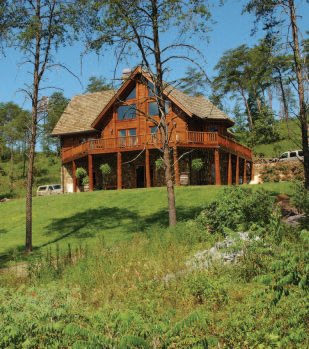
Blue Buck Lake will yield trophy bass in 4 to 5 years but more importantly, it is where the subdivision containing 29 five acre lots is located. This design concept provides owners with a great lake front location for their cabin or home yet leaves the majority of the land for wildlife.
SPORTING COMMUNITY MANAGEMENT
The right location and limited membership are the keys to successful management of a Sporting Community. If the location is not suitable for top notch wildlife habitat it will take a lot of extra physical input to bring it up to a productive level. If there are too few members, the per member cost to maintain the project may cause friction between members. On the other hand, if there are too many members the wildlife resource may not support the activity level envisioned.
The developers usually maintain management control until the project sells out. Thereafter, a landowners association takes over management decisions regarding how the land is to be used and maintained. In the case of WOVP, the developers have put together a team of wildlife, forestry and land management experts to guide the project through its initial phases.
Covenants and guidelines are normally put in place to maintain development and land use continuity. For example, on WOVP, only log or stick built homes will be allowed using earth tone colors for trim. In other words, a retreat cabin on Blue Buck Lake can not be a white columned mansion.
Land use guidelines protect the property from overuse and abuse. For example, allowing four wheelers to go off road or off trail will lead to degradation of habitat and wildlife populations as well as erosion problems. Uncontrolled activity of this type also contributes to noise pollution; one of the things most people are trying to get away from. However, allowing only electric or oar powered boats on the lakes enhances the sense of tranquility while fishing or hiking.
Hunting and fishing guidelines will result in optimum wildlife populations that can be enjoyed by all owners for many years. On WOVP guidelines are established based on detailed analysis by the professional management team. Deer census data obtained by digital cameras throughout the property is used to monitor herd size and health. WOVP allows one 5.5 year old trophy buck per owner plus several does and management bucks if needed. The guidelines are changed as data dictates.
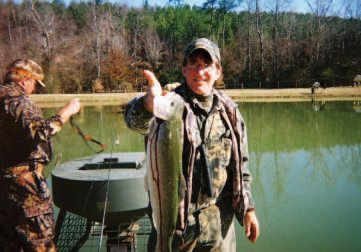
Fishing guidelines are simple; eat what you catch and stick to state limit regulations. One exception is the WOVP lodge pond. This 2 acre pond is stocked each fall with 5 pound rainbow trout. These fish offer great sport through the winter and are fished out by spring because they can not tolerate the warm summer water temperatures.
With the landowners association monitoring the guidelines, they ensure the common interests of the group are met. If an owner is out of line such as harvesting too much game or wanton disregard for aesthetics, the association would have covenant protocols that would address the situation. Usually a discussion with an owner solves the problem but fines may be necessary.
The main advantages of being an owner in a Sporting Community are all owners share equally in the purchase price of a large land area and in operating costs. For one person to own and manage the same amount of land is often prohibitive because of cost, skill and time management issues.
PROJECT MANAGEMENT; START TO FINISH
Developing a Sporting Community like WOVP is more challenging than developing a city subdivision. Everybody has to follow regulations governing subdivision development. Often, subdividing in a town or city entails clearing off the vegetation, surveying in streets and utilities and registering a plat followed by curb and street construction.
Surveying, road and utility development, etc in a Sporting Community development have to be considered in relation to the habitat potential and aesthetics of the land. For example, on WOVP, roads follow contours to minimize erosion and are lined with sawtooth oak and clover to improve wildlife food production.

In rural areas where most Sporting Communities are developed, septic systems and individual wells provide two critical utilities. On WOVP, each lot is evaluated by a professional soil scientist who stipulates the specifications for the septic system.
Power may be above ground or buried depending on terrain. The main power line on WOVP, which is several miles long, is overhead but the feeder lines to residences are underground. This improves the looks of the community while the overhead lines provide perch points for doves and other birds.
Ponds and lakes are an asset to any property. They increase both the monetary as well as habitat value of the land. Topographic maps of a property will give a good indication of where a pond or lake could be located. However, if the lake has much size to it the Army Corps of Engineers will have to evaluate the site, an archeological review will be required and dam construction engineered and approved. This process took over a year before construction of Blue Buck Lake could be started. The construction process is very detailed and time consuming. Fortunately, WOVP had ample clay near the lake site that could be used for coring the two dams needed for Blue Buck Lake.
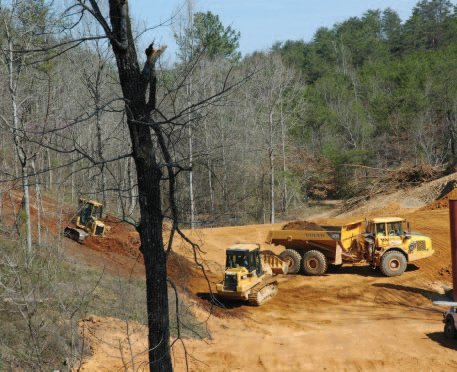
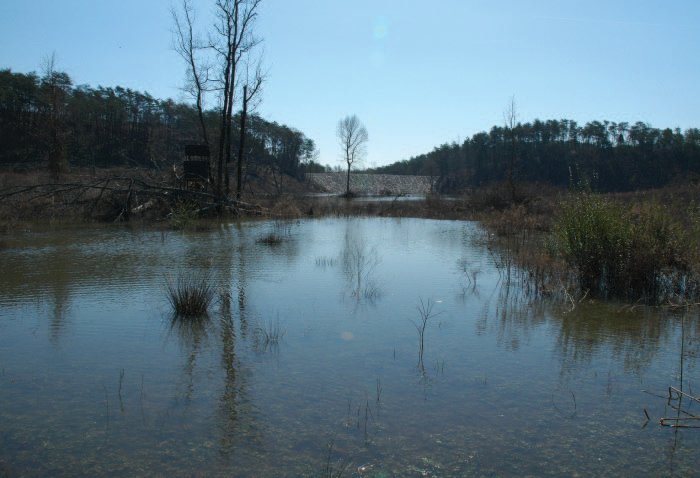
Lake management starts before water accumulates. Lime was spread at 5 tons per acre and structure developed before the dams were built. This will ensure good fish habitat from the start. Fish were stocked when the lake was approximately 30 percent of full pool.
If habitat is present and managed properly from the time the Sporting Community project is conceived, it will be easy to get potential owners interested in the project. If habitat has to be developed from scratch it will be much more difficult to make a sale.
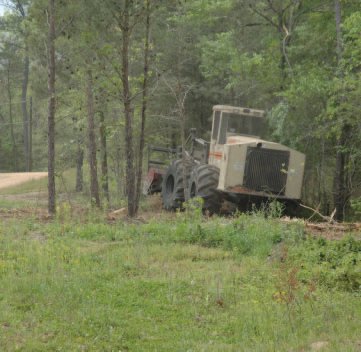
Although WOVP had excellent habitat to start with, the management plan calls for continued improvement. Mulchers were used to thin unwanted vegetation. This opened up areas for more productive deer, turkey and quail habitat. Plus, it improved the looks of the land.
Inevitably it takes longer and costs more to develop a Sporting Community than one anticipates. As with all projects, delays can be due to weather, materials, regulations, etc. If tasks are completed in the proper order, it is possible to bring prospective owners to the project and get them oriented. Prospects with a bit of vision will have chosen the most desirable lots, moved in and be hunting and fishing before the project is complete.