
Prune apple trees.
Pruning is a management strategy that will improve the health of apple trees as well as enhance fruit production. Moderate pruning is usually best. Heavy pruning dwarfs trees and may delay fruit bearing, and is especially undesirable for young trees. Proper pruning shapes the tree’s structure for life. Prune young trees to establish a strong scaffold system with wide-angled, well-spaced branches that will not split from high winds or heavy crops. A well-trained young tree bears heavy crops early and continues to bear efficiently. The dormant season is the best time to prune fruit trees, although dead or diseased branches may be removed any time. Prune bearing apple trees regularly, preferably every year; it is a mistake to neglect trees for years and then prune them severely. Old trees, however, can sometimes be rejuvenated with heavier pruning than younger trees require.
Spring is a good time to check soil pH and lime food plots if needed.
To check the soil pH, simply collect soil samples and send them to a soil laboratory (see previous Wildlife Trends articles on how to properly collect soil samples). Your local farmers cooperative will often have soil collection bags and will also know where you can send the soil to be tested. Although there are exceptions, most crops grow best in a relatively neutral soil pH of 6.5 – 7.0. Thus, lime is often needed to enhance the soil (this is particularly true in sandy soils). Because it can take several months for lime to effectively change the soil pH, checking the soil in the spring will give you ample time to enhance the soil before the fall planting period. Remember, ensuring proper soil pH is often more important than what you plant or how much you fertilize. In fact, proper soil pH is essential for fertilizer to be available to the plants. Although lime can be spread any time of year, applying it at least 6 months before planting will allow time for it to enhance the soil.
Make preparations for spring turkey season.
One of the best ways to ensure you have gobblers in the spring is to manage your property throughout the year to promote quality nesting cover. Where do you think gobblers will spend much of their spring? – where the hens are. Where are the hens? – where the best nesting habitat exists. I have worked with landowners that had gobblers on their property all year except during the spring. After closer inspection, their property didn’t have good nesting habitat and the hens had moved to adjacent properties carrying the gobblers with them. Quality nesting habitat is created by maintaining a patch work of early successional habitat throughout your property. Burning, herbicide applications, strip disking, timber harvest, and roadside management strategies are all tools that can help you create quality nesting habitat for turkeys. Besides the key element of creating nesting habitat, what are other things you can do to enhance turkey hunting on your property this spring?…something you can do now.
Creating strutting areas in strategic areas around your property will help put turkeys where you want them to be. A bushhog/mower is the tool of choice for this task. Creating strutting areas simply means mowing areas that will be attractive to turkeys for breeding courtships. I often create these areas between roosting and nesting areas and preferably near a food source such as an old field, chufa patch, or food plot. Areas that often lend themselves well to creating strutting areas are powerlines, old fields, and roadsides. Lastly, mowing hunter access trails will help you slip into areas to hunt without making a bunch of noise. If these trails go through thick habitat, don’t be surprised if turkeys use the same trails.
Initiate Late Winter/early Spring Strip Disking
Strip disk areas to enhance quail and turkey habitat. Disking can be done along roadsides, in or around old fields, and within thinned pine plantations or mature longleaf stands. Disking strips 10-30 feet wide in late winter and early spring will stimulate the growth of desirable native quail food plants such as partridge pea and beggarweed. The new succulent vegetation that grows in the strips will also attract insects. These areas can be managed by re-disking every other year. Maintaining a balanced pH and applying fertilizer within the strips will enhance plant growth. The time of year you disk will often dictate the types of plants that colonize. For example, winter disking produces heavy-seeded quail foods such as partridge pea and ragweed, while disking in April increases the production of important seed-producing grasses such as panic grass. Disking in June favors green vegetation that attracts insects and a number of major seed plants that turkeys and quail readily feed upon in the fall. In general, seasonal disking can provide a diversity of seed producing plants for quail and turkeys as well as quality browse plants for deer.
Start planning & preparing for summer projects.
Good planning and preparation ensures you will have everything needed and be ready to initiate projects this summer. Planning also allows you to prioritize projects, create a budget for the up coming year, and develop timelines for completion. Many landowners simply tackle projects as they come up or as they think of them. This strategy can work, but without planning they may overlook or run out of money before addressing a more needed project. Spring is a busy time for us at Westervelt helping landowners determine their property’s needs. We conduct what we call “property management reviews”. During this consultation, we review projects that had been completed the previous year, review harvest data or other information that provides insight to how the wildlife we are trying to manage is doing, re-assess progress towards goals, assess the habitat and property in general to determine its limiting factors, and develop a prioritized list of activities that need to happen to help the landowner achieve their goals. While this is a professional service we provide, it is a process that I feel all landowners should go through each year, whether they hire a professional biologist or not, to keep themselves on track.
Plant supplemental fruit trees and/or other wildlife friendly plantings.
Supplementing your property with plantings of oaks, chestnuts, pears, crabapples, plums, autumn olive, etc. is a great way to enhance both the esthetics and wildlife value of your property. Late winter through early spring (before spring green up) is the best time to plant most wildlife friendly trees/shrubs. Planting a variety of trees/shrubs will ensure that a variety of food sources are available throughout the year. The plantings should be strategically placed around food plots or fields, along roadsides/ intersections, or other areas that will receive adequate sunlight. If quail management is one of your goals, and your property has lots of open land, you may consider establishing hedgerows for additional quail habitat. Hedgerows are often created using wildlife friendly plantings such as plums, drawf chinquapin or sawtooth oaks along with other shrubs. Hedgerows can be enhanced by planting adjacent strips of partridge pea or food strips of corn, Egyptian wheat, sorghum, or millets this spring/summer. The Wildlife Group is an excellent source for obtaining beneficial wildlife trees/shrubs as well as getting advise on planting strategies and tips.
Erect new wood duck boxes and/or clean out existing boxes in preparation for the nesting season.
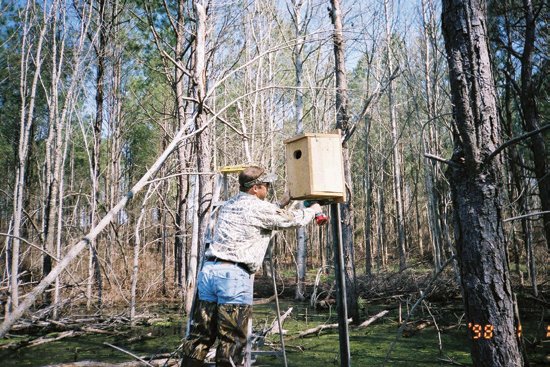
Place 4″-6″ of sawdust or wood shavings in the bottom of the box for nesting material (I prefer shavings verses sawdust because they do not absorb moisture as easily which causes rotting and mold – check with a wood shop that uses a planer for shavings. Cedar chips that are used for dog bedding can be good nesting material as well). Erect new boxes before February in highly visible areas near good brood rearing habitat. Adequate protective cover is essential for brood survival. Brood habitat should include a dependable source of water with plenty of shrubs and emergent vegetation for food and cover. Wood duck boxes should be cleaned out and inspected at least once per year. Word of caution – always be careful when opening wood duck nest boxes. Many other animals use the boxes. Animals that are commonly found in wood duck boxes include gray squirrel, flying squirrel, rat snakes, screech owls, and flycatchers.
Although deer season has just ended, February is the best time to scout for new deer hunting locations for next season.
Because deer have been exposed to a great deal of hunting pressure over the past few months, they are using areas that they are most comfortable in and feel safe. If you find out where they are “hiding” now, you will know where to find them next season once the hunting pressure builds and deer seem to disappear. During February the weather is still cool (or cold), leaves are off the trees, and buck sign such as rubs and scrapes is still fresh. Although you will have to touch them up before the season starts next year, late winter is a good time to trim shooting lanes around deer stands. Relocating stands now also allows deer to get used to seeing them over the summer.
Late winter is a great time to conduct dormant season prescribed burns.
As you probably know, prescribed fire is an exceptional tool for managing wildlife habitat. With the exception of longleaf pine/coastal plain areas, most understory burning in the Southeast is conducted during the winter dormant season. Acceptable relative humidity, temperature, fuel moisture, and steady, persistent winds often occur during this period. Try to conduct burns before turkeys start nesting (Mid-March in most areas). Cool season or winter burning is not only a good way to reduce fuel loads and control undesirable hardwoods in a pine stand (which reduces the chances of a wildfire that can be detrimental), but is also a great way to stimulate new understory plant growth which will result in quality food sources for wildlife. Fire rotations (interval of time between burning the same area again) vary depending on your goals, habitat types, and property limiting factors but are generally every 2-5 years to promote quality wildlife habitat. It is also a good idea to strategically plan your burns to create a diversity of habitats across your property. Landowners often feel they need to burn large acreages to make a difference. This isn’t so. Although larger burns are often initially needed to promote quality wildlife habitat, after the property is in shape, I actually like small burns of 5,10, or 15 acres in size. These create great pockets of quality natural foods that are accessible by wildlife, yet leave close by quality cover. Always check local burning laws and consult with an experienced burn manager before lighting a woodland fire. The U.S. Forest Service or your state forestry commission are great sources for obtaining more information regarding burning in your area.
Leave duck ponds flooded until early spring.
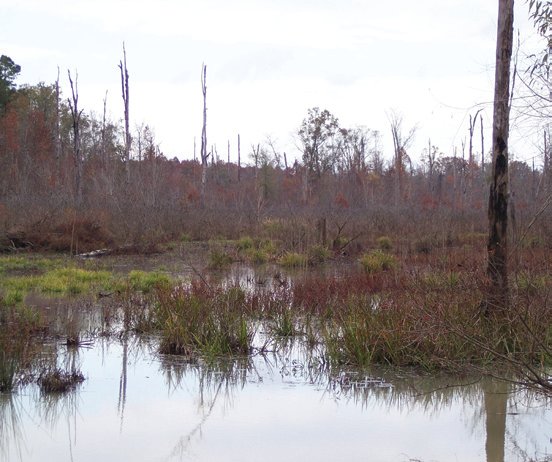
Although duck season may be over, leaving your duck ponds flooded will benefit migrating waterfowl by providing energy rich foods for their flight back north. Pond drawdown and timing will vary depending on your management strategy (natural moist soil management or agricultural plantings). If you are planting agricultural crops for waterfowl, you will likely leave the pond flooded through early summer for weed control. However, if you are managing for natural moist soil plants, such as in a beaver pond, you will likely start pond drawdown in the spring. Slow drawdowns (over a 2-3 week period) are often desired because they will result in diverse emergent wetland species composition. Quick drawdowns result in decreased plant species diversity and are often composed of undesirable species.
Collect shed antlers.
By mid-March, most bucks across the country have shed their antlers. Collecting antler sheds can be a fun spring activity for the whole family. Shed collecting not only provides a great opportunity to spend time with your family, but also provides some insight to the quality of your deer herd. After a few seasons, compare the quality of sheds found from different years. If your program is moving in a positive direction, you will notice that the antlers are getting larger each year. Key areas to concentrate your searches include food plots, fields, around feeders, and along trails where deer must jump (over fences, ditches, etc). Unfortunately, many of us find them in our tractor tires!….which means you’re doing something right!
Fertilize and monitor perennial clover plots
Perennial clover plots will start growing rapidly once spring green up begins and daily temperatures exceed 65 degrees. Because clover produces its own nitrogen, apply a fertilizer that does not contain nitrogen, such as 0-20-20, during early-mid spring to provide adequate nutrients for clover growth. If you add nitrogen, you are simply feeding competing grasses. Although I strongly recommend pulling soil samples and applying fertilizer accordingly, a “normal” fertilizer application rate for clover in the spring is 200 lbs./acre. Once the growing season begins, monitor the plot for undesirable weeds and grass. Pre-emergent herbicides are a fantastic tool that will kill weeds before they have a chance to become a problem. If you are unable to apply pre-emergent herbicide, mowing will help reduce undesirable weeds (do not mow too low…your mower should be set to cut just over the clover). However, if weeds and grasses persist, apply selective post-emergent herbicides for control. Although herbicides are more expensive than mowing, they are often the most effective. Mowing is used to give the clover a better chance to out-compete the weeds while herbicide kills the weeds.
Fertilize select roadside areas to increase browse and nutritional value for wildlife.
Roadsides and right-of-ways generally have more native plant growth than areas within the forest. This is because of the additional sunlight these areas receive. Coincidentally, areas along roadsides are usually areas that are easy to manage by disking, mowing and fertilizing to enhance the quality and quantity of plants beneficial to wildlife. Once spring green up begins, select areas that have wildlife friendly plants such as ragweed, greenbriar, honeysuckle, etc, and apply fertilize to enhance their growth and nutritional value. If you are fortunate enough to have a side broadcasting spreader, simply drive down the roadside broadcasting fertilizer. If you have a typical cyclone spreader, select areas you want to fertilize, then back the tractor up to the spot and spread the fertilizer. This method obviously takes more time than a side broadcast, but is more common. Although some people take soil tests to assess soil nutrient levels to determine how much fertilizer to apply, a general application is 200 lbs per acre of a balanced fertilizer. With fertilizer costs so high these days, I certainly recommend taking a soil test to ensure you do not spread nutrients that are not needed.