
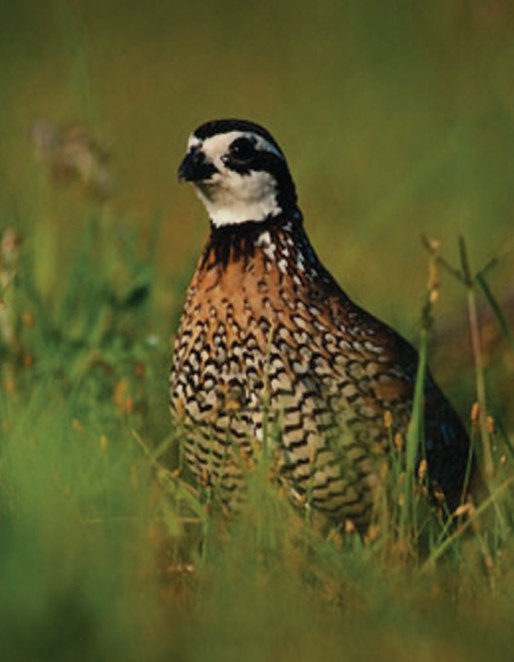
Conduct summer quail call counts.
Call counts conducted in June provide an estimate of the number of males available for breeding and an evaluation of winter survival. This information allows you to monitor the quail population’s response to habitat management efforts and quail production. To obtain an index of male birds, set up several “listening points” on your property that can be used each year. Listen for whistling males for 1-2 hours after sunrise. In June, nesting by females is at its peak in many regions, so males will be actively calling. To standardize the call count, arrive at the first station at sunrise, wait one minute to allow vehicle disturbance to settle, then listen for five minutes and record the number of male quail heard. Count the number of different individuals you hear. Continue until all stations have been monitored. You will need to conduct the call counts at least 5 different days for the most accurate estimates. The more counts you conduct, the more accurate your estimates will be (statistically speaking). We often conduct 10 call counts (10 different mornings) each June. After completing the call counts, calculate the average number of calling males heard per station. This is your “index” and the number in which you will compare against future call count data to assess increases or decreases. The key to accurate year-to-year counts is to be consistent about everything you can control: same people listening, same locations, same kind of weather (clear, windless days) same week of the year, and the same time of day.
Start preparing and planting dove fields.
Dove field preparations should begin by July. Planting dates will depend on the soil moisture, crops you are planting, and the time required to produce seed. Common dove field crops include dove proso millet, browntop millet, Japanese millet, sunflowers, grain sorghum, corn, and wheat. For best results obtain soil samples and apply required lime and fertilizer before planting. Be sure to allow enough time for your crop to produce seed before dove season arrives. If you are in a pinch or running behind on your planting, browntop millet is a good choice for dove or ducks because it only takes about 50 days to produce seed. One trick that we often implement on dove fields to create hunting blinds is to plant strips of Egyptian wheat or sorghum Sudan. These plants can grow 8-10 feet tall and will provide adequate cover for hunters. Another option is to simply hand sew the seed where you want hunting blinds to be. This will create small “islands” for hunters to use. These tall crops also provide shade for hunters during the early part of dove season when temperatures can be hot.
Monitor and control competing weeds around fruit trees or other plantings.
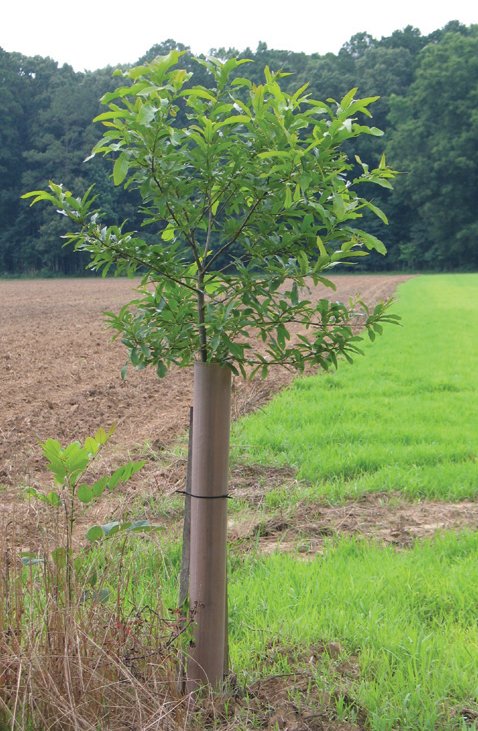
Herbicide is a great tool to combat weeds and grasses that compete with young fruit trees. Using herbicide to reduce this competition is often overlooked, but is a critical step for success, particularly during drought conditions. Young fruit trees have a hard enough time obtaining adequate nutrients and water without other plants fighting for the same resources. Reducing competition will significantly increase tree growth and survival. Glyophosate, or Round Up, is the herbicide of choice. Be sure to avoid getting the herbicide on the leaves of the tree you are spraying around. I highly recommend using tree tubes when planting seedling fruit trees. Not only will the tube enhance tree growth by creating a “green house” effect, but will allow you to easily spray herbicide around the trees without the risk of getting it on the tree itself. Another helpful tip is to place 3-4″ of mulch around the base of the trees. Mulching will reduce weed problems due to the unfavorable germination conditions under the mulch (no sunlight) and will also conserve soil moisture which will help your trees during the hot summer months.
Evaluate and repair existing roads & build new ones.
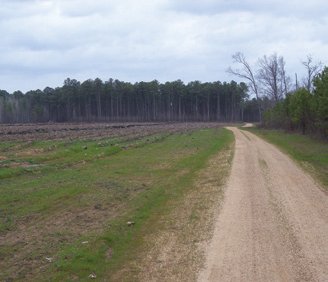
June and July are often the driest months in the Southeast (other than those of you lucky enough to get sea breezes and regular afternoon thunderstorms). Thus, this is a good time to work on or build new roads. Although you probably have a good idea of areas that need repair, the best time to identify road problems is during the wet season which is usually during late hunting season. Make notes during the winter then repair them when the property dries up in the summer. As you know, having all weather access to your property is important from a management perspective so that you can get tractors and equipment into areas of your property, but will also make life easier and more comfortable for you during hunting season. While working on roads, consider increasing the roadsides where possible to enhance wildlife habitat (see calendar item below). These areas can be planted or simply maintained as native grass/weedy areas that wildlife will use for food and cover. Wide roads also dry out quicker due to additional sunlight and wind.
Widen roadsides to create roadside management areas
Summer is a great time to create roadside management areas throughout your property. Creating roadside management areas can add wildlife and aesthetic value to your property. Regardless of how intensely you manage these areas, they will create more “edge” habitat which is preferred and used by most game animals. To create a roadside management area simply clear the understory and undesirable trees along a roadside, lime/fertilize as needed, and periodically mow to maintain control of encroaching trees species and maintain a relatively low understory (avoid keeping a “manicured” look by mowing roadways often – this does not offer as much wildlife value). How wide you make the area is site specific, but is generally 10-20 yards wide. Be sure to leave a few desirable mature trees within the managed area. These trees will provide shade to conserve moisture in the summer and will add aesthetics along the road. If you desire to intensely manage your roadsides you can seasonally disk or burn them to promote desirable weeds, and/or install wildlife plantings such as clovers, sorghum, or wildflowers. Wildflowers provide both esthetics as well as bugging areas for turkeys. Managing roadsides not only increases the aesthetics of the property and add wildlife value, but will increase increase wildlife viewing opportunities. For more detailed information see the Roadside article in the April – May 2007 issue of Wildlife Trends.
Complete draining duck ponds and prepare for planting.
If you are managing a moist soil area/duck pond (native vegetation vs. planting agricultural crops), you should have started your spring drawdown around 45 days after the last frost. Slow drawdowns, those that take 2-3 weeks, are desired because they result in a more diverse wetland plant community than rapid drawdowns. A diverse community of wetland plants will result in many different types of food sources (seeds and insects). By May or early June, your drawdown should be complete and native moist soil plants are starting to establish. Herbicides can be a useful tool to remove undesirable vegetation if it becomes a problem and is dominating the pond. Button bush and sesbania (wetland shrubs) can be beneficial, but should be kept in check and not allowed to comprise more than 25% of the pond.
If you plan to plant an agricultural crop rather than manage the native vegetation, leave the pond flooded until closer to planting time. That is, drain ponds you plan to “plow and plant” a few weeks before you start plowing and preparing the soil for planting. Leaving the pond flooded until this time will provide weed control and reduce tractor time later. Drying time will vary depending on your soils. It is better to drain early than to wait and not be able to work the ground because it is too wet and chance running out of growing season. My personal favorite crop for duck ponds is rice. Rice, however, requires more time and effort to manage and takes about 120 days to produce seed (depends on variety used) so you need to plant early. For best results obtain soil samples and apply required lime and fertilizer before planting. Japanese millet is also a favorite of ducks and is easily grown by duck pond managers. In fact, Japanese millet can be top dressed or broadcast onto mud flats of a wetland or beaver pond. Japanese millet is a strong re-seeder, meaning that it will produce seed that will germinate the following year.

Conduct warm season or summer prescribed burns.
Warm season burns are an exceptional tool for managing quail habitat. Warm season burns are generally conducted from June through August. However, extreme caution should be used when conducting summer burns. Due to higher ambient air temperatures and low relative humidity, summer fires can get very hot and difficult to control. If the area you plan to burn has a heavy fuel load (understory shrubs, grasses, and thatch) or has not been burned in over 3 years, I recommend initially conducting a cool season burn (December – March) to reduce fuel loads before attempting a summer burn. Fire rotations (interval of time between burning the same area again) for summer burns vary depending on your goals and habitat types but are generally every 1-2 years to promote quality wildlife habitat. Regular warm season burns will often promote native warm season grasses that are desirable for quality quail habitat. It is also a good idea to strategically plan your burns so that you always leave some areas unburned. This will help to maintain diverse habitat types which will enhance the wildlife value of the area. Always check local burning laws and consult an experienced burn manager before lighting a woodland fire. The U.S. Forest Service or your state forestry commission are great sources for obtaining more information regarding burning in your area.
Plant chufa for turkeys.
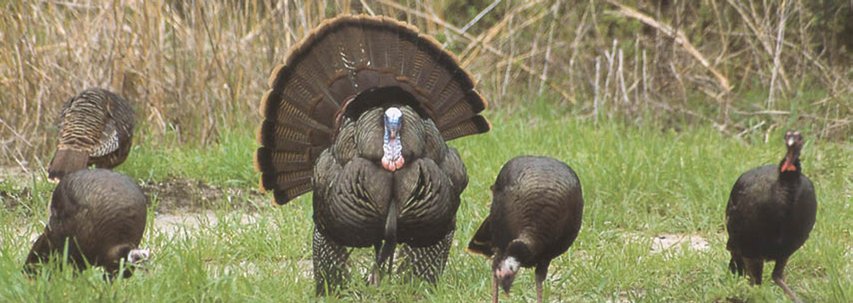
Chufa can be planted in May or June in the Southeast, but most plantings occur in June when summer rains start. Monitor chufa plots for competing grasses and weeds and apply herbicide accordingly to control. Adding chufa to your planting program can be quite rewarding if you like to see or hunt turkeys. Turkeys primarily utilize chufa in the fall, winter and spring once the tubers have developed. If your turkeys have never been exposed to chufas, you may need to lightly disk a strip through the patch in late fall to expose tubers. Once turkeys find them, you will not be able to keep them out. A word of caution – raccoons and hogs like chufas as well and can pose problems in some areas. Chufa patches can often be regenerated the following spring by lightly disking the areas. There has to be adequate chufa seed remaining to regenerate an adequate stand (there’s often more left than you may think). To regenerate the stand, lightly disk the plots once in April, again in May, and once more in June. The key is to continue disking each month regardless of how nice your plot is growing with chufas – it’s going to kill you, but do it. Herbicide applications can be used to enhance chufa plots by controlling competing weeds and grasses. Be sure to rotate your chufa patches every 2-3 years to avoid nematode problems.
Identify and control invasive exotic plant species.
Exotic species are very competitive with native plants and can take over your property and compromise habitat quality. The best time to control or eradicate exotic plants is during the growing season. Strategies to control these plants vary depending on the species at hand. However, herbicide will likely be the tool of choice. It is much easier to control exotic species if you catch them in the early stages of colonization. Once the have a foothold, eradicating them can sometimes be impossible. Some of the common invasive exotics in the Southeast include Cogongrass, Chinese tallow tree, Kudzu, Chinese Privet, Chinese Lespedeza, and many others. If the common name has a foreign country in it, I would get rid of it. A great field guide to keep on hand is “Nonnative Invasive Plants of the Southern Forest” by James H. Miller. You can get this publication from the USDA Forest Service – Southern Research Station at Auburn University or visit http://www.bugwood.org/weeds/forestexotics.html. This guide has information regarding identifying invasive exotics as well as methods of controlling them. Another resource is the Florida Pest Plant Council – www.fleppc.org.
It is also wise to consult with a professional herbicide applicator before deciding which herbicide and method to use. Besides the complex world of herbicides themselves, mixing and applying them can be complicated as well.