
It was the summer of 1978 and my family and I had just moved from Tennessee to Memphis, Missouri; a small, rural farming community which is located in northeast, Missouri. While completing my sophomore year registration at Scotland County R-1 High School, I was told that my science and biology teacher would be Mr. Wagner. The other students told me that Mr. Wagner loved science and biology but most of all, he loved to talk about trapping and calling predators.
That fall, I quickly learned that Mr. Wagner was as obsessed with hunting and trapping predators as much as any whitetail deer hunter was about hunting deer. I also learned that in order to sustain healthy and viable wildlife populations, wildlife managers must provide an adequate and diversified habitat (i.e. nutrition/food, cover, water and space) as well as control excessive predator populations.
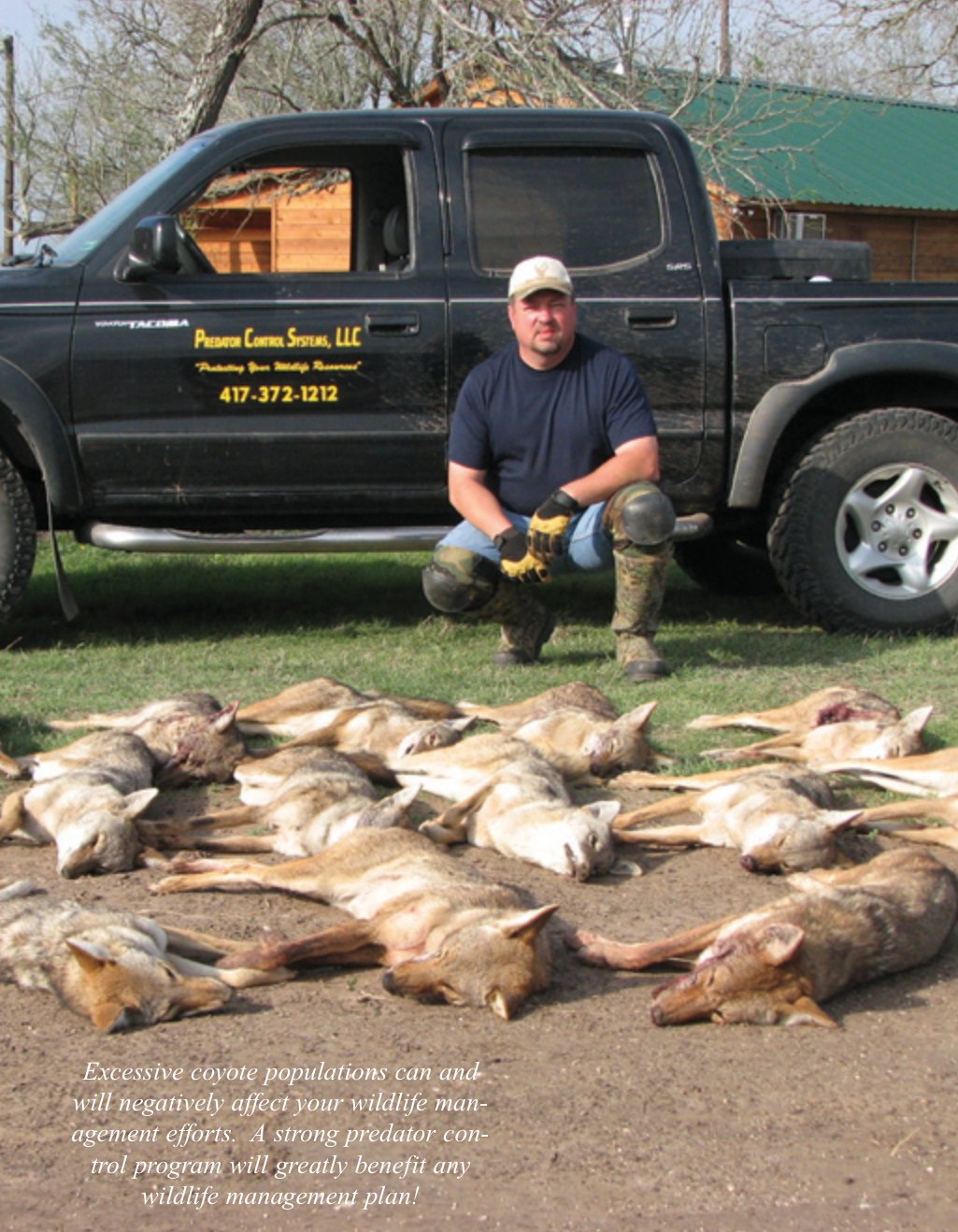
My introduction to predator population management was 30-years ago. As a matter of fact, I not only still predator trap, snare and call for fun, I make my living at it. However, you do not have to be a full time Predator Control Specialist to enjoy the benefits of predator control. Not only is predator control a proven and effective wildlife management tool, it’s also a lot of fun! Individuals, who are managing for wildlife game species on their property such as whitetail deer, wild turkey, bobwhite quail, cottontail rabbits, etc., can and will benefit from incorporating predator control into their wildlife management plan.
Have you ever wondered if there was anything else you could do to receive the “optimum” level of benefits from your wildlife management efforts on your property? If you are committed to properly managing your wildlife resources, you should ask yourself the following question; “If I am incorporating the financial resources and putting forth the efforts to establish a diversified habitat with an optimum food source, adequate cover and being responsible on harvest parameters, why am I not concerned with excessive predation of my wildlife resources?”
My job takes me all over the southeastern United States and as far south as south Texas. Undoubtedly, the most rewarding aspect of my job is hearing from landowners and wildlife managers about the benefits they are experiencing due to continued predator control efforts on their property.
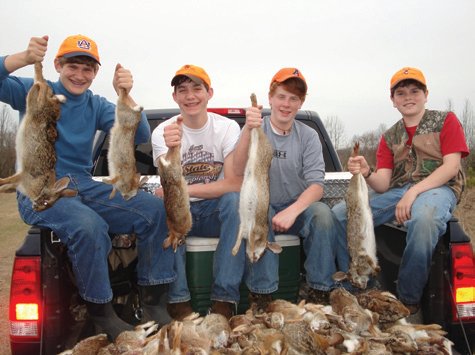
Mr. Johnny Kincey, President of Whitetail Land Management, Inc. (Auburn, Alabama), recently shared the following: “This past winter, we decided to take the beagles and see if we could get the boys on some good rabbit hunting. Wow! As you can see by the photographs, we had the best rabbit hunt that we have ever had. We harvested 41 rabbits in less than four hours. The dogs were worn out! This kind of rabbit hunting was not remotely possible before we incorporated a predator control program on our property”.
Mr. Bill McKelvy, owner of Whitetail Lakes’ properties in Pintlala, Alabama recently wrote, “We have for the very first time had a minimum of seven whitetail does with triplet fawns. Our whitetail fawn recruitment rate has easily doubled since we incorporated predator control into our wildlife management plan!”
Mr. Kincey and Mr. McKelvy are two of the most innovative and progressive wildlife managers in the southeastern United States and their statements speak volumes. When they found out that I was writing this article, they contacted me to know the following: “We have also observed that our deer now enter our food plots without their usual nervous tendencies. They are not worried anymore about being chased and attacked by coyotes and/or bobcats. Additionally, our wild turkey population has exploded due to our decreased predator populations.” With proven results like these, it’s hard to argue why predator control should not be a major component of every wildlife management plan.
Predator control in wildlife management is catching on like wildfire! One may wonder why it has taken so long for the majority of wildlife managers across the United States to understand and acknowledge the importance of protecting their investments… Would you leave your vehicle unattended in a populated area and leave it unlocked with the keys in the ignition? I would hope that most of us would not. This is because we want to protect the investment that we have in that vehicle and we want to feel that we have done all that we can to maintain its safety and security. It is exactly the same with the wildlife resources on our properties. If you have an investment in managing those wildlife resources, then why would you not want to take measures to protecting those investments? Fortunately, those wildlife managers who have already taken measures to protect their wildlife management investments by incorporating predator control into their wildlife management plans are now experiencing the rewards of their efforts.
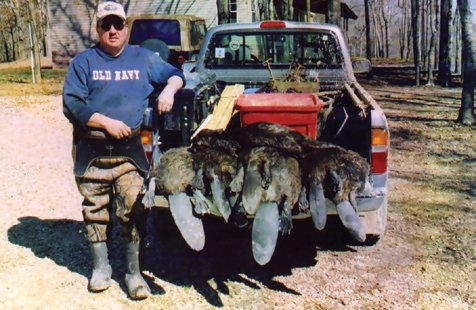
Controlling predator populations should be a continuous effort. One should understand that even if you were to eliminate every single bobcat, coyote, beaver, etc., off of your property, it will just be a matter of time until transient predators (or beaver, etc.) will fill the voided habitat and establish it within their own home range. The key to making your predator control efforts successful and providing you with that wildlife management optimum benefit, is to consistently control your predator populations just as you consistently provide your wildlife resources with adequate habitat (i.e. food, cover, water and space).
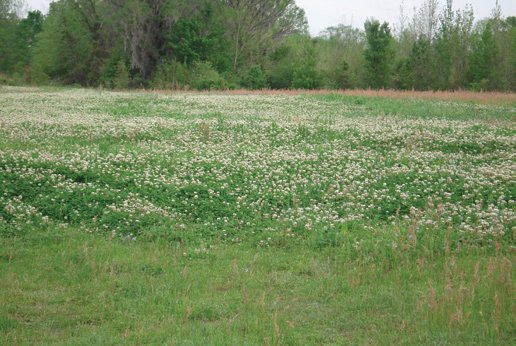
When conducting white-tailed deer management consultation work with clients, Mr. Macy Ledbetter, owner and consulting Wildlife Biologist of www.SpringCreekOutdoors.com, says, “Without growing fawns this year, you can’t harvest a trophy buck in five years” and “Deer don’t eat grass, they live in it. If you have predators, and I don’t know of anyone who does not, you better have good grass for your fawns to hide in!” Macy Ledbetter conducts the majority of his work in the state of Texas and if there has ever been a place where managing for trophy whitetail bucks is taken seriously, its Texas!
DuCote Haynes, M.D. (retired) of Little Rock, Arkansas manages three separate hunting clubs which are located in north central Arkansas. At age 70, Dr. Haynes is one of those individuals whose battery never runs down. He is passionate about wildlife management and never passes on any opportunity to expand his knowledge pertaining to cutting edge methods and technologies which may enhance his wildlife resources. Dr. Haynes states, “While trying to learn all that we could about proper wildlife management techniques from those who have succeeded before us, we came to the conclusion that we needed to incorporate predator control into our wildlife management plan. Our goals are to decrease our wild turkey and bobwhite quail depredation rates and to increase our whitetail fawn survival rate. Our predator populations have previously not been held in check and we sincerely believe that predator population management is past due.”
There are numerous other success stories which reflect how predator control has benefited wildlife management. Whether it is problems with excessive predator populations such as bobcat, coyote, raccoon or river otter and/or herbivores such as beaver or nutria, consistent predator control efforts are the key to enhancing your wildlife management endeavors. If you have not yet been one of the many wildlife managers who have already incorporated predator control into their wildlife management plan, I highly encourage you to consider the proven benefits. Just remember, if you do nothing to keep your current predator populations in check, all of your wildlife management investments just may be eaten up right in front of you!