
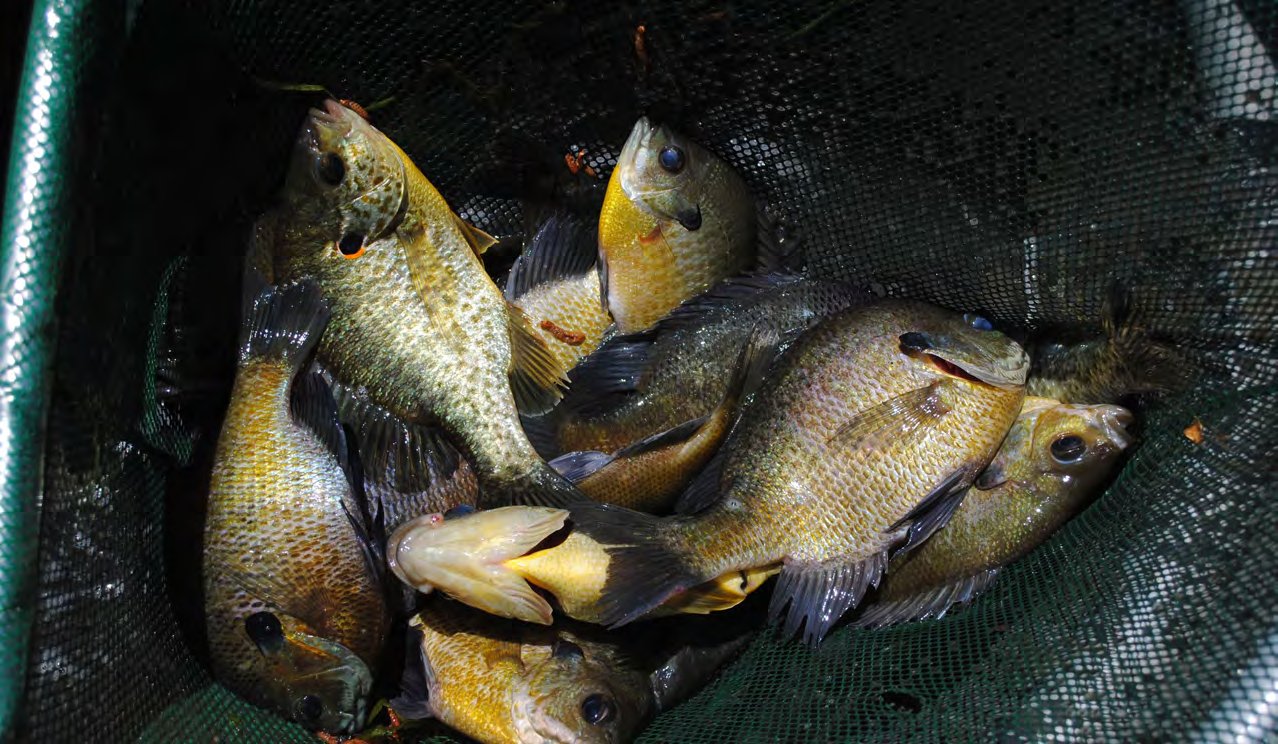
As a lake manager, growing fish is what we do, but on occasions to improve a fishery, techniques to remove fish may be required. Everyone who owns a lake with largemouth bass has someone preaching to them to remove small bass. In some instances, a new lake owner discovers his pond is full of small crappie, bullheads or common carp. As a lake owner you may discover your cousin or neighbor has been helping you out by bringing you free “catfish” and he has really introduced bullheads that have taken over your pond. Or in the Deep South, someone has stocked tilapia that do not die in the winter, but quickly get too large for bass forage and they become a liability as opposed to an asset. And the most recent is a lake or aquatic plant management company or lake owner had stocked triploid grass carp a few years ago and now wants some of them out, because they are hurting the lake more than helping it. Lastly, there may be an infestation of invasive or exotic undesirable fish species and a total restart is needed and all the fish need to be removed.
Largemouth bass
Removing large numbers of largemouth bass is easiest done by angling and/or electrofishing. The smaller your waterbody the easier to achieve your annual removal number/pounds of bass. On average the number of largemouth bass to remove is about 20 per acre, but in a more productive lake it could be as high as 30 per acre and in a less productive waterbody it may be 10-15 per acre. With a couple acre waterbody those numbers are very obtainable over the year. When lakes get 10 acres or more, those numbers can seem unachievable, but they are still reachable with some work. When using angling for collecting your unwanted bass, remember you want to usually remove the smaller individuals, so use tackle appropriate for that size. Throwing a large Zara Spook, walking the dog at sunset, on a glass-like lake looks pretty, but the 14-inch and below bass have a harder time getting that into their mouth where your hooking success is high. Small topwater plugs, beetle spins, small crank baits, small plastic worms, live small nightcrawlers, minnows and crickets can be effective at catching large numbers of small bass. Spring and fall are the best times to target small bass followed by summer mornings and evenings because they are generally feeding more actively as opposed to hot summer or cold winter days.
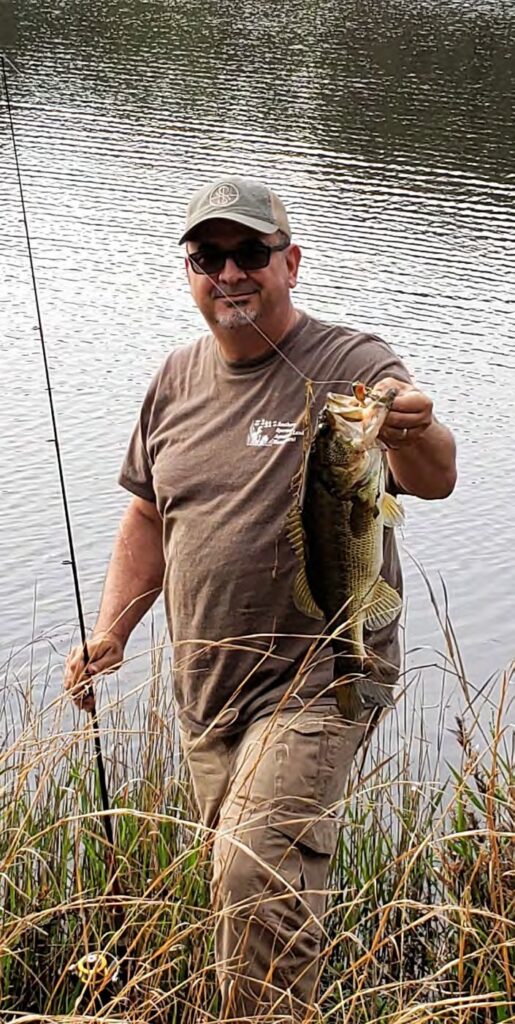
The largemouth bass is a literal zone species and since it prefers the shoreline and structure (vegetation or woody snag) that makes it easier to electrofish large numbers than other open water species. They can be collected in large numbers most of the year in the South and spring, summer and fall farther north. We have removed hundreds of small bass in a day with electrofishing when conditions are right. If it is an already quality lake, you will have to pick through several bigger individuals above the target size, but electrofishing is a very effective tool to collect small largemouth bass.
Crappie
The crappie is another species that can overrun a waterbody becoming overpopulated and stunted, even more so than largemouth bass. At times of the year when schooling, small ones can be caught with light tackle either with beetle spins, jigs or minnows. On small waterbodies (under 10 acres) we recommend keeping every crappie that is caught, whether it’s large enough to eat or not. Due to their open water preference and quickness, there are not a lot of predators that forage on them regularly, other than cormorants. But when cormorants target them, they are very efficient at catching them.
Electrofishing most of the time is very unproductive at collecting small crappie. In certain waterbodies, during their spawn in late winter, they are susceptible to electrofishing, but usually the more desirable size to keep and not the smaller individuals. In winter, they can be caught in unbated hoop nets or trap nets. Gill nets are fairly efficient at catching large numbers of crappie, but have a lot of bycatch (collateral damage) in small waterbodies, catch a lot of desirable non-target species, and can cause unwanted death to those species if not run properly. A small trawl has been effective at collecting them, but is usually not a tool lake owners have easy access to.
Catfish and Bullheads
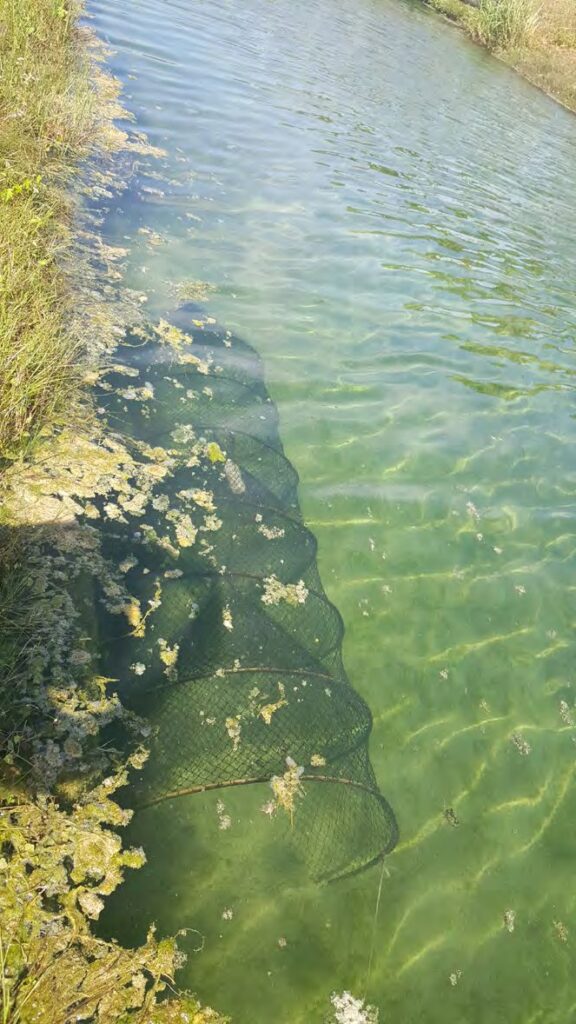
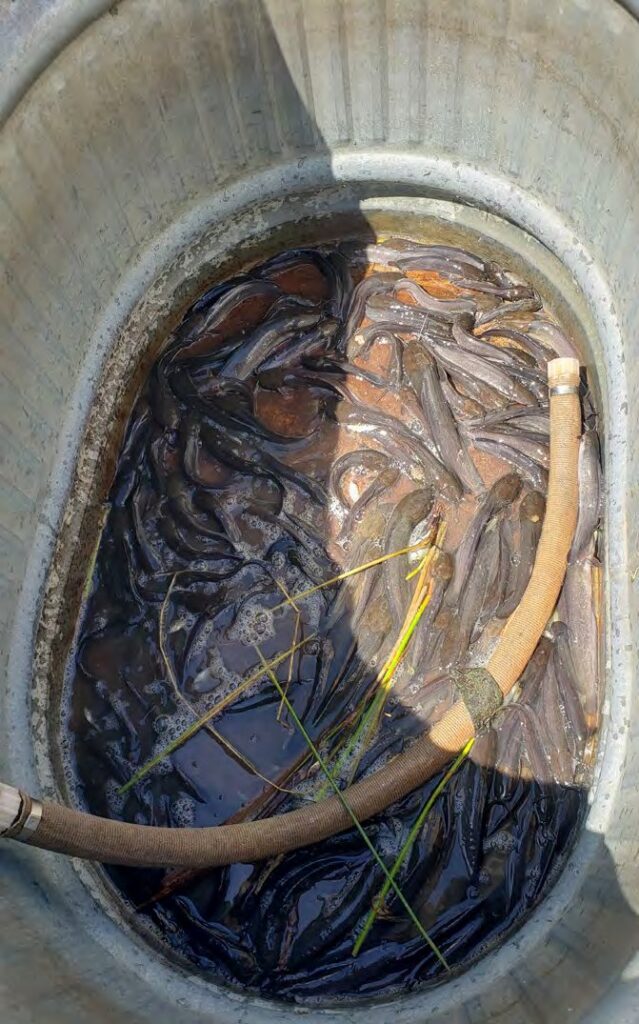
Bullhead and catfish (channel or blue) do become a negative issue in some situations. I have seen thousands of bullheads come out of a quarter acre pond that we killed out with the fish toxicant, Rotenone. They were not allowing other species to grow, prosper and reproduce, and the water chemistry was always poor due to the constant turbid (muddy) water. We have also on rare occasions observed channel or blue catfish reproduce in manmade lakes at a highly successful rate and overpopulate, which is very rare, but can happen. Besides rotenone, which kills all the fish and a total restart is required, angling, trotlines and hoop nets work well for removing catfish and bullhead species. Again, your fishing tackle needs to match the target size. Hooks big enough to hold 20-plus-pound catfish cannot be swallowed by a six-inch bullhead. For bait, traditional catfish dough balls, worms, pieces of hotdogs, cut bait, and balls made of soft fish feed being dispensed all work. Cast netting at a feeder does catch a lot of catfish and bullheads, however, removing a large number of catfish or bullheads from a cast net is a nightmare, and is not recommended. Electrofishing large numbers of catfish or bullheads is rarely effective as they tend to be in deeper water with poor conductivity and not affected by the field.
Common Carp and Suckers
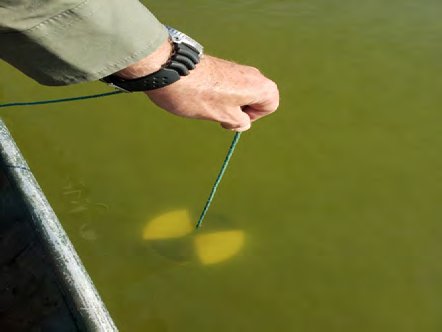
In some areas of the country, common carp and suckers infest a waterbody through flooding or establish in an old, neglected pond decades prior. If the waterbody is not too deep, electrofishing is an effective tool for removing large numbers of common carp and suckers. If the waterbody is not conductive enough or majority too deep, angling (including trotlines), baited hoop nets, gill nets, and cast nets have all been successful techniques to collect large numbers. Bowfishing can collect carp and suckers, however, it can be a slow process compared to other techniques, and nighttime with lights works better than during daylight. Angling or running trotlines requires a dough ball and treble hook. Again, use tackle size appropriate for target sized fish. Trotlines are less labor intensive only requiring to be run and rebaited at daylight and dark. Throwing a cast net at a well-placed fish feeder after dispensing, where they have become accustomed to come, can also be effective, unless they are excessively large. Baited hoop nets work fairly well on catching common carp and suckers. We have observed them being attracted to cat/dog foods, fish feed and cornmeal cake. Again, gill nets catch them, but there is some bycatch and this needs to be considered if this technique is used. If they are large, gill nets may be an option, since the mesh size will need to be large, allowing most fish to swim through without getting entangled.
Gizzard Shad
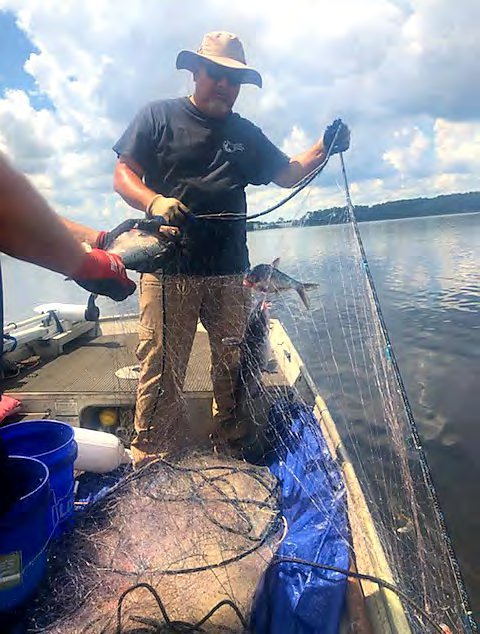
In the South, large gizzard shad can overpopulate a waterbody. They grow faster in the South and quickly become too large for even trophy largemouth bass to consume. These fish cannot be removed by angling or trotlines and are usually difficult to electrofish unless water is highly conductive and shallow since they prefer open water. These fish are susceptible to low doses of the fish toxicant Rotenone, where other species are not affected. A trawl is an effective tool for collecting gizzard shad if the lake bottom is clean, free of woody snag, rock and vegetation
Exotics
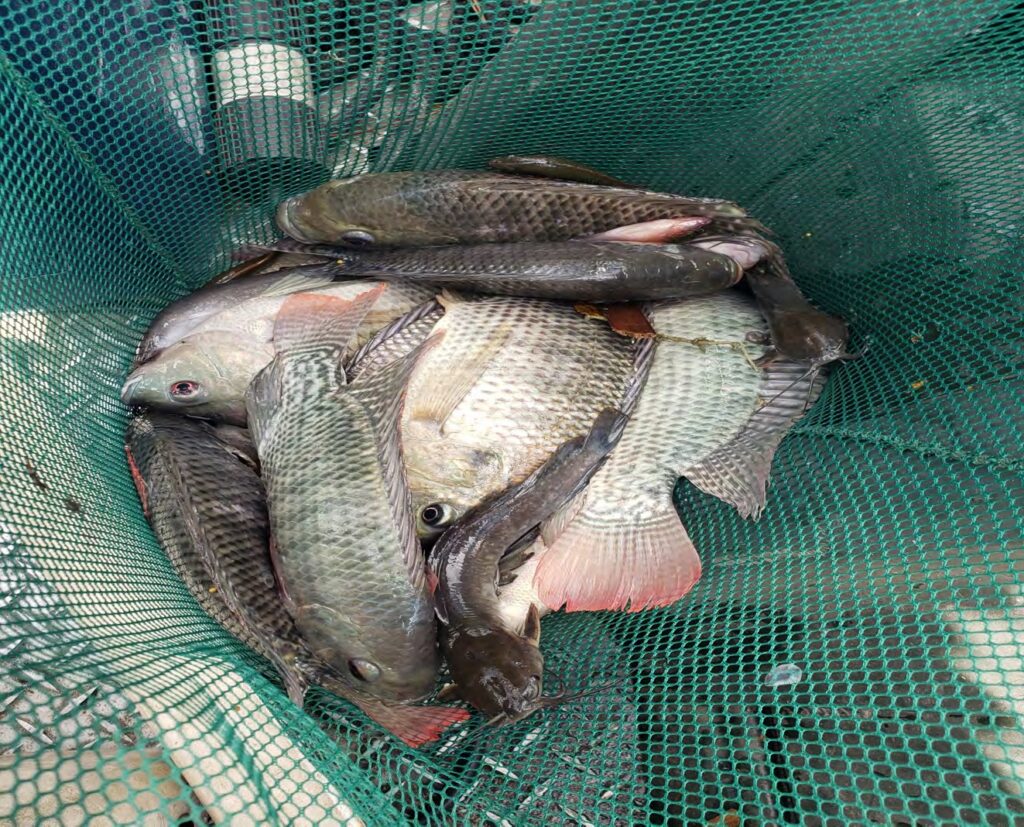
Exotic fish species are generally in the South, but some can survive winters in the North. Identifying the species and consulting your professional lake manager or your State Fish & Game agency is advised. Depending on the species, you may be advised to do nothing and live with them, catch and remove as many as possible, but that means annually, or perform a total restart with Rotenone to eliminate the species and start over restocking with only native, desirable species.
Grass Carp
Every state has different rules regarding stocking triploid grass carp. Some states require the landowner to obtain a permit, have a barrier (so fish cannot escape down-stream) and even lake inspected, and then will be told by a state biologist how many fish you are allowed to buy and stock, while other states only require the hatcheries selling the fish to have a permit to sell certified triploid grass carp and let you decide on your own how many to stock. Check with your State Game and Fish/Department of Natural Resources agency for rules, regulations and how to obtain triploid grass carp if they are needed in your waterbody.
We rarely stock triploid grass carp as a sole way to solve an aquatic vegetation infestation. We perform a herbicide treatment and follow-up with a low rate triploid grass carp stocking as maintenance to keep the problem vegetation managed and from coming back as bad as the original scenario. We have witnessed where other management companies recommended stocking large numbers of triploid grass carp to solve a vegetation problems without prior herbicide treatment. Over the course of a year the problem plants vanish, but in less than two years, the bottom is continually stirred up, with zero fish habitat present in the form of vegetation, and in some instances a strong planktonic algae bloom occurred because there was no vegetation to absorb excess nutrients. When this occurs, landowners, Home Owner Associations and golf courses contact us to reduce their numbers.
Retrieving triploid grass carp has proven to be difficult. Many state agencies and universities have researched the most efficient ways to remove them from a waterbody. Gill nets, hoop nets, electrofishing, hook & line, bow & arrow, and guns at a feeder have been tried to remove them when too many were present. All methods will catch a few, but no method has been deemed a great success.
With a multi-technique approach, we have had more success than most at removing triploid grass carp from smaller lakes (25 acres and smaller) where overstocking had occurred. The amount of success and which technique works best depends on the physical layout of the waterbody and if any vegetation is present.
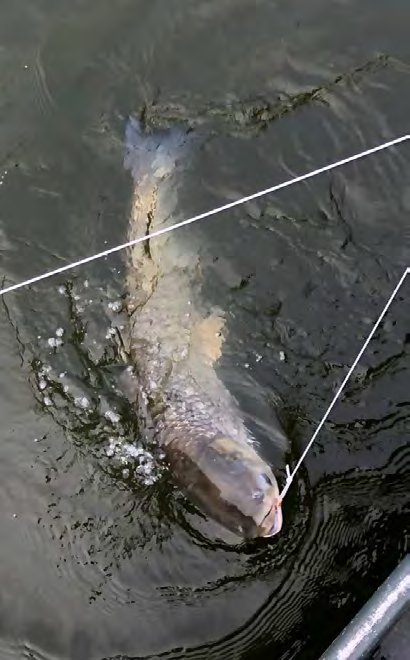
The one fact most people do not understand is that triploid grass carp are smart when they are pursued. They quickly change their habits and location in a waterbody when they feel pressured from electrofishing or identify traps in the water such as hoop and gill nets. Electrofishing with good conductivity will only be effective to about 10 feet deep in water. Once these fish know they are being pursued they will move into deeper water and not be reachable with electrofishing. Traditional thought is cooler weather with some submerged vegetation is a good scenario for successful electrofishing, but in many situations, there is no vegetation. The first trip around the lake with an electrofishing boat will render a few triploid grass carp. Normally we use a dip net while electrofishing, but carp sometimes do not shock well and fight through the field and escape, so we use large fish gigs on an 8-10 ft pole, which makes it a little easier to harvest them. Once it appears that the traditional shoreline electrofishing is not working, trying the open water (if not too deep with good conductivity) to try and catch a few is performed. Also, as time and days go by, the triploid grass carp become “educated” and begin avoiding the shocker boat and success drops drastically. Once it appears the fish “felt” us as we begin baiting the shoreline and any vegetation and/or structure present with fish feed. When electrofishing to remove triploid grass carp, I recommend doing it for a few days, then letting the lake rest for several weeks before returning.
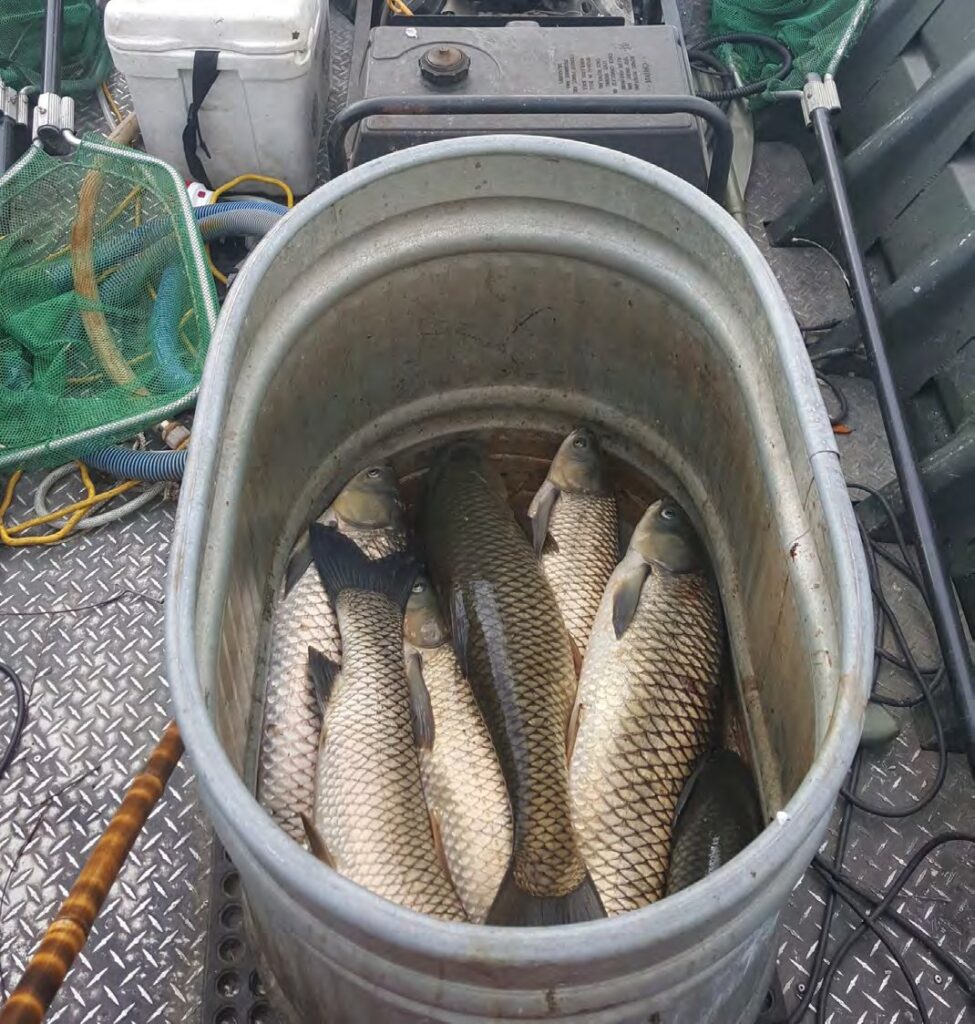
A more practical method for lake owners is fishing 300-foot trotlines with quality #2 treble hooks, baited with dough balls every 20 ft apart. Hooks should be 15-18 inches below the main line. Depending on the dough ball consistency, springs can be added to the hooks if it will help hold bait on the hook longer. The #2 hook seems to be small enough they can get it into their mouth, yet strong enough to hold a 10-20 lbs. fish for 10-12 hours without breaking. If your fish are greater in weight, then you will have to go up one more hook size, particularly in metal thickness. Dough balls can be homemade or store bought. There are many good dough ball recipes on the internet from carp anglers that fish and have great success in the Midwest and South. We use a mixture of grits, cornmeal and peanut butter and on occasion mash in some fish feed if they are used to it. Hooks should be placed farther apart than on a normal trotline, as these fish may not bite if another fish is already hooked too close. Finding the correct depth to fish takes some time. Although they are usually near the bottom and vegetation in shallow water, at certain times of the year the surface water temperature may be colder and push fish into the deeper warmer water. The deepest parts of the lake in summer and winter may not have adequate dissolved oxygen for the fish to stay at that depth for extended periods of time to feed, so placing hooks deep will not work in that situation. Earlier I stated angling was probably the best method of removal, which is why we use trotlines, as it is angling, but requires less man hours than rod & reel. This method can be used by lake owners themselves and requires less time commitment and not a large budget while fishing several hooks simultaneously, and over a long period of time where several carp can be removed. If there are no catfish present, you should only catch carp, or possibly an occasional turtle. Baiting the trotline in the morning and running and re-baiting in the evening will give you the opportunity to remove more fish. Some lake/ponds may only need a few removed, while some may need hundreds removed, which is why trotlines make the most sense over the long periods taken to remove several.
All these methods have been performed with various success depending on who is performing the work and the physical characteristics of each waterbody. The most successful removal method is draining the lake and applying Rotenone to any left in any holes with water. We have seen the targeted undesirable species return or was never completely eliminated when only draining was performed and it was not completely dry. Many undesirable fish can survive low dissolved oxygen for extended periods of time and shallow water holes during a drawdown allows them to survive until refill begins. Some methods discussed can easily be performed by the landowner and/or their staff, while others can be handled with the help of most professional lake management companies, and a few techniques are only performed by a few lake management companies. One technique that is very successful in one waterbody may not be in another, or even different successes in different times of the year in the same waterbody. Each state has different regulations on removing fish species from private waterbodies. Please check with your agency to verify the species and techniques you will be using are legal. Some techniques discussed may be legal but require an easy to obtain free permit. The saying, “Sometimes to build it up, you must tear it down first” holds true, even in lake management.