
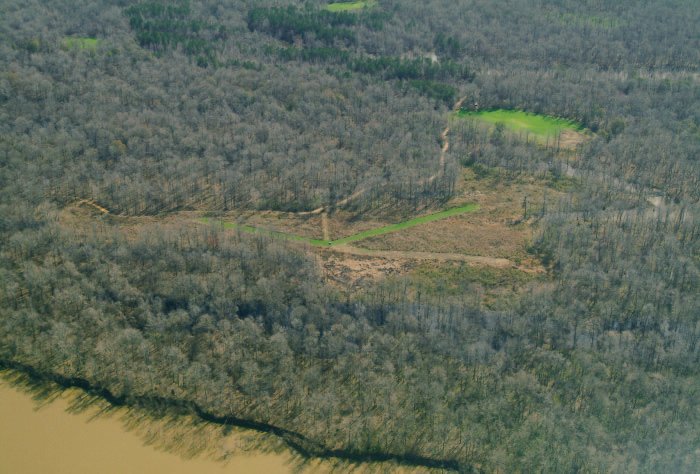
What is ideal whitetail deer habitat? Regardless of where you are in the whitetails’ range, ideal habitat for deer will include a complex of many habitat types of various ages that provide adequate food and cover resources. Think about it. If you are an experienced deer hunter, where do you tend to concentrate your hunting efforts? Where do you see the most deer and deer sign? My vote would be near habitat edges or young habitats where cover exists, close to food sources, or between the two. Thus, if one of your property management goals is to manage for deer, you obviously want to create quality food sources (natural and supplemental) and adequate cover; ideally laid out in a way that promotes good hunting opportunities. In addition to simply providing deer with food and cover, creating a diversity of habitats with lots of interspersion will create more edge and in turn result in better deer habitat.
Over the past several years, the value of quality food resources has been stressed to deer hunters and deer managers and rightfully so. Nutrition plays a significant role in fawn production, antler development, and overall deer health. The 3 primary factors that influence antler production are age, nutrition, and genetics (in my opinion- these are listed in the order of importance). If you are managing for a quality deer herd, you need to manage for and provide adequate high quality food sources. However, food alone will not produce a quality deer herd. Because of the emphasis placed on providing food, primarily in the form of food plots, many deer managers have neglected the value of quality cover and habitat diversity. I often meet landowners or hunting clubs that claim they are aggressively managing their land for deer. When I meet them at their property, “aggressively managing their land” often means they are simply planting food plots. Nutrition is important, very important, but providing adequate quality cover is equally important and is often overlooked. Simply stated, deer need cover. In fact, deer spend the majority of their time in or near cover. It is used for escape, loafing, bedding, feeding, and fawning. Again, ideal whitetail habitat consists of a diversity of habitats of various ages and quality food sources that are interspersed throughout the property.
All properties are unique and have their own set of strengths and weaknesses. One property may have more than adequate food for deer but not much cover, such as in a commercial agriculture situation, while another property may have the opposite scenario. To create ideal deer habitat or optimize the deer value of your property you must assess your property and address its weaknesses or limiting factors. Is it food, cover, or both? While it’s relatively easy for landowners to determine whether they need to increase or enhance food or cover on their properties, it is a good idea to bring in a professional wildlife biologist to provide specific guidance on where to enhance and how. In fact, doing such is usually our initial consultation with a landowner, land manager, or hunting club. If deer is the primary goal, our next step is to determine the status of the deer herd through a camera census and make harvest recommendations for improvements. Deer management in a nutshell – create good habitat (food and cover) and manage the deer population (overall density, buck age structure, fawn production, etc) through harvest to promote a healthy herd or meet overall objectives.
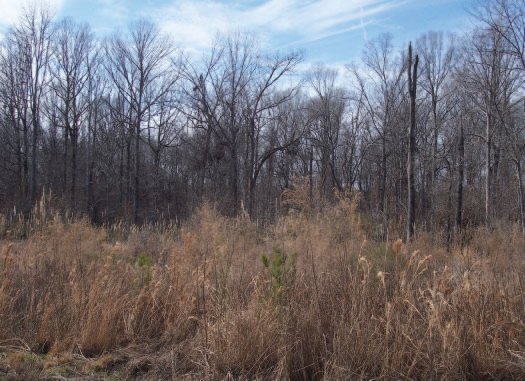
If cover or habitat diversity is a limiting factor for your property, you may consider installing a series of wildlife clearcuts. Examples of properties that would benefit from clearcutting are those that are predominately mature bottomland hardwood forests, mature pine forest, mature mixed pine/hardwood, or properties with little or no “open” land. These properties are often very aesthetic from our perspective, but offer deer and other wildlife little in the way of quality food and cover. Incorporating small wildlife clearcuts across the landscape is a particularly useful tool for enhancing the wildlife value on properties where early successional habitat (the youngest stage of habitat before tree encroachment –old fields, food plots, pastures, etc) is limited.
Proper forest management, even intensive timber production strategies, provides quality wildlife habitat. In fact, little or no timber management often has detrimental effects on the wildlife value of a property. The key in balancing timber management and deer value is to maintain good habitat diversity (species composition and age diversity) and habitat interspersion (how habitats are situated next to each other). Thus, if one of your property management goals is to optimize its value for deer (or wildlife in general), large clearcuts (> 50 acres) are less desirable because they result in less habitat diversity and interspersion and often contain what I term “wasted space”. By wasted space I mean that most wildlife, particularly game species like deer, turkey, and quail are “edge” oriented and will primarily use the perimeters of large clearcuts. Large clear cuts do have lots of edge, but the middle of these clearcuts receives less use by wildlife and hence is “wasted space” and could be put to better use by a landowner primarily interested in managing wildlife. A similar example I often see on properties is having too much commercial agriculture, which can have the same effect on wildlife value. Although large clearcuts and large agricultural fields provide a tremendous amount of wildlife value, both usually have wasted space that are not efficient use of your property from a wildlife standpoint. Small clear cuts, on the other hand, are quite beneficial for wildlife and can provide exceptional bedding, nesting, escape, loafing, and foraging habitat for deer, turkeys and other wildlife.
What are Wildlife Clearcuts?
Everyone knows what a normal clearcut is, but what is a wildlife clearcut? Wildlife clearcuts are relatively small, irregularly shaped clearcuts that range from 1 to 20 acres. These cuts are strategically located and designed to enhance the wildlife value, as well as hunting opportunities on a property. Wildlife clearcuts are most effective, or provide the most benefit, on properties that have little habitat diversity and are primarily composed of mature forests or where neighboring properties exhibit these habitat characteristics. Mature forests normally lack year-round quality food and cover for wildlife. As a forest matures to canopy closure, little to no sunlight reaches the forest floor to stimulate plant germination. These areas are easily identified because the understory, or the forest floor (the part we are most concerned about when managing game species) will often have a “park-like” appearance and be open. I often work with recreational landowners whose properties are primarily composed of beautiful mature bottomland hardwoods along a river system. These properties are gorgeous, but other than providing acorns during the fall, mature hardwood forests often lack quality browse and cover habitat needed by wildlife. Thus, in this situation, installing a patchwork of wildlife clearcuts not only ensures adequate food and cover is available, but as a result, will likely increase the quality and abundance of wildlife using the property. Wildlife abundance and diversity are directly related to habitat diversity and interspersion. Therefore, landowners interested in managing their property for wildlife, particularly game species, should strive to maintain diverse habitat types that are irregularly shaped, which means increased edge and interspersion. The types of habitats that should be maintained vary depending on the species of interest as well as habitats on neighboring properties. In many cases, wildlife clearcuts can help achieve habitat diversity. For example, the landscape for deer and turkeys should include a mix of mature forest (mature bottomland, mature pine, mature pine/hardwood), mid-aged forest (10-20 year old hardwoods, pines, or mixed forest), and open land (agriculture, pasture, improved pasture, clearcut, managed roadsides). Hence, timber harvest and/or wildlife clearcuts are invaluable tools for the wildlife manager and play a significant role in achieving desired habitat types, diversity and interspersion.

Because each property is unique, the size and shape of a wildlife clearcut is often dictated by the specific needs and physical characteristics of the property. Characteristics such as topography, wetlands, roads and other land features are constraints that play a role in the size and shape of a wildlife clearcut. On large properties (> 500 acres) composed of mature habitats and low habitat diversity, larger clearcuts (10 to 20 acres) may be needed to effectively enhance the wildlife value. Another option on a large property would be to install several to many small wildlife clearcuts (2 to 5 acres). Again, characteristics of the property may dictate which strategy is employed. On small properties (< 500 acres), installing a few relatively small wildlife cuts may be all that is needed to significantly enhance the wildlife value of the property. Each property is different and will require specific approaches to achieve the desired results.
Wildlife clearcuts do not necessarily have to be true “clearcuts”. I often recommend leaving many mature trees in the cut area. This method is not only more aesthetic but the remaining trees provide seed sources for the regeneration of future trees. Additionally, mature trees left in the cut will provide shade which will conserve soil moisture and often increases plant productivity and diversity. From a deer hunting standpoint, leaving several mature hardwoods in the cut offers the best of all worlds – a clearcut with attractive/preferred deer browse, mature oak trees that will drop acorns, and adequate cover where deer will feel comfortable – and a place to hang a tree stand! Remember, one of the primary objectives behind installing wildlife clearcuts is to increase and enhance the food and cover on a property. To do this you simply need to take out enough trees and woody underbrush to allow abundant sunlight to reach the forest floor.
Management of Wildlife Clearcuts
Although Mother Nature will normally do the rest, we often influence the results through various habitat management strategies. These strategies vary depending on the habitat type and target wildlife species for the area. For example, if you were primarily interested in managing the area for quail, fire and selective herbicides that promote native warm season grasses and other desirable weeds would be applied. If our target species were deer and turkeys, we would use a selective herbicide(s) that would promote quality escape, loafing, bedding, and nesting habitat and quality food sources such as legumes. If you plan to replant the area in trees, another management strategy that will prolong the effectiveness of a wildlife clearcut is to leave the area alone for a couple of years, then set it back with herbicide and/or fire to begin implementing your desired management. Planting a lower tree density (trees/acre) will also prolong the wildlife value of these areas. Under normal forestry practices, a clearcut will be prepared for replanting by applying herbicide, burning, roller chopping, etc. immediately so that the next crop of trees can be planted. If pines are planted, within 3 to 5 years the crowns of the trees will start reaching canopy closure and the wildlife value will diminish until the stand is thinned (usually around year 12-18). By procrastinating the “site prep” by 2 years, you have added 2 additional years of quality browse, cover, and hunting opportunities to the wildlife clearcuts. The key is to allow the site to sit natural as long as possible, but not so long that you will have a hard time “reclaiming” it due to tree encroachment (naturally regenerating trees are getting too big).

Enhancing Hunting Opportunities
Although the primary goal of installing wildlife clearcuts is to create better habitat that will attract, hold, and meet the needs of wildlife on your property, these cuts will enhance hunting opportunities as well. Have you ever hunted in a large breath taking beautiful mature hardwood forest? Sure you have. Where did you hunt? In the middle of the stand of woods? Probably not…unless you found a thicket created by a blow-down or other structure such as a creek bottom. Chances are that you found the most sign and hunted near the edges that tied into other habitats. Deer hunting is somewhat like bass fishing. Where do you find bass? Near cover or structure. Vast mature hardwood forests often have little structure or cover and resemble a large open lake. Installing wildlife clearcuts will provide the needed structure and cover to hold deer and provide great places to hunt. Most of us have sunk Christmas trees or created brush piles in our favorite lake. Installing wildlife clearcuts serves the same purpose for deer and other wildlife.
So where do you install wildlife clearcuts and how do you design them to enhance hunting opportunities on your property? Because every property is unique with its own characteristics and constraints, this is not an easy question to answer without seeing the property. However, wildlife clearcuts will be the most productive for hunting if they are strategically installed to link or create natural travel corridors. Depending on their size and purpose, I often install wildlife clearcuts were I want deer to bed. This is often determined by food sources such as agricultural fields, food plots, mast crops, etc. Other factors to consider are predominant winds in the area, topography, other existing thickets or bedding sources, and which direction hunters will access the area. Because hunters will be situated between the food source and the wildlife clearcuts you obviously don’t want to install a WC south of a food source if your predominant winds during hunting season will be out of the North. This would send their scent directly into the bedding area. Although every situation is different, I generally install wildlife clearcuts 200-300 yards from destination areas such as an agricultural field or food plot. This makes deer more vulnerable to hunters and gives them plenty of room to catch deer traveling between the two. While I wouldn’t consider these true wildlife clearcuts, I often create bedding areas or thickets where they are needed by cutting trees out of very small areas (about the size of a house) with a chainsaw. Generally speaking, you may only have to cut 5 or 6 mature trees to create a desirable sized thicket to hold deer. This strategy creates a hole in the tree canopy that will result in a thick understory. Although there will be some food value, this method is mostly used to enhance hunting opportunities by creating structure or bedding areas within a block of woods.
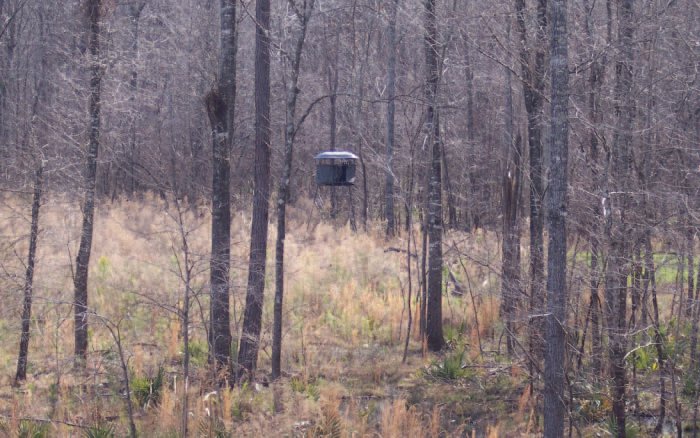
The design, or layout, of a wildlife clearcut can enhance hunting opportunities as well. For the first 1 to 3 years, the clearcuts themselves will provide good hunting. The cut will have quality native browse and some cover. Position deer stands along the edge or use a tripod. However, as the wildlife clear cuts get too thick, you will not be able to see deer. Therefore, when designing the wildlife clearcuts keep the long-term picture in mind. What will the area look like in say 10 years? There are several wildlife clearcut designs that will enhance hunting opportunities. The goal is to influence deer movements to benefit hunters. Some designs form long edges deer will travel along, some create coves or pockets of open woods between clearcut areas that deer will traverse, while other designs may direct deer traffic between two cut areas. If wildlife clearcuts are large enough and the situation allows for it, I have had great success tying in or installing Hub & Spoke food plots or senderos in the cuts. Regardless of the design or shape, try to maintain a few shooting lanes or fire breaks open along the edges. As the cuts mature, these will be great places to observe or harvest deer. See diagrams for wildlife clearcut designs that have worked well for me. Not all designs will work for every property. Again, characteristics and constraints of your property will dictate the appropriate design and size.
Conclusion
Habitat management comes in many shapes and forms and the strategies employed are as diverse as the properties they are being done on. Installing wildlife clearcuts is just one of the tools you can use to enhance the wildlife value and hunting opportunities of your property. If your property has good habitat diversity and interspersion, wildlife clearcuts may not be needed. However, if your property is a monoculture of even aged pines or mature hardwoods, wildlife clearcuts can provide much needed food, cover and hunting structure; not to mention a source of revenue – which is always good.