
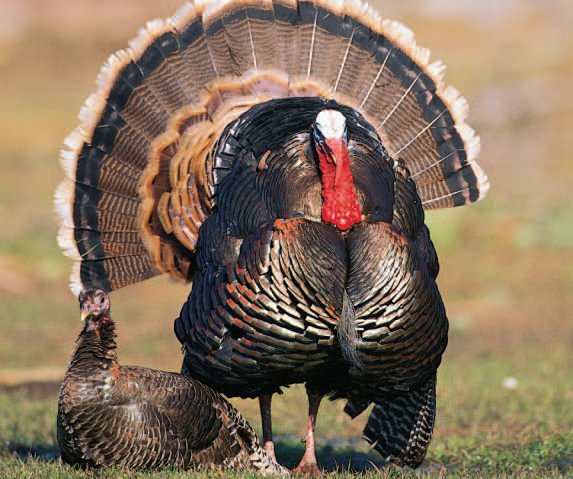
It’s the second week of spring turkey season and I can’t find a bird that will gobble. Aliens have either abducted them, hunters have killed them all, they have moved out of the area, or the breeding season is over. Except for the alien hypothesis, these are all reasons I hear from hunters for why turkeys seem to stop gobbling mid-season. But, for the most part, the gobblers are still here.
Ultimately, the length of the day, referred to as photoperiod, triggers the wild turkey’s mating behavior: gobbling, strutting, spit and drum and mating. However, there are other factors that will affect breeding behavior and provide plausible explanations for why you may not hear much gobbling at times. Breeding season, weather and hunting pressure all play a role.
Gobbling is the mating call produced by all male turkeys with the goal of attracting hens to the gobbler. This fact by itself puts the turkey hunter at a disadvantage. A gobbler expects the hens to come to his gobbling and he would rather not have to go to the hens. The “spit and drum” sound gobblers make is a close-in call used to attract hens that are already close to the gobbler. Fortunately for the turkey hunter, gobblers will at times go to the calling of a hen. But don’t feel bad when the last thing you hear from that old longbeard is a few gobbles as he moves away from you. It’s probably not you….he just expects you to follow him.
But how many times have you stood in the predawn darkness listening for that long anticipated gobbling only to hear nothing? You heard the birds gobbling a week ago, but nothing now. Let’s look at some reasons for this common problem.
No birds!
Despite how common turkeys are across the Southeast, it’s not uncommon to have birds leave your property for some “greener pastures.” This happened to me on a lease I recently joined this past spring. I scouted the property in March but found little turkey sign. There was plenty of sign from the winter so I know the birds were in the general area. There were some great looking hardwood bottoms and most of the timber in the uplands was older. I was the only person that turkey hunted the property, so I was sure no other hunters had molested the birds. I looked and listened for the birds. Although I had heard some gobbling in the weeks preceding opening day, I could not find one gobbler after opening day. In fact I had even located two gobblers the day before the season opened, but by the next day they vanished.
I hunted that 1,300-acre property for the entire season, and except for a couple of hen tracks and an occasional hen sighting, I never saw or heard the first gobbler. However, the reason for the lack of birds became apparent when I started to talk with surrounding landowners. Unfortunately, compared to the land around my hunting lease, the land I was hunting offered poor spring turkey habitat. There was plenty of large timber, but the food plots were abandoned for several years, the pine timber had never seen any prescribed fire, and no new clearcuts were availing to provide good feeding areas for the turkeys in the spring. Instead, they migrated across the creek to a property that had well-managed food plots, pastures, and some well managed timber.
I have worked with many landowners that complain that during the fall they have so many turkeys scratching in the woods they can’t hear themselves think. But come spring, the birds leave. Well, likely the birds did leave and found better spring-time habitat nearby. And for turkeys in the spring, they like things “green and growing.”
Hunting pressure
Anyone who has spent time hunting public-land birds intimately understands that even a little hunting pressure will reduce gobbling. And research supports this observation (Kienzler et al. 1995). Last year, for example, I waited for daylight seated against a tree in an area on public land that I suspected turkeys were roosted. As the sun finally painted the sky, I heard two gobblers sound off several hundred yards in front of me. Just as they started getting cranked up, I heard a truck coming down a road behind me. The truck stopped, a door opened, and the hunter owl hooted trying to elicit a gobble – the duo did not respond. I heard the truck door shut, the engine started and away the hunter went, probably confident there were no birds in the area. It was 15 minutes before the birds started gobbling again.
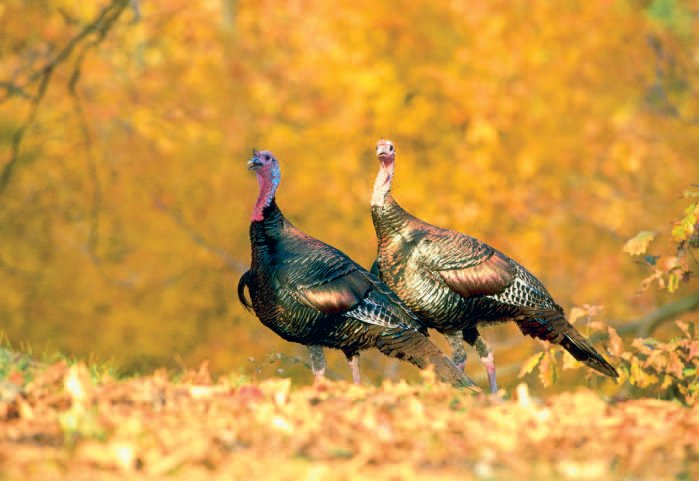
Most turkeys see you before you see them, and usually you never even know it. Many hunters call too frequently, don’t sit still, and are not patient. This often results in gobblers that figure out real fast that the seductive hen calls he hears may actually be trouble. After being bumped by hunters, they usually switch to caution mode; elicit a few gobbles, and walk the other direction.
It’s difficult to almost impossible to hunt birds without occasionally bumping one. But you can reduce pressure on the birds by working with your hunters. Encourage them to sit still, or if they can’t sit still, use a blind. Be patient with a gobbling bird. That gobbler doesn’t have a schedule he just wants a girl-friend. And if he already has some with him, it may take a while before he checks you out. Call sparingly to gobblers, and never call before the season opens. Don’t get too close to the birds when they are on the roost. Most turkeys fly down well after daylight…if it’s not pitch dark, they will see you moving through the woods, especially in early season prior to leaf out. Instead, try to figure out where the birds will go, and set up to intercept their travel.
How many turkey hunters use your land can also make a difference. Turkey hunting is not like deer hunting. You can’t just turn out 15 hunters on 1,000 acres and expect a good hunt. Most of the 15 hunters chasing turkeys will eventually end up hunting the same one or two groups of birds. One or two individuals may have a good hunt, and after a few days of this kind of pressure, the birds will become very quiet.
Most properties in the Southeast are managed with deer hunting as the primary focus. Turkey hunting is often thought of as an added perk for hunters come spring. But with the recent explosion in turkey hunters over the last 10 years, landowners and hunting clubs should focus more attention on managing for a quality turkey hunt. And quality means offering hunters enough room to hunt, and keeping pressure on the birds to a minimum. This will require some creative techniques. Breaking the property into large blocks (> 500 acres) and only allowing one hunter (or pair) in at one time, or limiting the number of hunters allowed to turkey hunt can go a long way towards maintaining a quality hunting experience.
Timing of breeding cycle
There are typically two peaks in gobbling activity. The first peak usually occurs just as mating starts. In many states, this is just prior to the opening of turkey season or at the beginning of the season. The second peak usually occurs later in the season and some research suggests that the second peak is a response to hens leaving the gobblers to start incubating their eggs. In Piedmont South Carolina, for example, the first peak occurs in mid-April and the secondary peak in late April (Bevill 1975). The secondary peak of gobbling is usually less intense. However, if hunting pressure is high, you may never even notice the second peak. And although timing of breeding plays a large role in gobbling, another factor that will change gobbling intensity is weather.
Weather
In general, the best mornings to hear gobbling are when the sky is clear, there is a light breeze and a heavy dew – clear, cool mornings. Gobbling is less intense on rainy and windy mornings. And yes, a tom will gobble in bad weather, but your odds are much better when the weather is nice. There is no doubt that some bad weather can really turn gobblers off for a day or two.
Weather can also influence the timing of the breeding cycle. Early warm springs can advance the breeding cycle, often by a week or two, whereas cold, wet spring weather can delay the breeding cycle (Vangilder et al. 1987). However, for much of the Southeast, an advanced or delayed breeding cycle will rarely ruin a turkey season. I have heard this reason over and over from hunters claiming, “they are already done for the year.” Surprisingly, I have even heard this comment in February here in South Carolina. Obviously, their hypothesis was incorrect.
You will likely hit at least one if not both gobbling peaks during your turkey season. State fish and wildlife agencies specifically structure turkey hunting seasons to maximize hunter success and protect nesting hen turkeys. If your turkeys see hunting pressure, you likely may never hear a peak in gobbling.
Conclusion
Science will never completely unravel what makes a gobbler tick. Any experienced turkey hunter will tell you that, just when you think you have them figured out, the rules seem to change. Hoffman (1990) makes the following generalizations about gobbling activity:
- Some toms gobble a lot, some don’t. Gobblers are individuals, some like to gobble a lot and some don’t. In addition, if there is a dominate gobbler in the area, the less dominant gobblers may not want to gobble for fear of a butt whooping.
- Adults gobble more than jakes. But jakes do gobble, and as the season progresses many get very good at it.
- Gobbling is more common in the early morning
- Birds gobble more on the roost than when they are on the ground
- Toms gobble more when there are no hens with them
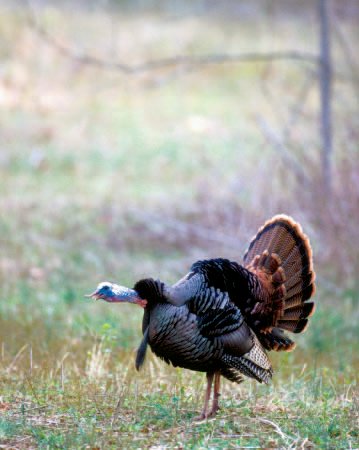
There is really no mystery to having quality turkey hunting on your land. First and foremost, you must provide habitat that turkeys are looking for in the spring. If your property is primarily forested and your neighbor has pasture, guess where the turkeys will hang out? Look for every opportunity for food plots on your land. Two plantings, clover and chufa, are at the top of the list for turkeys. Turkeys are driven by availability of food. If you have abundant food sources on your land, you dramatically increase your odds of keeping turkeys on the property.
Manage your timber! Don’t become too preoccupied with your food plots and ignore the most important habitat on your property – your forest. Get input from a biologist and forester to help guide you on timber management. Appropriate use of prescribed fire, timber thinning, selective herbicides, controlling invasive plants and clearcutting are requisite tools to keep turkeys on your land. Many properties in the Southeast have less than 5% of the property in wildlife openings. Don’t ignore the other 95% of the property.
Once you have the turkeys sticking around and you are managing hunter pressure, it’s all up to nature from there. You can’t control the weather, you can’t control when breeding will take place, and you will never completely figure out why or why you are not hearing gobbling. Just enjoy the frustration we call turkey hunting.
Literature cited and suggested readings:
Bevill, W.V., Jr. 1973. Some factors influencing gobbling activity among wild turkeys. Proc. Ann. Conf. Southeast, Assoc. Game and Fish Comm. 27:62-73.
Hoffman, R.W. 1990. Chronology of gobbling and nesting activities of Marriams’s wild turkeys. Proc. Natl. Wild Turkey Symp. 6:25-31.
Kienzler, J.M., T.W. Little, and W.A. Fuller. 1995. Effects of weather, incubation, and hunting on gobbling activity in wild turkeys. Proc. Natl. Wild Turkey Symp. 7:61-67.
Additional resources available through the National Wild Turkey Federation
Every turkey hunter should have James G. Dickson’s book, The Wild Turkey Biology and Management, published in 1992 by Stackpole Books. In addition, periodically, scientific papers from researchers across the country are gathered together in the National Wild Turkey Symposia. Symposia 1 – through 8 are now available on one CD Rom. Between Dickson’s book and the 8 symposia, there is a wealth of information available. To order, contact the National Wild Turkey Federation at 1-800-THE-NWTF or check out their website at www.nwtf.org.