
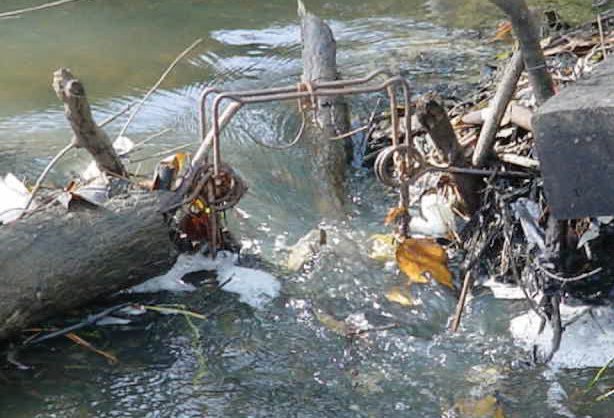
Timber owners and farmers consider them one of the most destructive creatures in the southeast, causing flooding of hundreds of acres yearly, but to duck hunters, bird watchers, and herpetologists, their homes create ideal habitats for many species of wildlife. Depending upon one’s livelihood or hobby, beavers (Castor canadensis) are either a blessing or a nuisance. In the days of subsistence hunting beavers were regarded as a source of income. Their winter pelts constituted a substantial portion of the fur trade and their meat was a steady source of protein for many people.
Years of unregulated harvest in the late 1700’s and early 1800’s quickly lowered beaver populations to dangerously low levels. In some states it was estimated that fewer than 500 beavers remained in the waterways and swamps. As a result, strict beaver trapping regulations were imposed to save the largest rodent in the southeast. After some relocation and protection, the beaver population started to rebound. Presently, beaver populations are at an all-time high, especially in the southeast. The lower demand and small bounty for southern beaver pelts have allowed beavers to expand nearly anywhere there is fresh water.
Beaver Biology and Life History
Beavers are the largest rodents in North America. Size varies depending on region with northern beavers often being larger than their southern counterparts. Large adult beavers in the southeast can weigh 45 pounds or more. The fur of these monogamous animals is usually brown, but variations do occur. Cinnamon and reddish colorations are two common tones that could be encountered. Beavers get their genus name, Castor, from the two scent glands, referred to as Castor glands, located near the anal vent which are used for individual identification at castor mounds – small clumps of mud and debris beavers put on the shore line. The nocturnal rodents use these mounds to mark their territory. The most notable part of a beaver, though, is the paddle like tail, which is used as a rudder during swimming. It may also be used for short bursts of speed.
Reproductive potential of beavers is centered on a colony’s females. Breeding season initiates during the winter with offspring dropping after a 3.5-month gestation. Litters vary in size from 2 to 6 depending on food availability and quality. As beavers are not sexually mature until about 3 years of age, and, because of their small litter size, their reproductive potential is very limited. Beavers live in colonies often consisting of adults, yearlings, and kits with up to seven or more individuals in one colony. Sub-adults usually disperse around two years of age. One stream can support numerous colonies if adequate vegetation is available.
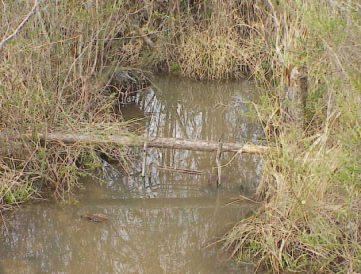
Beavers are strictly herbivores which mean their diet consists of vegetative matter. They do not eat fish, or other forms of meat. During spring and summer, food sources consist of numerous types of green plants, while winter diets are mainly woody material. A limb stripped of bark is a sign that beavers are present in an area.
Beaver Trapping and Removal
Before beaver control can begin, one must consider all options and possible implications from the management practices. Is trapping a feasible option to control the beavers? Are water control structures such as a three-log jam or Clemson pond leveler a better solution? How long will it take for a new pair to take up residence in the waterway after a lengthy trapping program has been completed? These are just a few questions to consider before engaging in a time-consuming beaver removal program.
If, after consultation with one experienced in beaver biology and control, the landowner believes that trapping is the best option, a beaver removal program can be initiated. First and foremost, it should be understood that a professional trapper is not always needed. With some guidance from an experienced trapper, a landowner will be able to trap many of the beavers. Also, as juveniles or other pairs take up residence in the beaver free area, landowners can often remove them in a relatively short period of time.
I learned how to trap beavers with the assistance of Mr. Parker Hall, a trapper with over 20 years experience. Mr. Hall allowed me to assist him on numerous beaver removal jobs, and, in the course of a few sessions, I learned how to safely use the different traps, find optimal trapping locations, and how different types can fool the wisest of beavers. There are entire books dedicated to beaver trapping, but I believe the best way to learn is to accompany a trapper for a few days of intensive instruction. Before trapping can begin, one should examine the area to locate the best sites for traps. Attempt to find all dams, the lodge, and any canals leading to feeding sites. Dams will usually have a specific place where beavers crawl over it going to feeding areas. Heavily used runs will have a hard bottom. Look for ones free of debris such as leaves or soft mud. If the water is too deep or stained to see the bottom, put on a pair of waders and walk slowly through the beaver pond. With the aid of a rake or stick, feel for U-shaped canals with a hard bottom. These runs are probably being used on a consistent basis. Be careful when doing this as some runs may be extremely deep. Often, there will be runs leading from the lodge to feeding sites.

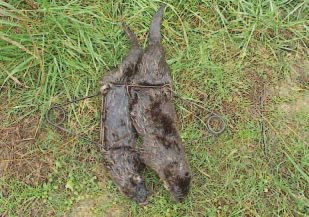
Once good trapping sites have been located, choose the best trap for the job. There are many different types commonly used for beavers, but for this article only a couple traps and methods will be discussed. A common trap used in beaver control is the Conibear 330. This body grip kill trap has a 10 X 10 inch frame that, when sprung, applies pressure to the chest region of the animal causing quick asphyxiation. They are simple to operate and very effective. Over half of the beavers I have trapped were caught with Conibears. The trap can be set on a dam crawl over, in beaver runs, directly in front of castor mounds, or in natural or artificial dive sets. The major advantages to these traps are their versatility with sets and quick kill. Disadvantages include size, possible injury when setting, and catching non-target species. As Conibear 330’s can cause injury to hands, it is highly recommended to use setting tongs and a safety catch.
Ideal locations for Conibears are at the bottom of beaver slides or in canals leading to feeding areas. If good runs are located a few traps can produce many beavers with minimal effort. For example, in one trapping site, I caught eight beavers in two Conibear sets only a few feet apart in 5 days. A well-placed dive set, either natural or artificial, can also produce several beavers. Beavers swim either at the surface or the bottom. This information makes for great trapping. A beaver will dive to the bottom if a structure, such as a floating limb or fallen tree, is in his path. Place a Conibear in the run at the bottom of the canal and place a limb or stick on top of the water. When the beaver sees the obstruction he will dive leading him straight into the trap. When setting Conibears, it is important to secure them with wire to a limb on a tree or a stick stuck in the mud to insure that the beaver does not sink to deeper water taking the trap with it.
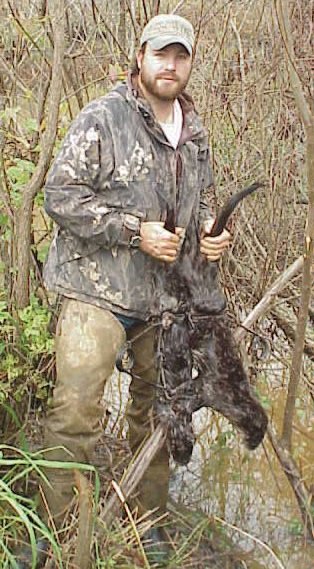
Stabilizers are often used in Conibear sets to keep them from falling over; however, they are not a necessity, though. Two well-placed sticks will also hold a Conibear correctly. Although photos and written explanations can help when using Conibears, it is highly recommended to get assistance from one who has experience with them before heading to the swamp. (Stay tuned for a future article on proper conibear setting).
Snares are another effective method for beaver trapping. A snare is a steel cable loop that beavers swim through. The snare tightens and does not allow the beaver to free itself. Because of their small size, they are easy to transport. There is little risk to the user and, if non-target animals are caught, they can be released. Snares catch the beavers live which enables trappers to move animals if necessary. Snares can be set at a dam crawl over, castor mound, and bank slide. These traps must be run everyday, as beavers have been know to chew through them. Also, snares are usually good for only one beaver as they get kinked and become unusable. Snares must be anchored to a tree as low as possible as beavers may chew the tree down and escape. They are relatively inexpensive and can often catch smart beavers that have become educated to Conibear traps. I prefer to use snares either in locations that have Conibear shy beavers or swamps that do not have a lot of good runs. A snare, using artificial castor scent, is very productive on smart beavers and can often be the best trap available.
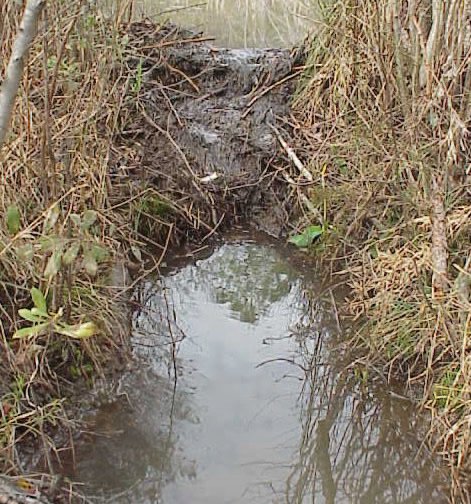
When starting out on a new beaver site, there are a few things that should never be done. First, don’t destroy the lodge. Beavers are always going to return there. If the lodge is destroyed, beavers are going to relocate in a bank den which is often difficult to find. As long as the lodge is there, finding the beavers will be easy. To see if the lodge is active, just look for freshly chewed sticks on or around it. Second, never set traps at the lodge. This is something that is done only after you believe that there are only one or two left. This is their home, and if you disturb them the trapping will only become more difficult. Remember, the lodge is off limits until the end. Never set traps directly below a heavily used dam crawl over. If the dam is long and there are multiple locations that look like active crawl overs, set secondary ones, but leave the main one alone. The canal below the dam crawl over can be set 30 or 40 feet away, but never set a trap directly below the slide. If a beaver is caught it won’t spook others coming over the dam. Finally, when securing the trap to a limb or stick with wire, use at least two or three feet of wire so the beaver can float out of the canal away from others that may use the run.
This article introduces only a few methods of trapping nuisance beavers. Wildlife Trends could dedicate every page in each issue for two years to beaver trapping without covering all aspects of it. Sometimes the most productive method isn’t trapping, but use of firearms with spotlights (check state and local regulations before attempting this method). With a little instruction landowners can manage nuisance beavers. In areas near river systems or creeks, total eradication is nearly impossible. There will always be young adults looking for their own territory once they disperse. If one beaver has found your property, there is a good chance another one will too. Almost anyone can learn to trap beaver, but there is always the option of hiring someone. During the trapping season, it may be possible to find a trapper to remove the beavers in exchange for the pelts. There are also private companies, or individuals, who will trap the beavers for a fee. Some charge by the week while others charge by the beaver. If a landowner does not have success finding a trapper or company to conduct a beaver removal program, a final option is to contact the local USDA – Wildlife Services office. Landowners sign a cooperative agreement with the office to conduct a trapping program. The landowner agrees to reimburse the agency for all expenses accumulated during the period in which trapping takes place.