
Until as recently as the 1980’s the northern bobwhite was abundant in most counties of the Southeast. The prosperity of the species during most of the 1900’s was primarily due to the widespread mosaic of small farmlands and the abundance of burned open habitats. However, agricultural economics began pushing the farming and timber industries towards larger areas of cleaner crops with less native ground cover and fewer “weeds” that were needed to support quail. While there are many complex factors involved in the restoration and management of the bobwhite and its habitat, we need only to examine the nature of those native understory plants to solve the most important piece of the habitat puzzle. Virtually all the requirements of the bobwhite can be found if one looks in the grass and weeds. The point is, without quality, burnable, native vegetation it will be almost impossible to successfully build and maintain a viable wild bobwhite population.
While it is relatively easy to describe what a desirable understory plant community looks like, with regards to meeting the needs of quail, it is not as simple to instruct one on how to achieve it. This is because almost every land manager starts from a different point. There are all kinds of landowner situations that vary in: size of tract, soil, timber type and age, agricultural history, or any of several other factors that will have bearing on how the manager proceeds towards building quality ground cover. The answer is further complicated by the fact that quail need more than one successional stage of ground cover, due to the shifts in life cycle and seasonal requirements of the species. Fortunately, there has been some amount of research and headway made with respect to reaching a desirable destination from all the various points. While there are other (non-herbaceous) habitat features that are important from time to time, this article will focus on the creation of the functional herbaceous plant community that will support quail, considerations for different starting points for land owners, and the maintenance of these communities through management and time.
A Picture of the Correct Understory
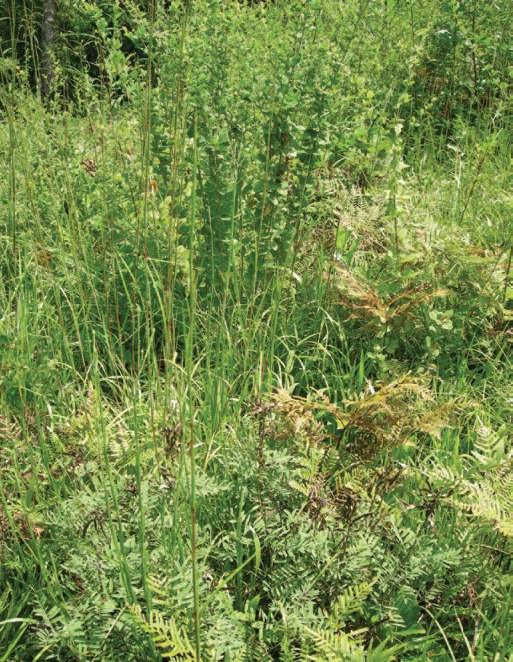
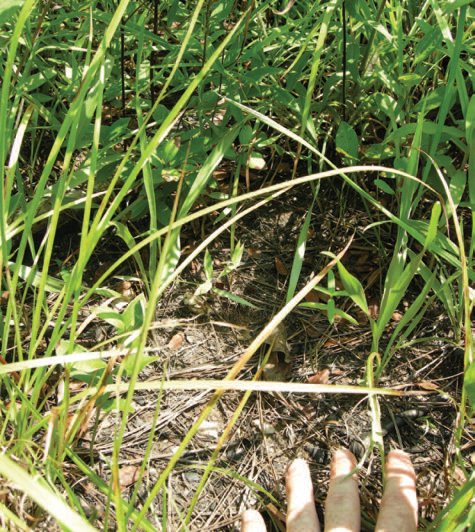
In general, quality bobwhite ground cover will usually consist of many species of herbaceous plants, including native bunchgrasses, legumes, and composites. Native bunchgrasses include bluestems (Andropogon / Schyzachyrium spp.), Indiangrasses (Sorghastrum spp.), plumegrasses (Saccharum spp.), switchgrasses and panicums (Panicum / Dichanthelium spp.), oatgrasses (Danthonia spp.), lovegrasses (Eragrostis spp.), needlegrass (Piptochaetium avenaceum), spikegrasses (Chasmanthium spp.), and wiregrasses (Aristida spp.), depending on the region. Native bunchgrasses grow in a clumping habit, and therefore are typically naturally intermixed with several other forb species and bare ground, as well Figure 1). This is the reason they are so important to quail.
In any given unimproved (non-agricultural) forestry setting, these native grass species will probably be present to some extent on the upland sites. But these species generally prefer open sunny conditions, of course, so maintaining an open canopy is inherently important in building good quail habitat in your timber stands. Perennial bunchgrasses provide foraging, brooding and nesting cover for quail. While they generally produce small seeds that are typically of little value to the bobwhite, they are very important for another reason. These grasses constitute the major portion of the fine fuels necessary to carry productive fire in open stands and meadows. Regular fire will promote the establishment and maintenance of a diverse community of other herbaceous plants that will satisfy the nutritional needs of quail, with respect to seed production. High quality seed producers including native legume species like partridge pea (Chamaecrista spp.), native lespedezas (Lespedeza spp), pencil flower (Stylosanthes spp.), wild beans (Rhyncosia spp. / Strophostyles spp.), and Beggarweed (Desmodium spp.) are often quite abundant on fire-maintained upland sites. Sedges (Carex spp.), foxtails (Setaria spp.), crotons (Croton spp.), and composites like beggarticks (Bidens spp.) are among the other important “seed weeds” that naturally occur in open stands and edges. This complete “working” plant community, refreshed periodically with fire, will also provide a fairly good base of invertebrates and succulent vegetative matter needed by bobwhites in spring and summer during mating and brooding season. Quality brooding habitat can be created or enhanced in other ways as well, and is discussed later in the article. While there may be a few trees, shrubby thickets, and other structural features present in the picture of an ideal quail landscape, this diverse grassy plant community is the foundation of desirable bobwhite habitat.
Starting Points
Stand structure, soil type, and land use history will usually dictate what kind of vegetation is expressed (or will be potentially expressed) on the ground of a particular location. These factors should be weighed when considering sites for quail habitat improvement, as they will influence how much cost and effort will be needed to create desirable native plant communities. On upland cutover areas or on thinned timber, the appropriate ground cover vegetation may already exist, or the site may just need some burning or selective herbicide treatments to reduce hardwood encroachment. In most cases, on natural, non-agricultural sites there will be enough of a seed source of the desirable native weeds and grasses to forgo any need for native plantings. The existing community would need only to be released and adjusted through regular fire and control of hardwood competition (shading). Unimproved (nonagricultural) natural pine stands and cutovers are generally the easiest of sites on which to create and maintain ideal quail understory.
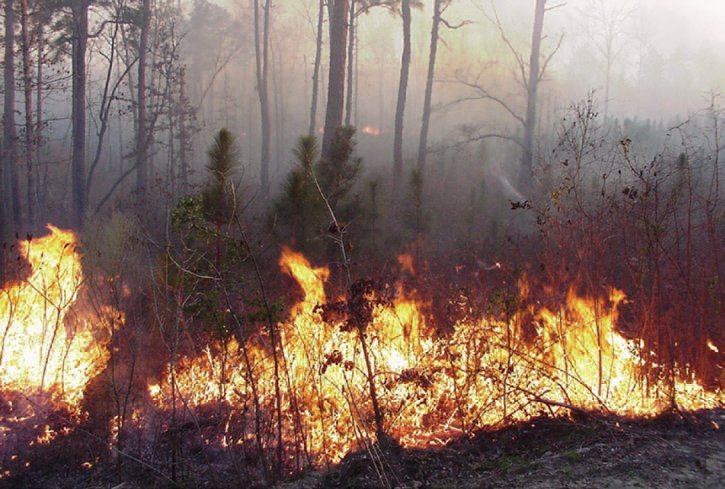
One tool that is often overlooked when starting the process of building open early seral quail habitats is growing season (late spring and summer) fire. Growing season fire in the southeast has been a subject of some debate with regards to nest mortality, however, its effectiveness for controlling hardwood saplings and promoting a grassy bunchgrass understory is well documented. Waldrop et al. in 1992, found that a frequent summer burning regime was successful in completely eliminating the hardwood sprouts in a stand. Using small, alternating burn blocks, managers on the Talladega National Forest, USDA Forest Service, regularly use early summer fire to create and maintain grassy understories in open mixed pine timber stands and manage successfully for quail. Understory species propagules (seeds and/or rhizomes) respond naturally to the disturbance of fire, and in turn those species are released and expand across the stand.
On the other hand, if you want to build native plant communities on sites with an agricultural history, odds are that it will be more difficult to create a diverse burnable understory. Fallowed row-crop sites typically have an abundant seed bank of annual pioneer weed species (both native and exotic), and may serve a manager better as brooding patches maintained by fall and winter disking, rather than by fire, especially if bunchgrass cover is already abundant in adjacent areas. These old agricultural fields can be good producers of ragweed (Ambrosia spp.) dominated brooding habitats. However, unless these areas were in pasture production, these sites can usually be successfully converted to native perennial understories, by planting with the appropriate species, also. One or two site preparation applications (in the summer and fall), using a glyphosate herbicide would likely be needed prior to the next year’s planting to reduce competing species like Johnsongrass (Sorghum halapense). Typically, native warmseason bunchgrasses are planted to begin the process so that the stand can be burned periodically, which in time will probably produce a functional herbaceous ground cover, with regards to quail habitat. Depending on how quickly the manager wants to “restore” the site, more supplemental planting or selective herbicide application may be needed. Native species site preparation and planting is discussed in more detail later.
Former pasture sites (containing exotic sod-forming grasses such as bahaia, fescue, and Bermuda grass) are probably the most expensive and difficult to restore to natural conditions. Before any meaningful native planting can occur, it will almost always be necessary to clean the slate of whatever pasture grasses are present, using one or more commercial herbicides (Figure 3). Over time, if any of the “big three” pasture grasses mentioned above are present in an open situation, they will most often outcompete the native species by forming a thick, continuous monoculture with no access to bare ground. While good for heifers and horses, this situation is virtually useless to a bobwhite. Quail, especially poults, have trouble negotiating through the thick sod and thatch, and if any seeds from the occasional desirable plant do happen to fall into the tangles of grass, they are generally rendered unavailable to the bobwhite.
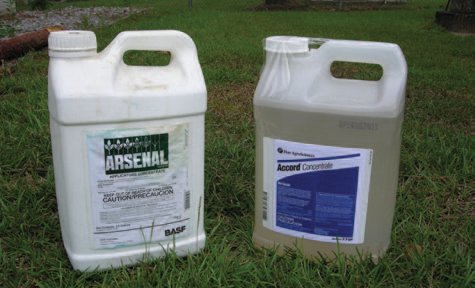
Again, it is very important to spend the time and money up front to eliminate pasture grasses from the site, prior to native warm-season grass planting. Many land managers have been tempted into trying to plant strips of native grasses within their stands of pasture grass. These ventures almost always result in wasted effort and money. One effective site preparation treatment is to mow the site in early spring and apply Arsenal (imazapyr) in late spring, or use sequential applications of Accord (glyphosate) at two month intervals throughout the growing season (Longleaf Alliance 2010, CWC Chemical 2010). Use plenty of water in tank mixes when treating pasture grasses. Follow-up treatments may be necessary even in the following year. When it is necessary to spot-treat exotic grasses amongst native warm season species, imazapyr at low rates can be used, as most native warm bunch grasses are somewhat tolerant of the herbicide (See Table 1).
Once the pasture grasses are removed, you may be surprised at what species respond naturally from the seed bank and/or surrounding sources. In fact, there may not even be a need, in many cases, to plant any native seeds on the site as existing species will be released by the herbicide treatment. It is important to remember that quality herbaceous quail habitat can’t be built overnight and that sometimes the benefits of waiting an extra year to see how a site responds naturally can often be worth the time. However, on some areas there just might not be enough of a native grass response to burn the site effectively, and supplemental planting may be needed.
Native Species Planting
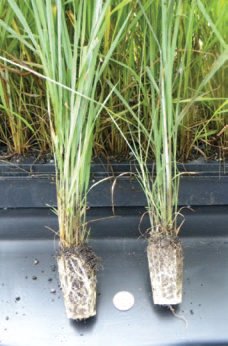
Native species can be established using seeds or plugs. Usually seeding onto a prepared seedbed is the cheapest method, however, plugs may be a better option if the site is rough or the manager is simply trying to “inoculate” the site with a particular species that may be lacking. A few vendors now sell plugs with the same dimensions as standard longleaf pine tublings, and so the plugs can be planted with a longleaf dibble (Figure 4). When planting native seed or plugs, it is important to find the most local ecotype available for your location. For example, coastal plain varieties may not be as likely to survive in the soils and colder temperatures of the Appalachian Mountains, and vice versa. Native seed is often quite expensive, but many species (especially warm season grasses) have become more affordable with the increased popularity and availability. The most commonly planted native species for quail include little bluestem (Schizachyrium scoparium), big bluestem (Andropogon gerardii), yellow Indiangrass (Sorghastrum nutans), switchgrass (Panicum virgatum), and partridge pea (Chamaecrista fasciculata).
Often germination rates of native grasses are not, on average, as high as traditional hard-grained species. For this reason, as well as the fact that there’s usually a lot of inert material and debris in the bag, they are usually purchased in Pure Live Seed (PLS) amounts. PLS is calculated by simply multiplying the percentage of pure seed (minus inert and other crop materials) by the total germination rate. When establishing the native warm season grasses by seed, it is best to drill the fluffy mix into a prepared seedbed using a specialty drill, like those manufactured by Truax. Warm season grasses are usually established from March through May and germination typically occurs when soil temperatures are above 50 to 55 degrees. Depth of planting varies but the appropriate range for the species mentioned above is generally ¼ inch or less. If obtaining a specialty drill is not feasible, these species can also be broadcast by hand or in a spreader at a little higher rate (Table 2). In fall seeding applications, winter wheat or oats are sometimes used as a carrier in a cyclone seeder and are then mowed prior to seed head formation.
Typically no fertilizer is applied to the site when planting native warm season grasses. Fertilizers usually only encourage the growth of non-desirable annual weed competition. If the native grass seed source is from the general vicinity or same physiographic province of the planting area, the species being planted will usually be adapted to the fertility of the local soils and can usually persist, even on relatively poor sites without any fertilization. When broadcast-planting native warm season grasses, it is very important to have a well-prepared seed bed and to cultipack after seeding to ensure good seed to soil contact (Harper et al. 2004).
Maintaining the Understory
The perfect quail understory at any point in time is still an ephemeral phenomenon, unless of course, there is some type of regular disturbance to maintain its existence. There are several tools that can be used to accomplish this but the best and the cheapest one is most often fire. Once a somewhat desirable plant community has been established or released, there are many physiological reasons why fire is better than mowing or herbicide alone. Many of the plant species (including wiregrass) used by quail specifically need fire to stimulate flowering, set fertile seed, or germinate, and their abundance in the stand will be based on whether they are exposed regularly to fire (Outcalt 1994).
Once the correct structure and native species composition is reached, and a regular disturbance regime (prescribed burning) is underway, there are a few other things a land manager needs to consider during the maintenance phase. One important thing is the manipulation and maintenance of an open canopy, if the site has timber. As time passes, it will be important with regards to bobwhite habitat, and to your wallet, to plan and conduct timber harvest treatments. Generally, traditional thinning operations (without site prep) do not pose any serious risk to physically damaging the rhizomes and/or seed reserves of the native plant communities across entire upland stands. However, if clearcuts are used and there are need to regenerate the timber stand, there are several things to consider when looking at site prep options. It is well documented that very intensive site prep practices (including shear and pile/windrow) can almost totally remove the existing perennial grass component of a stand. Virtually all the rhizomes and seeds can be displaced and pushed up to be burned in this type of treatment. A study currently being conducted by Troy University and the USDA Forest Service in the Alabama Gulf Coastal Plain, noted that cutover stands that were site prepared using shear and pile were dominated in the years to come by annual pioneer species and sand blackberry (Rubus cuneifolius), while control stands that were burned only retained their dominant bunchgrass component. Exotic invasives like bahaia were also noted more frequently in the shear and pile sites, since there was more opportunity for them to move in and less native competition.
Heavy drum chopping has the potential to significantly reduce perennial bunch grasses in a stand, in some cases also. For example, studies have shown that two passes of a drum chopper in wiregrass sandhills will nearly eliminate wiregrass from a site (Longleaf Alliance 2010). Contrary to popular belief, selective herbicide site prep tends to leave more of the native perennial herbaceous community important for quail intact, than does mechanical prep. For example, one study in a Florida sandhill community found that a broadcast application of hexazinone removed only a few of the desirable understory plants but the native grasses persisted (Longleaf Alliance 2010). Many native legumes are also not harmed by label rates of hexazinone or imazapyr, and stimulation of profuse blooming has been observed in the second growing season after the application (Longleaf Alliance 2010). An intensive mechanical site preparation will generally eliminate many of these root systems, and many of the species that invade the site will most likely be weedy annuals or exotic opportunists.
Conclusions
A functional herbaceous plant community is the foundation of a successful bobwhite management program in the Southeast. In open native environments regularly maintained by fire, native grasses and forbs will provide quail adequate cover structure and food resources, as well as access to those resources. Certain aspects of the bird’s requirements may be met and/or enhanced by other means, but the majority of good bobwhite habitat will usually include the type of native species composition, structure, and maintenance that was discussed in this article. However, it is important to remember that there are many points from which to start heading towards a good quail understory, and many specific issues may warrant the counsel of a local professional.
References
Harper, C.A, Bates, G.E., Gudlin, M.J., and M.P. Hansbrough, 2004. A Landowner’s Guide to Native Warm Season Grasses in the Mid-South. University of Tennessee Publication, 25 pp.
Native Warm-Season Grass Bulletin; Vegetation Management Options (website information) 2010. http://www.cwc-chemical.com/NWSG.htm
NRCS, 2003. Plant Sheet: Little Bluestem, Jimmy Carter Plant Materials Center, Americus GA. 6 pp.
Outcalt, K.W., 1994. Seed production of wiregrass in central Florida following growing season prescribed burns, Int. 1. Wildland Fire, 4, 123.
The Long Leaf Alliance, 2010. Restoring and Managing longleaf; Preparing the Site for Restoration – Situation #1: Cutover Land (website information). http://www.longleafalliance.org/situation1.html
Waldrop et al., 1992 T.A. Waldrop, D.L. White and S.M. Jones, Fire regimes for pine-grassland communities in the southeastern United States, Forest Ecol. Manage. 47, pp. 195–210.
Situation Recommended Herbicide Application Rate
Table 1. Herbicide Application Situations Relevant to Native Understory Release and Establishment. NOTE: These are suggested rates for general applications. Always follow specimen labeled rates and procedures for each local situation.
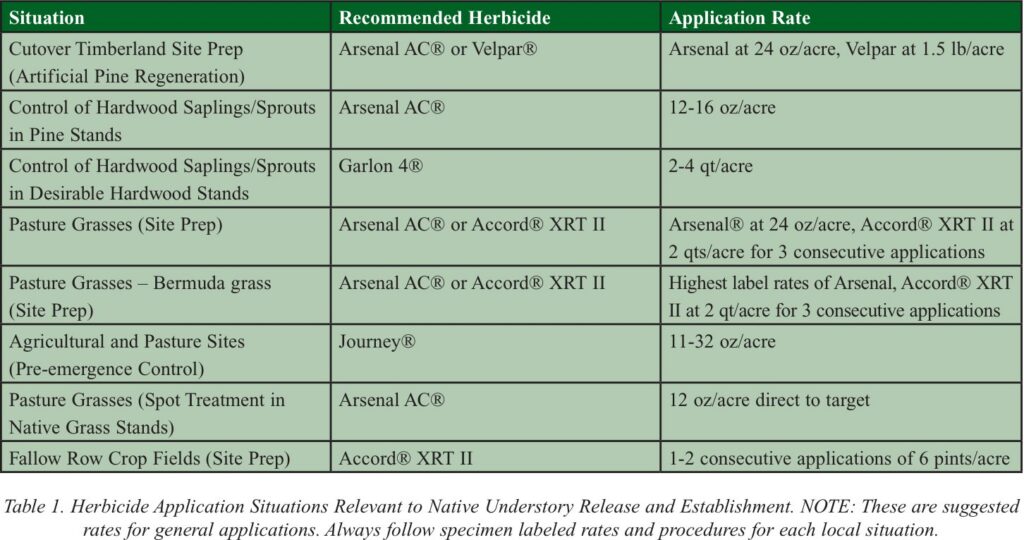
Table 2. Typical seeding rates for establishing native species on fallow fields (adapted in part from NRCS Plant Sheet: Little Bluestem, Jimmy Carter Plant Materials Center, Americus GA. 2003).
