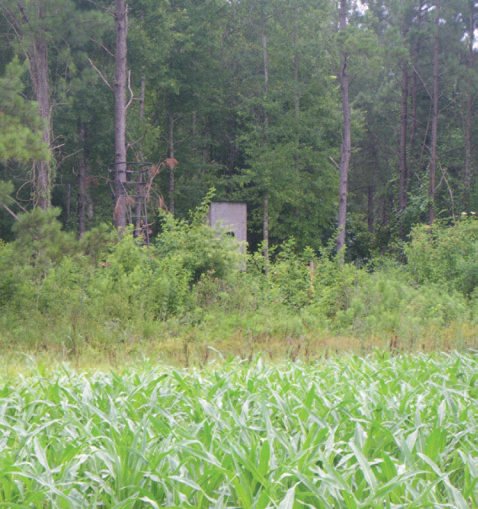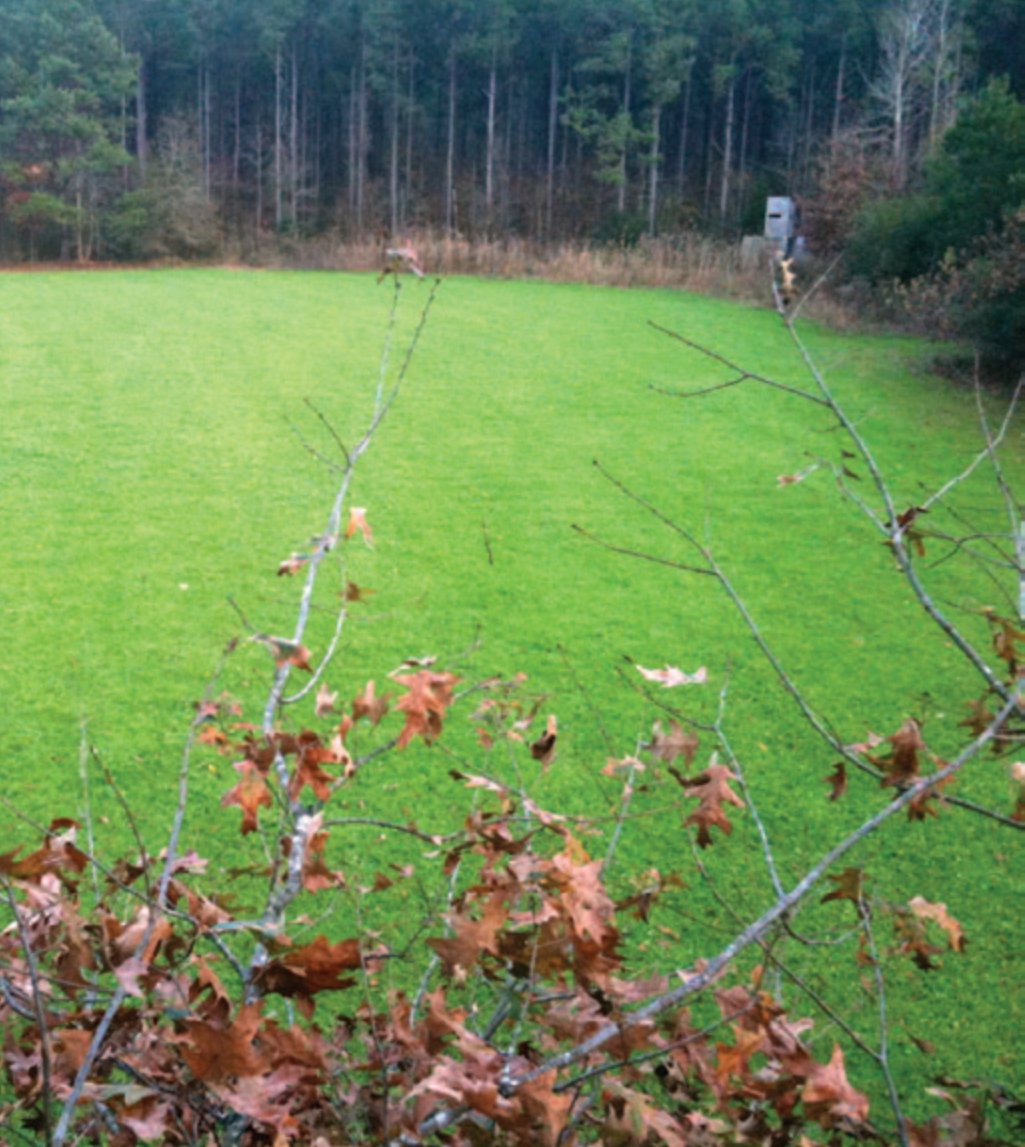
It’s like clockwork. Around mid-December each year our biologists at Westervelt begin receiving calls from frustrated hunters that are not seeing deer and most want to know “what happened to the deer?” We commonly hear statements such as “We must have shot too many deer last season”, “There are tracks everywhere – the deer have gone nocturnal”, “Coyotes must be getting them”, “must be the moon…weather related”, or “We had plenty of deer early in the fall, but they have vanished now – our neighbors must be baiting them”. Once we have heard them out and given them time to vent their frustrations, we begin asking questions about how much rainfall they have had through the summer and fall, what kind of acorn production they are seeing, and how they hunt the property because all of these things can affect deer movement.
In years of abundant rainfall and/or acorn production (like 2009), deer movement, and thus deer sightings, are going to be lower due to the amount of natural foods available to deer. With lots of food in the woods, deer simply do not have to move far to meet their daily needs which results in less movement, fewer deer seen by hunters, and overall tougher hunting. However, regardless of how much food is available, reduced deer movement and fewer deer sightings by hunters is often associated with how the property is hunted and the amount of hunting pressure being applied. That is, hunting strategies and pressure play a significant role in deer movement, the number of deer hunters see, and ultimately hunter success and satisfaction.
While hunting pressure affects deer movement regardless of age or sex, it is particularly evident in buck movement. As a consulting wildlife biologist who assists landowners, managers, and hunting clubs across the Southeast, I see a similar scenario play out over and over. First, hunters recognize that they want to “grow bigger or better deer”, then they incorporate QDM strategies where they allow younger bucks to mature and initiate a more aggressive doe harvest to manage the overall deer density and balance the adult sex ratio, they put more effort into habitat and food plot management to boost the nutritional value of their property, then after about 3 years they become frustrated because they are seeing fewer deer and the mature bucks they have worked so hard to grow are not making it to the skinning shed. There are usually two primary reasons for hunters practicing QDM to see fewer deer leading to frustration – 1) chances are that they started with an overpopulated deer herd where they were used to seeing lots of deer (in fair-to-poor health and few mature bucks) and through QDM strategies that improve the health of the herd (balancing the sex ratio and maintaining a desirable deer density for the habitat) have effectively reduced the number of deer on the property – leading to seeing fewer deer while hunting; and 2)hunters have not adjusted their hunting strategies to increase opportunities to see and harvest mature bucks. Generally speaking, “growing big bucks” is the easiest thing we do as biologists; getting them in front of hunters is the challenge.
As bucks mature, they become smarter, more cautious and research has shown that they generally move less, particularly during daylight hours, than young bucks. To see and harvest mature bucks, hunters must hunt smarter and adjust hunting strategies. On properties that experience heavy hunting pressure, it is common for mature bucks, and other deer for that matter, to “disappear” once hunting season opens and hunter activity increases. By disappear I do not mean they pack their bags and leave; they simply become educated and learn how to avoid hunters. While the focus always seems to be on bucks, deer in general learn to avoid hunters once hunting pressure is applied to a property.
Addressing a “hunting pressure problem” with a client or hunting club group has to be done delicately. Hunters are easily offended when you tell them they need to reduce hunting pressure if they want to improve their hunting experiences and success. Some tune out of the conversation pretty quickly because the first thing that goes through their mind is “you’re telling me I have to hunt less” – which is something they do not want to hear. Where in fact, reducing hunting pressure does not necessarily mean that you have to hunt less, you simply need to hunt smarter. Once I explain this, they are all ears and are anxious to learn more about how to hunt smart.
Ways to Reduce Pressure
Understand how deer use your property
The first step in learning to hunt smart is to understand how deer use the property you are hunting. Where do deer bed? Where do they feed and when? How do they use the property to travel? These are obviously questions that every deer hunter seeks to find answers to when they begin hunting a property. I can’t tell you how many countless hours I have spent studying aerial photographs of properties I have hunted trying to figure out what the deer were doing and how I could position myself in a location to cross paths with them as they move from one place to another. Understanding how deer use a property will make you a better and more successful hunter – period. However, knowing this will also help you hunt smarter and have less impact on deer thereby reducing your hunting pressure and improving the quality of your hunts over the season.
One of the best ways to understand how deer use a property is to study aerial maps to determine logical bedding areas, feeding areas, and travel areas. Once you have identified these areas on the map, you will need to get in the woods to ground check the property (scout for deer sign) to confirm your speculations. In my experience, the best time (and “smart” time) to perform full-scale scouting missions to learn a property is right after the hunting season ends. Because deer have been exposed to a great deal of hunting pressure over the hunting season, they are using areas that they are most comfortable in and feel safe. If you find out where they are now, you will know where to find them next season once the hunting pressure builds and deer seem to disappear.
During this time of year the weather is also still cool (or cold), leaves are off the trees, and buck sign such as rubs and scrapes is still fresh. Remember, your goal is to determine how deer are using the property which will help you hunt smarter next season. As such, walk trails out to see where they go, be aware of potential food sources (such as a large oak tree, honey suckle thicket, food plot, or agriculture field), pay attention to which direction deer travel various trails and why, and look for potential hunting stand locations that will allow undetected access and scent management. Again, to reduce pressure or disturbance to deer, full scale scouting missions should not be done right before or during the hunting season, particularly on small properties. This only adds to the already increased hunter activity on the property and will result in increased pressure.
Keep in mind that how deer use a property can not only change from year to year as habitats change, but can change from month to month or even week to week during hunting season as food sources change. However, once you get an overall understanding of how deer use the property you will be on your way to hunting smarter and having better hunts throughout the season.
The following tips and strategies to minimize hunting pressure and improve your hunting experiences and success are based on my personal and professional experiences over the past 25 years; particularly experiences over the past 10 years as I have become consumed with the challenge of bow hunting specific mature bucks each season and as my role as a deer biologist has been to not only produce a healthy deer herd with many mature bucks, but to ensure my clients have exciting and successful hunts.
Fly under the radar
Many factors should be considered when determining where a deer stand should be placed. Obviously, the location should conceal the hunter and provide relatively easy shots to harvest deer. However, I am talking about much more than making sure you are hidden. This is what most hunters try to do, even those that don’t hunt smart and apply excessive hunting pressure. Besides concealment, important things to consider include deer movement (i.e., where will the deer be coming from and where are they going?), where will the sun be during most hunts (i.e., will this be a better morning stand or afternoon stand?), how will hunters access the stand, how will the topography or landscape affect wind direction, and which wind direction will you be able to hunt the stand. Remember, in most cases, the goal is not to set a stand up for a one-time ambush, rather it is to place stands in locations that will allow hunters to see and harvest deer with minimal impact throughout the season.

Many hunters do not realize the negative impacts they have on deer movement simply by the way they enter or exit a stand. Most hunters feel that if they do not shoot, or a deer does not “bust” them in the stand that they did not bother the deer in the area. Nothing could be further from the truth. In fact, hunters spooking deer (either by sight or scent) accounts for over 80% of the “we’re not seeing any deer” problems reported by hunters I described earlier. When visiting properties of hunters who report “not seeing any deer” problems, it is common to see hunting stands placed directly on food plots or over feeders (where baiting is legal) in which hunters spook deer feeding on the plot or feeder each time they access or leave the stand. In some cases, hunters even have to walk across a food plot to get in or out of a shooting house! Getting to a stand is not usually a problem because hunters generally enter the area before peak deer movement, but climbing down and walking through a food plot full of deer right at dark has significant impacts. Whether you shoot or not, if deer run out of a food plot when you get down, or you constantly hear deer blowing at you in the woods (because they smelled you) you have impacted them. If this continues over the season, deer will enter the field later and later resulting in fewer deer seen by hunters during daylight. Westervelt collects thousands of hunter observations each year from our hunting clubs and clients. When analyzed, it is quite obvious when a club or client does a poor job with stand placement and/or wind management because fewer and fewer deer, particularly mature bucks, are reported with each consecutive hunt from a particular stand. Until they see this information on paper, some hunters just don’t understand the impacts they are having on deer movement and tend to blame poor hunts on other things.
To minimize hunting pressure on food plots, be very conscious about how a hunter will access the stand without impacting deer. At my hunting club, we try to locate every stand in a manner that a hunter could get in or out of a stand 30 minutes before dark with the food plot full of deer. So how do you do this? Besides considering the wind direction (which I will discuss later), the key is to locate stands at least 20 yards off food plot edges and in the woods or cover. To get hunters into and out of the stand, an access trail is needed. These trails allow hunters to step off of a main road or trail leading to the food plot to access the stand undetected. To really fly under the radar, we often trim and rake out access trails that lead to a stand. This allows a hunter to walk silently on bare dirt. If existing vegetation in front of a stand does not provide adequate cover to conceal an approaching hunter, some type of screen is needed. By screen I mean something that will provide enough cover to hide hunters as they walk up to and enter a stand. Screens can be made of many things. We often plant a 20 ft. wide strip of Egyptian wheat, corn, or sorghum Sudan in the food plot along the edge where a stand is located. Switch grass makes an exceptional screen that does not have to be planted each year. Other screens I have used include dirt mounds, slash piles, pines, cedars, Leyland cypress or sheets of tin attached to the stand itself. The goal is to provide something between the deer and the hunter to allow the hunter to go undetected.
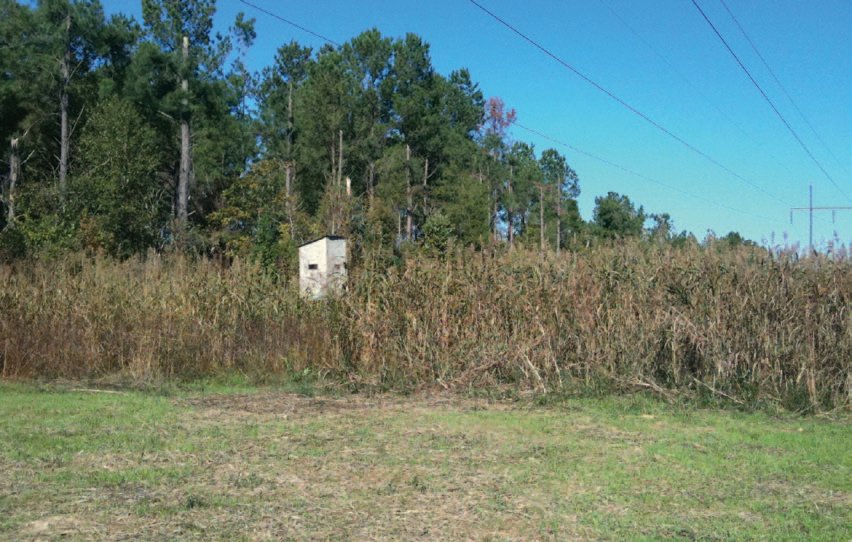
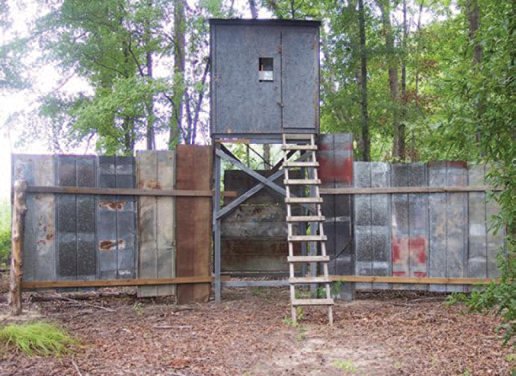
Stands in the woods, such as a ladder stand in a hardwood hammock, are treated a bit differently. The primary considerations in placing these stands are wind direction and where deer are expected to be bedded, traveling or feeding. Access trails should be trimmed and noisy obstacles removed (e.g., limbs or dead sticks from a fallen tree). Ideally, access trails can be raked to bare ground but this is not always an option. Stands in the woods generally do not require a screen, but concealment in the stand is desired. Try to place these stands in an evergreen tree if possible. Obviously pine and cedar trees are a good choice, but in hardwood areas choices may be limited. Water oaks are a good choice if available. They are deciduous (loose their leaves), but generally hold them until late in hunting season. The lowest impact will be made by hunters who ensure the wind is not carrying their scent to where deer should be (such as bedding or feeding areas) and can slip in and out of a woods stand quietly.
Keep your head in the wind
As we all know, deer have an exceptional sense of smell. Once a deer’s nose detects one hint of danger, the game is often over for a hunter. Producers of consumer deer scents and human odor eliminators have capitalized on this and have become a multi-million dollar industry. There’s probably not a deer hunter out there that hasn’t bought at least one bottle of doe-in-heat urine! The reason is simple – deer constantly use scents to communicate, and their sense of smell is one of their primary defenses in detecting trouble and food. My point is that deer rely heavily on their sense of smell to survive. If your scent is blowing towards an area that deer are using, you can rest assured that they have smelled you and that you have impacted them. In many cases you will never hear or see the deer you have impacted. I once bow hunted a food plot with a friend where he sat on the opposite side of the food plot than me. The wind was carrying his scent across the plot and to my left. As deer thirty rolled around I saw a very nice mature buck walking through the woods towards the plot. He was on a mission and walking rather briskly. When he hit my friends scent line coming from across the plot, he hit the brakes, stood there for about 15 seconds with his nose in the air, immediately and without hesitation turned around and silently walked right back where he came from. If I had not seen this buck, my friend would not have even known he impacted a deer. That buck gained experience that he will use next time he visits the plots – which was probably under the cover of darkness! I often feel that deer smell us like we can smell a cigar. That’s probably how alarming human scent is to a deer.
Unfortunately, there are many hunters out there that think if they spray down with human odor remover, dab on some deer urine, and wear their “scent concealment suit” that they do not need to pay attention to the wind. Regardless of scent free efforts, my experience has been that if a deer gets downwind chances are very high that it will detect me. This is not to say that these efforts are fruitless. I wash everything I own in scent free detergent, wear rubber boots, often spray down with odor neutralizing sprays, and even wear Scent Lok clothing when I can. Being as scent free as possible will certainly reduce your chances of being detected, even by deer you don’t see, which help keep overall hunting pressure being applied to a property to a minimum.
As it relates to reducing hunting pressure, rambling haphazardly through the woods or hunting a stand or area with no regard to the wind direction is the quickest way to put deer on alert and reduce deer sightings. This is particularly true for stands on food plots. Hunters must be conscious of the wind direction at all times and use it to their favor. That is, always hunt the wind. By this I mean to always have the wind in your face and not blowing your scent to where you expect deer to be. I have been fortunate to have had the opportunity to work and hunt with some great hunters over the years. I mean the type of hunters you often see in magazines standing in front of a barn wall full of their trophies. Besides being great woodsmen and understanding deer, they all have a single common denominator – they religiously hunt the wind and the wind dictates where they hunt and maybe more importantly where they don’t hunt.
One of the best ways that I have found to assist in “scent management” and help minimize hunting pressure on a property is to create a wind chart for all hunting stands to help hunters make good decisions on where to hunt. This is simply a table that lists wind directions across the top (e.g., N, NW, NE, S, SE, etc) then lists the stands along the left column. In the row for each stand a checkmark is placed in each of the winds this stand can be hunted (see example). For example, if the wind was SW you would look down the column labeled SW for checkmarks, then choose one of the stands that could be hunted with a SW wind. A wind chart is very helpful for a hunting club with several members, particularly if some of the members are not experienced hunters. It is actually a rule at my club that members are not allowed to hunt a stand with the wrong wind direction – it’s that important.
Buddy Hunting
Invariably you will have some hunting stands that will not lend themselves to allowing hunters to get in and out of the stand undetected. Many of these will be located on food plots where the stand needs to be on the other end of the field due to the wind, bedding areas, etc. If this is the case, the best way to hunt these stands is to “buddy hunt”. That is, only hunt these stands when you have someone else hunting with you that can pick you up at dark. Rather than climbing down from the stand and spooking deer, allow your partner to drive up to the food plot and spook the deer out of the area. Although this certainly impacts the deer and adds hunting pressure, they associate the negative event with the vehicle that pulled up not the hunter that was in the stand. How many times have you hunted a stand where every deer that stepped out froze and stared at you in the stand for 5 minutes before going about their way? They don’t just stare at a deer stand that has been there for years for no reason. A hunter(s) has spooked them from that stand before.
Three is a crowd
This will come at no surprise but hunting pressure increases as the number of people hunting the property increases. Even with the most cautious hunting strategies to reduce pressure, more people simply add more pressure and ultimately result in fewer deer seen while hunting. One of the reasons I include this is that I am often asked by hunting clubs how many members should they have. My answer is simple – as few as you can afford. Have you ever hunted a popular public wildlife management area (WMA)? When I worked for the Florida Fish & Wildlife Commission I managed several public WMA’s. It was amazing how fast deer reacted to the intense pressure hunters put on them during the opening weekend. On opening morning, normally on a Saturday, there would be shots ringing out every 5 minutes and hunters reporting lots of action and sightings. Although there were still plenty of deer left, by Sunday morning and over the next month few deer would be seen despite deer tracks everywhere and food plots being eaten down to the ground. This is an extreme case of applying hunting pressure and the effect of lots of hunters in the woods, but you get my point. It is also worth noting that a single hunter can overhunt a property and curtail deer sightings. However, as a rule of thumb, fewer hunters are better and will result in less pressure and better hunts.
Does and food plots
Harvesting an adequate number of does each year is essential to successfully manage a quality deer herd. It is the tool by which hunters/managers control or maintain a desirable deer density and balance the sex ratio of a herd to promote a healthy population and quality hunts. As such I am often asked my opinion regarding shooting does on food plots. My answer is always “it depends”. It depends on where you are in your deer management program. If you are just starting out and have an overpopulated herd that will require aggressive doe harvest to regain control, then my answer is yes shoot does wherever the opportunity presents itself. Your goal at that point is to harvest deer – not worry about hunting quality. However, if your deer herd is in relatively good shape and you are simply maintaining the current population size and/or sex ratio, then no, do not harvest does on food plots. In my experience, shooting does on food plots applies significant hunting pressure and will reduce deer sightings. Let’s walk through an example. Let’s say you are hunting over a food plot and 4-5 deer including 2 mature does enter the field. You shoot one and it runs into the woods. Unbeknownst to you there were also 5-10 other deer in the woods around the plot that you spooked. You walk out on the plot, search for blood, and begin tracking. It is getting darker now and more deer are approaching the plot as normal but hear or smell you sending them back into cover. You’ve impacted them without even knowing it. You continue tracking the wounded doe through a young pine plantation that is littered with beat down deer trails, rubs, and deer droppings. You think you have found the ultimate deer spot and you have. It is called a bedding area; a place where deer spend much of their time before entering the food plot and you have just “contaminated” it with human scent! You finally find the deer and begin dragging her out. In the process you are rubbing against many bushes and dripping sweat leaving scent behind. By the time you get her loaded in the truck and leave the food plot it is an hour and a half after dark. You have essentially destroyed every deer trying to feed in that food plot that evening. At 5 a.m. a mature buck using the pine plantation catches wind of your scent from the night before, blows 3 times and bounces off through the plantation. Wow! I really got into that, but my point is yes, harvesting does on food plots increases hunting pressure. The landscape on most properties offers plenty of places and opportunities to harvest does rather than on a food plot.
Sanctuaries
Sanctuaries are areas where no access or hunting is allowed to provide deer with a safe haven. Creating these areas will obviously eliminate hunting pressure on a portion of your property. With the exception minimal habitat and food plot management activities, human activities are off limits which provide a place for deer to avoid pressure and relax. Deer learn about these areas quickly and will gravitate to sanctuaries once hunting pressure builds on surrounding areas. Establishing sanctuaries can be particularly helpful in reducing hunting pressure and holding deer on small properties; say less than 1,000 acres but particularly on properties less than 300 acres. Obviously bigger is better, but sanctuaries are commonly 50-100 acres. I’ve even seen hunters on small properties not hunt at all during early season to completely avoid disturbance and pressure. As pressure from surrounding properties increased, deer would stack up on their small property. When they did start hunting, it was low impact and only on the edges maintaining sanctuary in the core of their property. I generally do not even bring up the word “sanctuary” when working with a client unless the property is very small, being overhunted, or there are many people that hunt the property such as a large club. The reason for this is that hunters are generally lazy (no offense) and rarely walk/hunt far from a road. They are also creatures of habitat and generally hunt the same stands throughout the year. In most cases, every property will have several unofficial sanctuaries where no hunting takes place and few people ever venture into. I am confident that if you think about the property you hunt, you can think of a few areas that no one ever goes.
To maximize the effectiveness of sanctuaries, hunters must use restraint and never enter the designated area. Hunting the edges, however, will generally result in fun and successful hunts if hunters apply low impact/smart strategies. Again, hunting smart means using the wind to your favor and avoiding setups that allow your scent to drift through the sanctuary area.
Conclusion
Although Mother Nature can be blamed for poor deer movement in some cases, reduced deer sightings and poor hunting is often the result of high hunting pressure and deer learning to avoid hunters. Reducing hunting pressure takes effort, but is not hard to do and will significantly improve hunting experiences and success on your property. Keep in mind that reducing hunting pressure does not mean you have to hunt less, you simply need to hunt smarter. Hunting smart means that you pay attention to the wind, consider it when deciding which stand you hunt, create hunting setups that allow hunters to access and leave stands without disturbing deer, avoid disturbances on food plots and surrounding bedding cover, avoid full-scale scouting missions during the season, and set up or recognize “sanctuaries” on your property that will help reduce pressure and hold deer on your property, particularly as pressure builds on surrounding properties. Many of you have heard me say before that “great hunting doesn’t happen by accident”. I say this meaning that rarely does consistent great hunting happen without management of the habitat and herd. While you must have good habitat and a well managed deer herd to have great hunting, hunting pressure plays a significant role in just how “great” your hunting really is.