
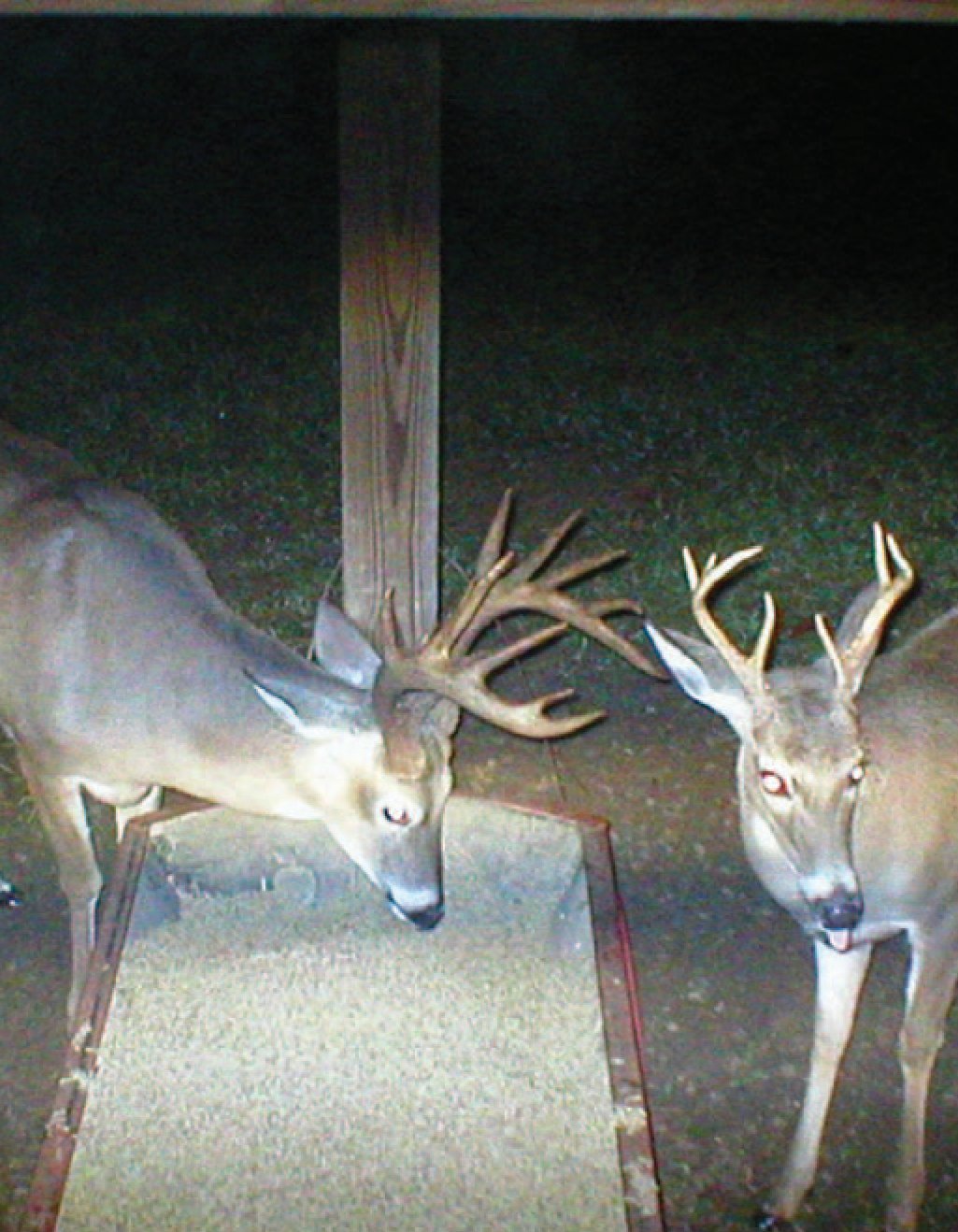
I’ve worked with numerous high-fence owners, and every high-fence property is unique regarding its herd characteristics, habitat quality, and overall management philosophies. While one property drives towards maximizing the number of 150-class bucks that can be harvest each year, the next is working towards a hunting experience where the opportunity to harvest a mature buck while seeing deer on a regular basis is priority number one. Some properties are family-owned, family-operated, and family-hunted, and others have a business foundation leading to a diversity of hunters using the property. The unique aspects of each property require that site-specific management be prescribed to ensure that each property meets the goals for which it was intended.
While there are, without question, unique aspects to every deer population and high-fence property, there are also many similarities that most high-fences share. Some of these similarities include high quality deer populations, as well as owners that take great pride in their property and deer herd. However, many other commonalities are things that could be described as negatives. The simple fact is that many high-fence properties exhibit facets that could best be described as mistakes. I’ve compiled a list of what I consider to be the most common, and easily-remedied, mistakes of high-fence deer properties, and describe how you can avoid these common pitfalls.
Supplemental Feed
Bagged Feed
Most high-fence properties have some sort of supplemental feeding program. The reason is that most high-fence properties have a deer herd that substantially exceeds carrying capacity. Supplemental feed is a critical component of every high-fence management program and is the nutritional foundation that drives growth, antler development, lactation, and reproduction.
However, I am continually surprised at the number of high-fence properties that purchase supplemental feed by the bag. I understand why the common hunter or manager who has a supplemental feeding program uses bagged feed: they may only feed a ton or two of feed a year. But, high-fence properties may be feeding 20, 30, or even 100 tons of feed per year.
The cost of purchasing feed in bagged form as opposed to bulk is significant. Bagged feed prices are inflated because of the cost of bagging, and can be as much as 25%-40% greater than the price of buying bulk. There is no question that bagged feed is convenient. Its purchase doesn’t require any special equipment, and it is easy to transport to feeders. However, I would argue that the purchase of a grain bin or other storage structure, and related equipment will pay for itself in 2 years with the savings generated by purchasing feed in bulk. In the end, the money saved by purchasing bulk feed can be invested into other management priorities.
Access to Feed
The point of a supplemental feeding program is to maximize nutritional intake of deer on the property. However, it is not as simple as putting feed in a feeder and walking away. Feeder location, number, and structure can all influence (positively or negatively) the effectiveness of a supplemental feeding program. These factors are important to consider in the context of how they affect the number of deer that are using a feeder. We tend to think that if we put out enough feed that the feeders are never allowed to become empty, that each and every deer is consuming as much feed as it desires. But, this is not necessarily the case. There is a high level of competition at feeders, and some deer may be left wanting. If you have too few feeders, there will be a greater number of deer using each feeder than is optimal. This means that at peak feeding times, many deer will not have the opportunity to eat their fill. Dominant animals will dominate the feeder. Mature males will keep younger males, does, and fawns from feeding at their will. This means that growth rates will be less than desired in these animals. The general rule of thumb is that you should have 1 feeder for every 25-30 deer on your property.
Feeder structure is another aspect of a successful feeding program. Your feeders should be of a design that allows multiple deer to consume feed at the same time. What I mean is that anything that makes a deer feel “crowded” at the feeder will decrease how much time they spend feeding. For example, if you have pig problems and have a 3-foot, pig exclusion fence built around the feeder, it could cause crowding problems. If it is too close to the feeder it may cause the deer to feel crowded, and they will become nervous when too many deer are at the feeder. This will result in deer feeding in shorter bouts, and this will reduce overall feed intake.
If you have a trough feeder with a roof, deer may feel crowded if the roof is not much higher than the top of their antlers. A feeder too close to thick vegetation at the edge of a field may cause deer not to use one side of the feeder. Feeders should be designed and established in such a way that access to feed is not limited.
The point is that anything that causes a deer to spend less time at a feeder than they would prefer is negatively affecting your management program. The problems I have described are easily-remedied, and fixing these problems will go a long ways towards increasing the quality of your herd.
Frequency of Feeding
At no time….EVER….should your feeders be allowed to run empty. Supplemental feed is the foundation of your nutrition program. If your feeders are allowed to run empty, then you are hampering the success of your management. I have seen some properties that refill feeders twice a week: Monday and Thursday. By midday Sunday (or earlier), most of the feeders on the property are empty. Unfortunately, because the property has had a deer density that has exceeded the carrying capacity of the native vegetation for a good number of years, the habitat doesn’t have the quality or quantity of natural browse that is required to provide the deer what they need to maintain a high level of nutritional intake on those days that the feeders are empty. While this is not devastating to the herd, it has negative consequences. The result of this scenario is that 1 out of every 7 days, the deer are left wanting from a nutritional perspective. While they aren’t in any danger of starving, and are in excellent condition, are you willing to decrease the nutritional plane of your deer by 14% (one out of every 7 days) just because you don’t want to fill feeders three days a week instead of two? Considering that you are already spending tens of thousands of dollars on a supplemental feeding program, the additional cost of filling feeders one more day a week is a drop in the bucket.
Non-Targets
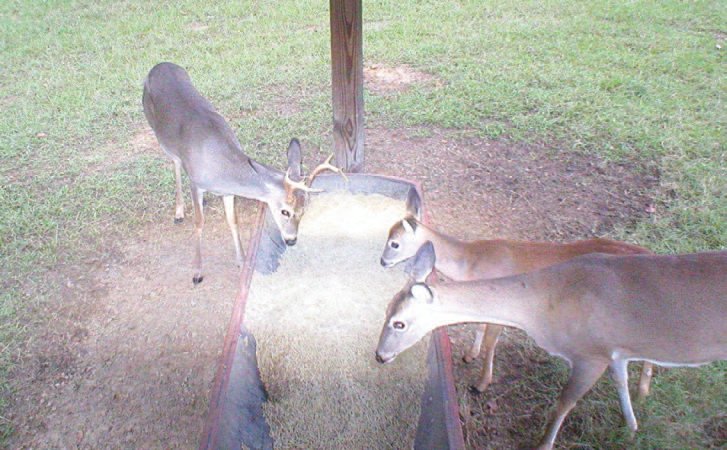
Unfortunately, the supplemental feed we put out for deer is also nutritional for other species. I am confident that everyone reading this article has seen non-targets (species other than deer) on camera eating the bait or feed that was put out for deer. While this may not seem like a big deal, some of these non targets can consume thousands of pounds of feed each year. Anything that can be done to reduce non-target access to feed will reduce costs. Probably the worst offenders are wild pigs and raccoons. Wild pigs can be kept away from feeders by constructing a pig-proof fence 5-10 yards from the feeder. The fence should be constructed low enough that deer can clear the fence with ease, and sturdy enough that pigs won’t damage it. Raccoons can’t be kept away from most feeders and thus need to be trapped. In addition to consuming considerable amounts of feed (much more than you would guess), high concentrations of raccoons at feeders will cause deer to feel less comfortable at the feeder and thus they will spend less time feeding. The same is even more true for wild pigs.
Nutritional Quality
If you are going to spend the time and money to maintain a supplemental feeding program, you should do everything you can to ensure that what you are feeding is what the deer need. Be sure to maximize the protein content of the feed. Protein is the basis for tissue growth and is the driving force behind body growth, antler development, lactation, and fetal development. Your feed should be at least 18% protein, but should not exceed 24%: feeds in excess of 24% can cause severe digestive problems. Most feeding programs use feed between 18% and 22% protein.
Corn is not a good supplement from a nutritional perspective. The reason deer love corn is because it is 94% digestible, and it is a quick energy source. But, pelletized supplemental feeds have more than adequate energy levels for your deer, and the energy is incorporated as structure carbohydrates rather than nonstructural carbohydrates. The digestive system of deer is designed for structural carbohydrates, and too much intake of nonstructural carbohydrates can lead to digestive problems. Considering the cost of these days, it’s better to just stick with pelletized feed.
Fence Construction
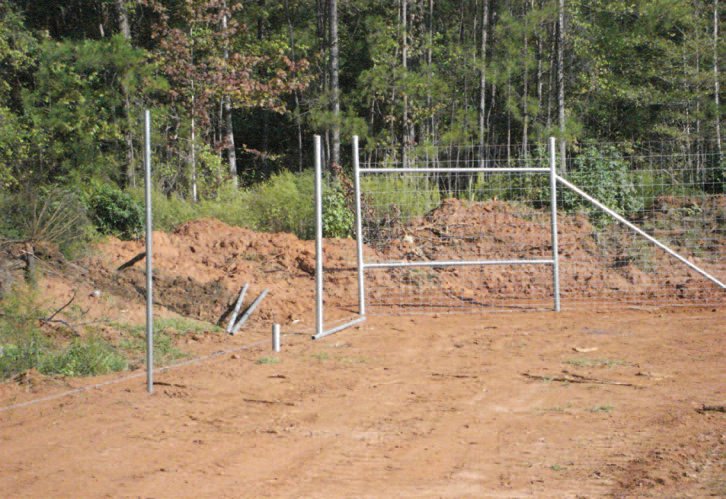
If you already have a high-fence facility, then this section may not apply to you. But, you may soon realize some of the issues that I am going to mention. When constructing a high-fence, you want to be sure that you won’t have to do much maintenance after construction is completed. There is no reason your fence shouldn’t last 25 years or more with little to no maintenance outside of damage from trees, wind, etc. But, if you’re looking to cut costs during construction, you may be investing significant money in maintenance and repair in as soon as 10 years. One way that many fence owners cut costs is by using wooden posts instead of galvanized posts, although most experts will argue that this is not a cost savings. Wooden posts are seen as a cost-savings, but have issues with rotting, rising out of the ground due to frost heave, etc. The end result is that wooden posts can be a big headache and end up costing you more money than if you had purchased and installed high-dollar, galvanized steel posts.
Corner post and gate materials need to be of the highest quality. Corner posts are the foundation of your fence, and any corners (no pun intended) that are cut regarding material quality, wall thickness, etc., will likely result in costly repairs down the road. Gates can also be costly if not constructed of high quality materials. These moving parts experience a lot of torque due to gravity, and can become misshapen. Finally, when planning fence construction, be conscious of the costs associated with corners and gates. Every corner and gate will substantially increase your construction costs. Try and design a facility with as few corners as possible, and as few gates as possible, while maximizing the amount of interior acreage and access.
Monitoring Your Herd
Another suggestion with regards to your facility is that you keep detailed records of everything. Data is the key to properly managing any population of white-tailed deer. If you have a long history of using computers, you may remember the term “Garbage In – Garbage Out”. This term was popular 20some years ago to describe the frustrating process of ensuring that you accurately told a computer what you wanted it to do. At that time, it wasn’t as simple as clicking on an icon in Windows to get a result. Rather, you had to write computer code to explain in detail your desires. Managing a deer herd is somewhat similar. It is extremely difficult to make wise management decisions without quality data. Your ability to make informed decisions regarding harvest quotas, nutritional supplements, and habitat improvements will ultimately be a function of the data you have recorded.
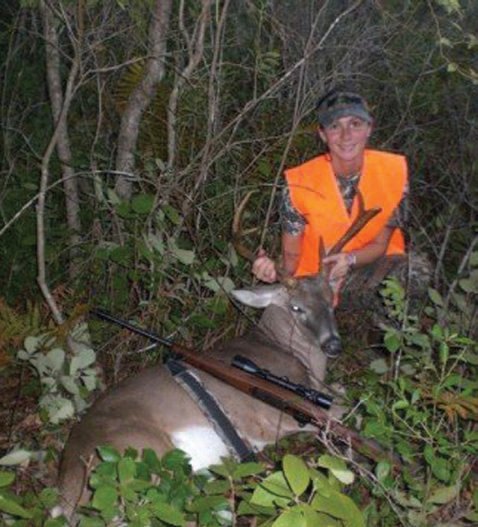
You should collect data from every deer you harvest, and detailed data regarding body size, antler size, age, and lactation status should be recorded. It’s not good enough to collect data for just a few years. Natural fluctuations in climatic variables (precipitation, temperature, etc.) and resulting fluctuations in habitat quality (mast production, browse availability, food plot production, etc.) cause measures of deer condition to vary from year to year. As a result, it takes 5 to 6 years, minimum to get a true gauge of any trends or patterns of deer condition or quality. Every deer that is harvested in your population should be aged, measured (weight, antlers, etc.), and assessed whether it is lactating (See Wildlife Trends, Volume 7, Issue 6). These data are critical for assessing the progress of your management program. Failure to record data means that you will be making decisions based on your best guess. While not fatal to your herd or management program, these guesses are likely not going to allow your herd to reach its potential.
I see management guesses in deer management similar to guesses regarding how much gasoline is left in the tank of your truck. Are you willing to drive every day and guess how much gas you have remaining, rather than look at your gas gauge? Running out of gas is not going to be a disaster. But it will mean that you won’t meet your short term objective, as well as considerable inconvenience to your short term plans. Deer management is similar. Keep an eye on your data (the gas gauge), and you’ll be in a position to make informed decisions regarding your herd.
In the next issue of Wildlife Trends, we’ll cover issues relating to habitat quality, harvest decisions, exotic species on your property, and how to deal with the challenges that friends and acquaintances may present.