

High-fence properties can be extraordinary examples of well-managed deer populations, and large-antlered deer and high quality hunting opportunities make them extremely popular to some hunters and landowners. However, many high-fence properties make similar mistakes in their management practices. In the last issue of Wildlife Trends we discussed some common pitfalls of high-fence properties regarding supplemental feeding, fence construction, and monitoring of your deer herd. In this issue, we’ll discuss additional pitfalls that you should attempt to avoid with your high-fence property.
Habitat Quality
Most high-fence facilities that I have toured have had fairly poor habitat quality. This is in part a function of the high density of deer that is in the facility, and the resulting overbrowsing of the habitat. However, it is also a function of the fact that many high-fence managers feel that because supplemental feed has been provided, there is no need to worry about forage production or habitat quality. While not necessary from a nutritional perspective, I feel that the following suggestions can pay dividends when managing a high-fence.
Prescribed Fire
Prescribed fire is likely the most underutilized tool in the wildlife manager’s toolbox. This is especially unfortunate considering that it is probably the most cost effective tool for managing white-tailed deer habitat. Prescribed fire is very effective at increasing browse quality and quantity in southern habitats. It serves to suppress growth of many undesirable woody and herbaceous plants, and promotes growth of desirable, low-growing species such as legumes. The overall impact of using prescribed fire is often a much thicker, herbaceous understory, and improved nutritional quality of those plants that are present. In addition to improving the nutritional plane of the deer in your facility, it can help reduce costs associated with supplemental feed.
The improved herbaceous understory created with prescribed fire also improves fawning habitat. Most high-fence facilities are characterized by bare ground in the wooded portion of the landscape. This is due to the mature hardwood and pine overstories that are present. Prescribed fire, while not a solution all its own, can help to improve groundcover in both pine and hardwood habitats. Also, if you’re going to burn, consider the season that you conduct the burn. Ask an expert about the benefits of growing season versus dormant season burns. More and more evidence suggests that growing season burns are more beneficial than dormant season burns for enhancing wildlife habitat.
Timber Harvest
Timber harvest can be an extremely beneficial aspect to any land management strategy. Removal of mature timber allows sunlight to reach the forest floor, resulting in increased growth of herbaceous and woody plants, thereby providing increased quality and quantity of forage for deer. The problem is that mature forests with open understories are aesthetically pleasing and provide a sense of grandeur to landowners and their guests. As a result, many landowners are often hesitant to thin these areas and negatively impact the allure of these stands. As with prescribed fire, timber removal will result in cost savings due to increased availability of natural forages and resulting nutritional benefits. In addition, timber removal can generate significant levels of income that can be used to supplement costs associated with deer management.
Food Plots
In my opinion, most high-fence properties do not put enough acreage into food plots. One property I work with has approximately 20% of the acreage as food plots. This high acreage of food plots has a significant effect on body mass and antler development, as it provides a year round source of very high quality forage at a fraction the expense of supplemental feed. Additionally, because the forage is spread out and not concentrated in the same manner as supplemental feed at a feeder, the deer truly experience free choice and no deer is left wanting. Properties with only 5% of the acreage in food plots are paying more money in feed, and some deer are likely not getting quite what they need.
Lower acreages of food plots also do not allow for crops to be planted in stages. For example, if enough acreage is available, a landowner can plant iron and clay peas at 3 different times, thus having different fields mature at different stages during the growing season when protein intake is most critical. This ensures that there are warm season plots available throughout the summer. In most cases, summer plots are browsed over by August, which could be argued is the most important nutritional period of the year for deer. In August-September, does are lactating, which is the most nutritionally demanding aspect of deer biology. By ensuring that there is high quality forage available in food plots throughout the entire growing season, you are making an investment into the future of your herd. If fawn growth is maximized during this period, it will translate into greater body size and antler development in subsequent years.
Food plot spacing is important as well. In most cases, food plots spacing is a function of convenience, and food plots are located wherever there is an unwooded area. Additionally, it is much easier to plant fewer, larger plots than many small plots. But, spreading out your plots into smaller plots (food plots of 1-3 acres) will provide deer greater access, and the small size will allow them to feel more comfortable when using the plots. More plots also means that you can plant in stages, and be sure that there is forage available throughout the season. Plant some plots early in the season, some so that they will mature in the middle of summer, and some so that they will mature in late summer so there is high quality forage available during August-September. Finally, with smaller plots, you can control deer access. Most landowners plant food plots and allow deer to use them at will. But, there are some fairly simple, yet proven techniques for keeping deer out of food plots until they are more mature and forage production is maximized. This is more easily accomplished with smaller plots than larger.
Harvest
Antlerless Harvest
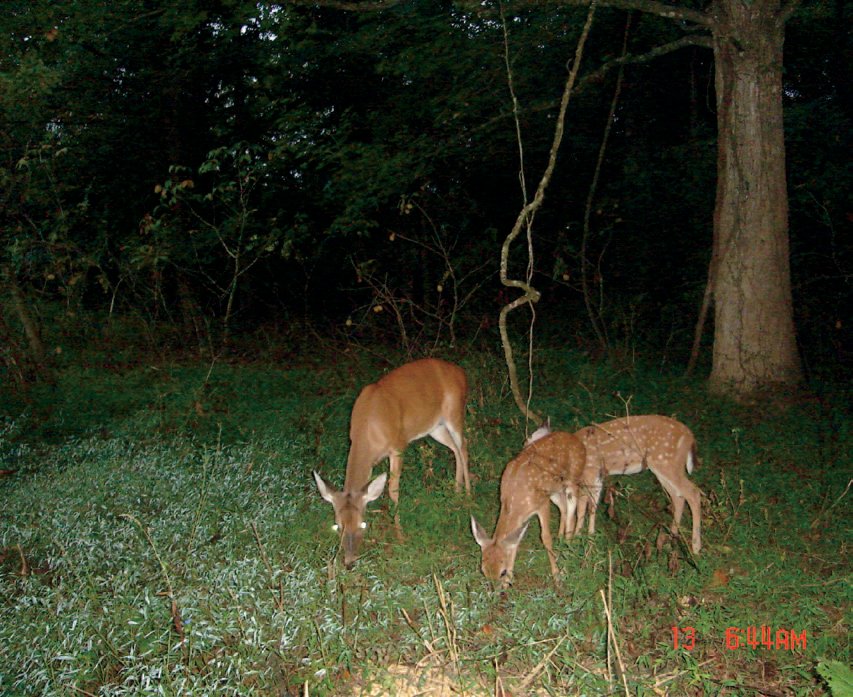
Antlerless harvest is a major component of any deer management program, and is no less important inside of a high-fence. However, many high-fence owners fail to keep doe numbers in check…even though they think they are doing a good job. If you see does regularly while hunting, then you have too many does. The nature of most high-fence properties is that they experience considerable hunting pressure. This means that your deer are educated and become wary of hunters. Over time they learn to avoid prime hunting locations and become very good at avoiding harvest. In all probability, there are does on your property that have been evading hunters for years and are passing on their wisdom to their offspring. This means that you need to shoot most every doe you see to ensure that you are harvesting enough does to keep the population at desired levels. I understand that this harvest philosophy can cause severe heartburn for a landowner, but trust me in that it is almost impossible to overharvest does in a high-fence property (or unfenced property). Because the high nutritional plane of your property, you can expect high fawn production and survival, and the does you harvest will quickly be replaced.
Buck Harvest
This may come as a surprise, but even more difficult than harvesting enough antlerless deer is harvesting enough bucks. Deer hunters are fascinated by antlers. There is something about antlers that turns us all to Jello. Even the most experienced and savvy hunter cannot pass up the opportunity to pick up a shed from even a spike-antlered deer. The problem with high-fence properties is that these facilities infuse a “disease” in high-fence owners: every high-fence owner wants to know what “that deer” will look like next year. If you own or hunt in a high fence, then you have the disease…you might have the disease even if you aren’t fortunate enough to hunt in a high-fence facility. The problem lies in the fact that we become scared to shoot a buck because of the fear that it could be our next trophy. We continually pass up sub-trophy bucks in the hope that they will be of trophy class next year or the year after. The result is that many properties are overrun with bucks. While this may sound like a great problem to have, it can create problems.
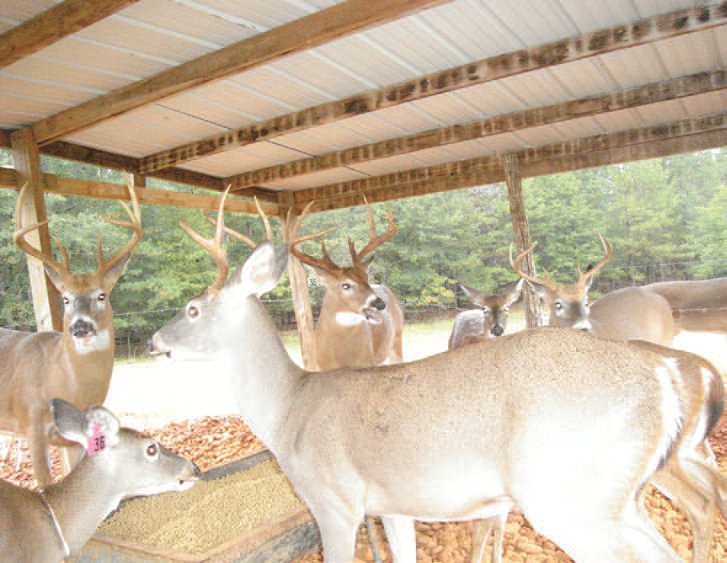
The more bucks on a property, the greater the level of competition. There will be more fighting and competition for food, and the result will be decreased growth and survival. Increased agonistic behavior among male deer results in greater levels of stress, which can manifest itself in reduced growth rates, decreased antler development, and compromised immune systems. My point is that you need to harvest bucks…more than just the trophy class animals. There needs to be an effort to harvest bucks that are not in the trophy class. I’m not a big fan of culling on properties that are not bound by a high-fence because it is very difficult to identify which bucks are of high quality and which are low quality from a genetic perspective. Outside of a high-fence, the presence of even low quality, mature bucks provides a benefit to the herd (See Wildlife Trends, Volume 9, Issue 5). But, inside of a high-fence, keeping these animals because they might make next-year’s trophy can be a mistake. Mature (animals 3.5 years of age or older) bucks that do not exhibit antler development consistent with other deer should be removed from the herd. I would even go so far as to suggest that 1.5 and 2.5 year old deer that exhibit subpar antler development should be harvested. There needs to be a conscious effort to harvest a sufficient number of bucks each year that do not fall into the trophy category. I’m not suggesting that you shoot every “sub-trophy” animal in the population. Rather, I am suggesting that you need to make a conscious effort to harvest 15-20% of your buck population annually. This is the basis for the “management buck” that you regularly see harvested on television. These landowners understand the need to remove a sufficient number of bucks each year, and allow a television crew to harvest the buck free of cost. In return, they get free national advertising.
Exotics
Every high-fence property across the Southeast was built for white-tailed deer. White-tailed deer are the focal point of both management and hunting in this region. However, there are some high-fence owners that can’t resist the urge to supplement their facility with some form of exotic species. These species may include, but are not limited to, axis deer, red deer, fallow deer and various species of antelope. Some properties have bison and other large horned species from across the globe. Without question, the addition of these animals creates a unique faunal assemblage that provides wonderful viewing and hunting opportunities that could only be realized by traveling to other parts of North America or overseas.
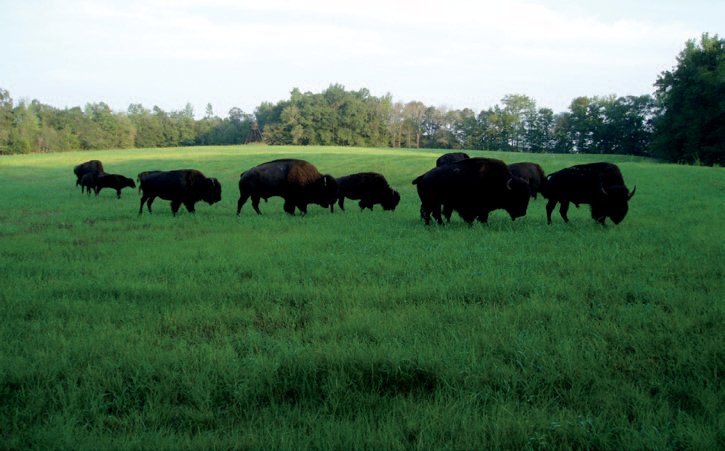
The problem with exotic animals in a high-fence facility is that they compete with your deer for access to resources. Feed consumption by many of these species substantially exceeds that of deer. Many of these species competitively exclude white-tailed deer, meaning that they dominate preferred food resources and negatively affect the nutritional plane of your deer. While the novelty of exotic animals makes them very attractive as a potential addition to your high-fence facility, most high-fence owners that have made such an investment will admit that it was a mistake. Once the novelty wears off and it’s realized that they need to be removed from the facility, it’s difficult to fully commit to eradicating an animal that was a considerable financial investment. Additionally, it can be difficult to completely eliminate some of these populations once they have become established.
Friends and Acquaintances
If you already have a high-fence property, then you already realize just how popular you are. If you are considering purchasing one, then you will soon be amazed at how many people want to be your friend. Not long ago, I was fortunate enough to own a lake house. I was continually amazed at how many people that were casual acquaintances (maybe talked with 3 or 4 times a year) were willing to sacrifice their time to keep me company at the lake. If you haven’t already experienced it, this is the same sort of love and adoration you can count on if you own a high-fence.
There are going to be many people willing to ride your coattails in the hopes of spending some time amongst your herd. You’re going to be put in an awkward position more than you wish regarding the exploitation of your deer herd. What are you going to do when a casual friend shoots one of your prized deer that you had anticipated would be a 180-class deer? Does it matter that he knew not to shoot that deer? What if a friend can’t resist shooting 4-year-old, 10-point frames when these are the breeder bucks of your program and you said he could only shoot mature 8-points? What I am describing here is the norm. My point is that you have to be very strict with regards to the use of your facility. While there are undoubtedly some friends that are willing to invest their time and resources into the management of the property, the majority will be in it for the hunt. Use caution when opening up your property to “unproven” friends, and be prepared to draw a hard line…even with “proven” friends.
Conclusions
High-fence facilities are great for producing high quality deer. But, to successfully produce a high quality deer herd in a high-fence requires attention to detail, as well as an eye on common pitfalls. Don’t fall into the trap (as many do) of thinking that a high-fence automatically equates to trophy deer. Keep in mind the common pitfalls described in this article and you will maximize your management success.