
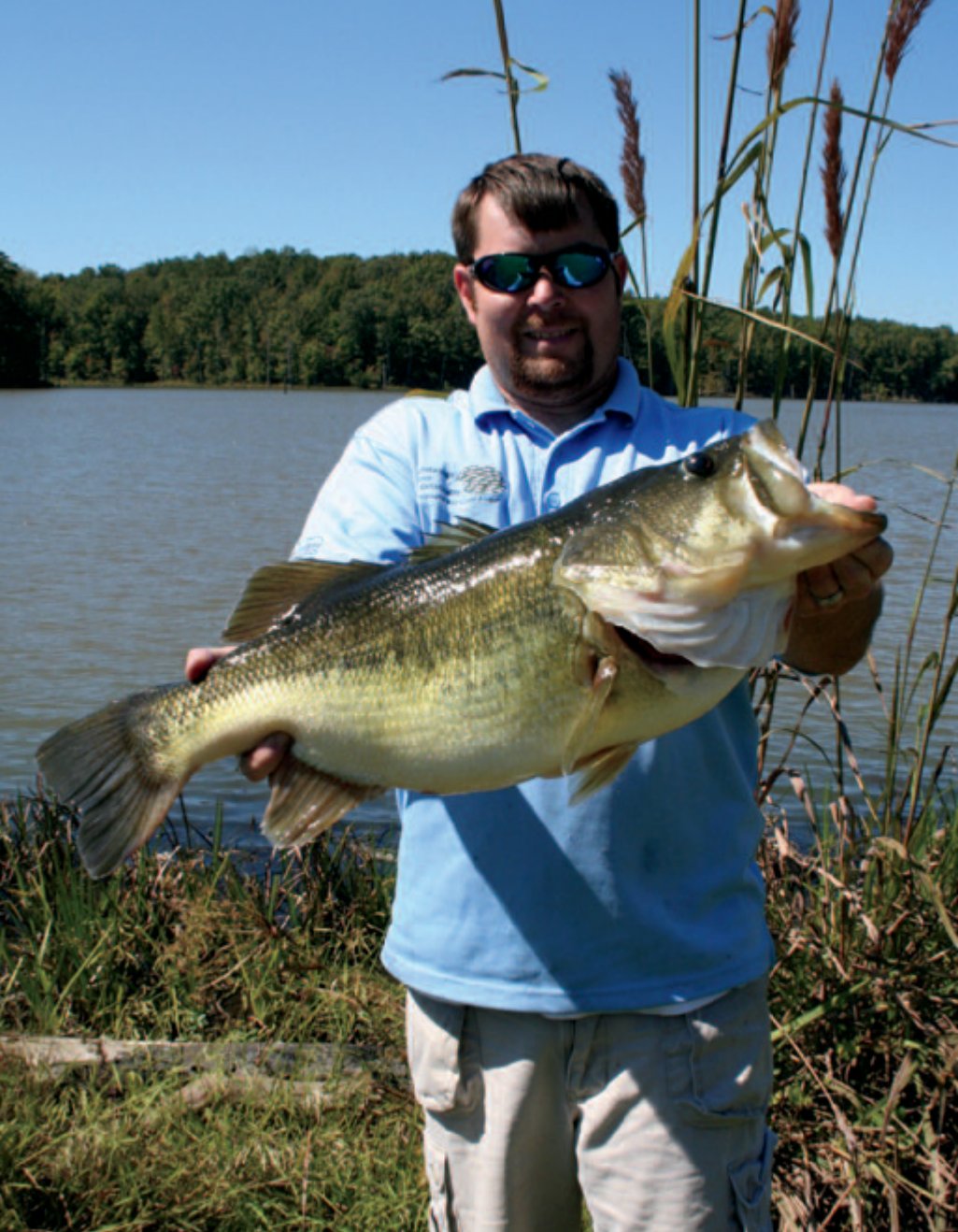
If you were to go inside the head of any outdoorsman, you would most likely see a common dream for the perfect piece of property. This property would consist of several thousand acres of the richest soil that is teaming with the most abundant wildlife populations imaginable. In the center of the expanse would sit a majestic log cabin overlooking the most premier largemouth bass fishing lake in the country. Is your mouth watering yet? Well believe it or not, there exists such places and for many of you reading this article, I may have just described your current weekend getaway. So what’s next for you sportsmen that already have it all? I can give you more, well at least for your fish populations! We can enhance your dream property by either adding more lakes and stocking them with different but equally exciting fish populations or just enhancing the management of the property if you have multiple ponds. For those of you wanting more diversity, I have a number of different stocking options for a property with multiple lakes or ponds.
Probably the most economical of the multiple pond options is to create a “Forage Pond”. The “Forage Pond” option is created by stocking only forage fish species such as coppernose bluegill, threadfin shad and/or golden shiners and you allow them to spawn several times throughout the growing season. Then in the fall you release the forage into your primary bass lake, which provides loads of food for your bass before winter. This only works if the forage pond is located close enough to the bass lake and you can drain the water and empty the fish completely into the bass lake each year. With no predators, the pond can fill up with the perfect sized forage and in late October/November, emptying this forage into your bass lake will create a Thanksgiving buffet like no other. Annually stocking forage each year to create a trophy bass fishery can be quite expensive. However, if you can grow and stock your own by utilizing a “Forage Pond”, your results for growing trophy bass are limitless.
The “Forage Pond” option doesn’t necessarily give you a different catchable variety for your property, but the benefit of providing the amount of forage a brood pond can produce each year will create some of the fattest bass possible. If you have a smaller pond or you can create one above your bass lake, then I would highly recommend trying the “Forage Pond” option at least one time. Size doesn’t matter in the case of a forage pond, however the bigger the pond, the more forage you can produce. One thing to remember, you cannot let any predator fish find its way into your brood pond or the production of forage will be limited. Also, for maximum return on your investment, initiating an intense fertilization and supplemental feeding program is imperative to increasing the biomass of the pond. I have several clients who have implemented the forage pond program and they have seen amazing results in terms of bass growth. One client told me he fished one afternoon in an area where he emptied his two forage ponds into his bass lake a few days after he released the forage. He was so excited and said his bass catch rates were amazing and that the bass were attacking everything that hit the water. It was one of the best fishing days he had ever had. An advantage to exploring the “Forage Pond” option is that if after you have grown forage and released them into the bass lake and you are not as pleased with the results as you would like, then the pond can easily be converted to another option at any time.
Let’s say you don’t have the right conditions for creating the “Forage Pond” option. There are other combinations of different fish species that will create diversity for your property. The most popular among the different “multiple pond” options is creating a “Trophy Bluegill” pond. If you enjoy watching the piranha-esk feeding patterns and growing and catching those hand-sized behemoth bull bream, then the “Trophy Bluegill” option is right up your alley. Just as with the “Forage Pond”, the size of the lake doesn’t matter when considering creating a trophy bluegill fishery.
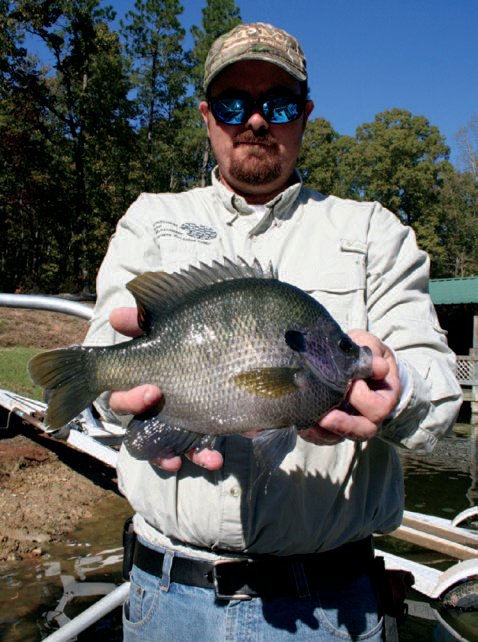
To create the “Trophy Bluegill” pond, it is best to start with a clean slate and I always recommend eradicating the existing fish population and restock with fingerling coppernose bluegill, redear sunfish, and largemouth bass. If it is not possible to remove the existing fish population, we can usually work with what is there. The key to growing trophy bluegill in ponds is by providing a supplemental high protein pelleted feed daily and maintaining a bass-crowded lake. This bass-crowded condition will create a stunting affect among bass, where the largest bass is usually no larger than 14 inches. The bluegill that escape predation and grow larger than what a 14-inch bass can eat will essentially have no threat of predation and can focus its energy solely on growth. Also, these stunted bass will consistently consume the small bluegill hatched each month, leaving no competition for available food for your larger bluegill. The combination of stunted bass and an intense supplemental feeding program is the perfect recipe for massive bluegill growth.
Management of a “Trophy Bluegill” pond is slightly different than that of a traditional balanced pond. However, fertilization will remain the same. To get the maximum growth from your bluegill, installing automatic fish feeders and feeding a relatively higher protein fish food is imperative. Bass harvest should be suspended if a larger bass, one greater than 14 inches, is caught then it should be either removed for table fare or transferred into another pond. Bluegill can be harvested, however occasionally intermediate sized (3-5 inches) or larger bluegill will need to be restocked to help supplement the lack of successful recruitment among the bluegill population in a “Trophy Bluegill” pond.
Ok, the “Trophy Bluegill” option sounds tempting, but you don’t want to sacrifice bass growth and you would also like a lake capable of high catch rates. In this case, it is best to stock your lake like the “Trophy Bluegill” pond, but instead we will substitute the traditional stocking of fingerling F1-largemouth bass with adult feed-trained Northern Bass. The “Feed-Trained Bass” option creates a lake with the most aggressive bass and bluegill possible, which means catch rates will be through the roof! Because these two species readily train to pelleted feed, multiple feeders filled with high protein food can push growth rates to the limit. The “Feed-Trained Bass” pond should be fertilized regularly and annual electrofishing evaluations are recommended to determine the reproductive success and to set harvest rates and limits.
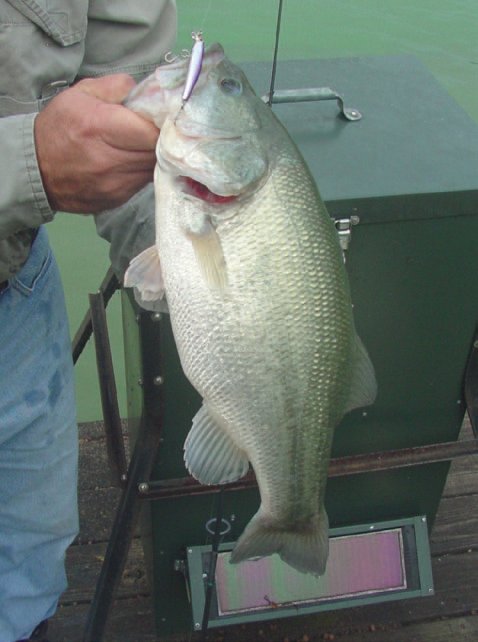
Maybe your management program has already created somewhat of a trophy bluegill pond in your primary bass lake and the “trophy-bluegill” option is not as alluring and you would like something outside the box. My suggestion would be to go with the “Crappie Pond” option. No you did not read it wrong, not “crappy”, but “crappie.” I know we have all said crappie are bad for ponds, but let me explain. Crappie can be problematic in a bass/bluegill pond, but without competition for forage we have seen some impressive results from the “Crappie Pond” option. Successful crappie reproduction in ponds is highly variable and that makes their management tough when coupled with a healthy reproducing bass population. I have seen ponds where the crappie population did not reproduce for 5 years, but on that sixth year a successful spawn and recruitment led to an overcrowded predator population and a completely ruined trophy bass lake. So in your bass pond, crappie are a no, no!
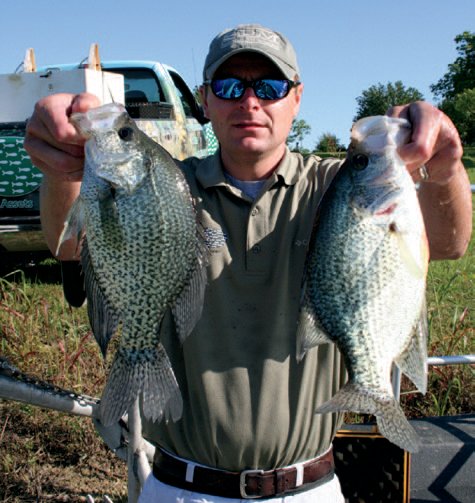
However, if you have a pond or lake that is completely void of fish or the pond can be drained and the fish population eradicated, then do I have a crappie recipe for you! To create the “Crappie Pond” of your dreams, you must first load it up with the right type of forage, which are fathead minnows, threadfin shad and golden shiners. Once this forage has had a chance to reproduce and become robust, then you stock intermediate-sized crappie. Naturally, there exists two subspecies in the crappie family; white crappie and black crappie. However a cross between these two subspecies has resulted in a “hybrid” crappie or “first generation cross”, which has been used to stock in ponds. This cross usually has a black stripe running down its nose and is sometimes called the “black-nosed crappie”. With many of our crappie lakes we have observed lower reproduction rates among these “hybrids”, which has helped with the management of the population. Also, to help control the crappies’ unpredictable reproductive success, we stock hybrid striped bass in relatively low numbers. The hybrid striped bass readily feed on the forage species stocked. However, during those years of increased crappie recruitment, these bass will reduce the crappie numbers and help maintain a balance between predator and prey.
Management of the “Crappie Pond” is fairly simple, but it is advisable to have the lake evaluated each year to ensure balanced conditions among the predators and prey species is maintained. Initiating intensive supplemental feeding and fertilization programs is beneficial to ensuring a healthy robust forage population. Harvest rates for crappie will most likely be based on your stocking rates and how successful reproduction among the crappie population is each year. Catch rates for both the crappie and hybrid striped bass are relatively high in our crappie ponds. Increasing the amount of available structure will help congregate the fish which can also help increase your catch rates.
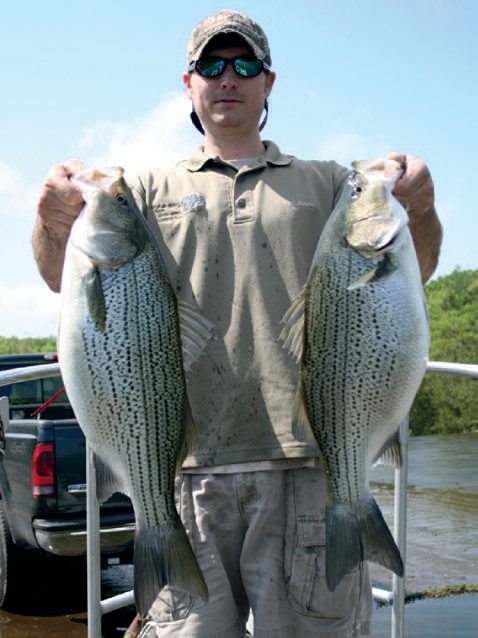
The final option for those of you who have multiple ponds and are looking to find diversity for your lakes is to create a “Hybrid Pond”. This pond is not for the faint of heart and it is geared for those fishermen who like fast action fly fishing or who just get fired up about a fish busting every lure that hits the water. The “Hybrid Pond” is stocked with hybrid striped bass, northern largemouth bass, coppernose bluegill and threadfin shad. All these species, except threadfin shad, are highly aggressive and readily train to a pelleted feed. Growth rates are unbelievable when high protein fish food, that which is greater than 40 percent protein, is regularly fed to the fish. Catch rates in the “Hybrid Pond” are excellent and for the most part you can’t keep a hook in the water long enough to stay wet. You can opt out of stocking the largemouth bass and just have hybrids and bluegill; however, more hybrids per acre will need to be stocked to ensure acceptable catch rates. Fish growth in the “Hybrid Pond” is mostly based on the amount of food you provide and the more you feed the better your chances of having a pond full of “footballs”. Fertilization is highly recommended, particularly to ensure an ample food supply for the threadfin shad population.
There are many different options for managing properties that have multiple ponds where creating diverse fish populations is the ultimate goal. Given the fact that many freshwater fish can coexist, combining them to create what you as the pond owner desires is fairly easy and this makes the possibilities endless. The examples above are just a few successful combinations we have experimented with over the years, give me a shout and let’s see what we can do in your ponds.