
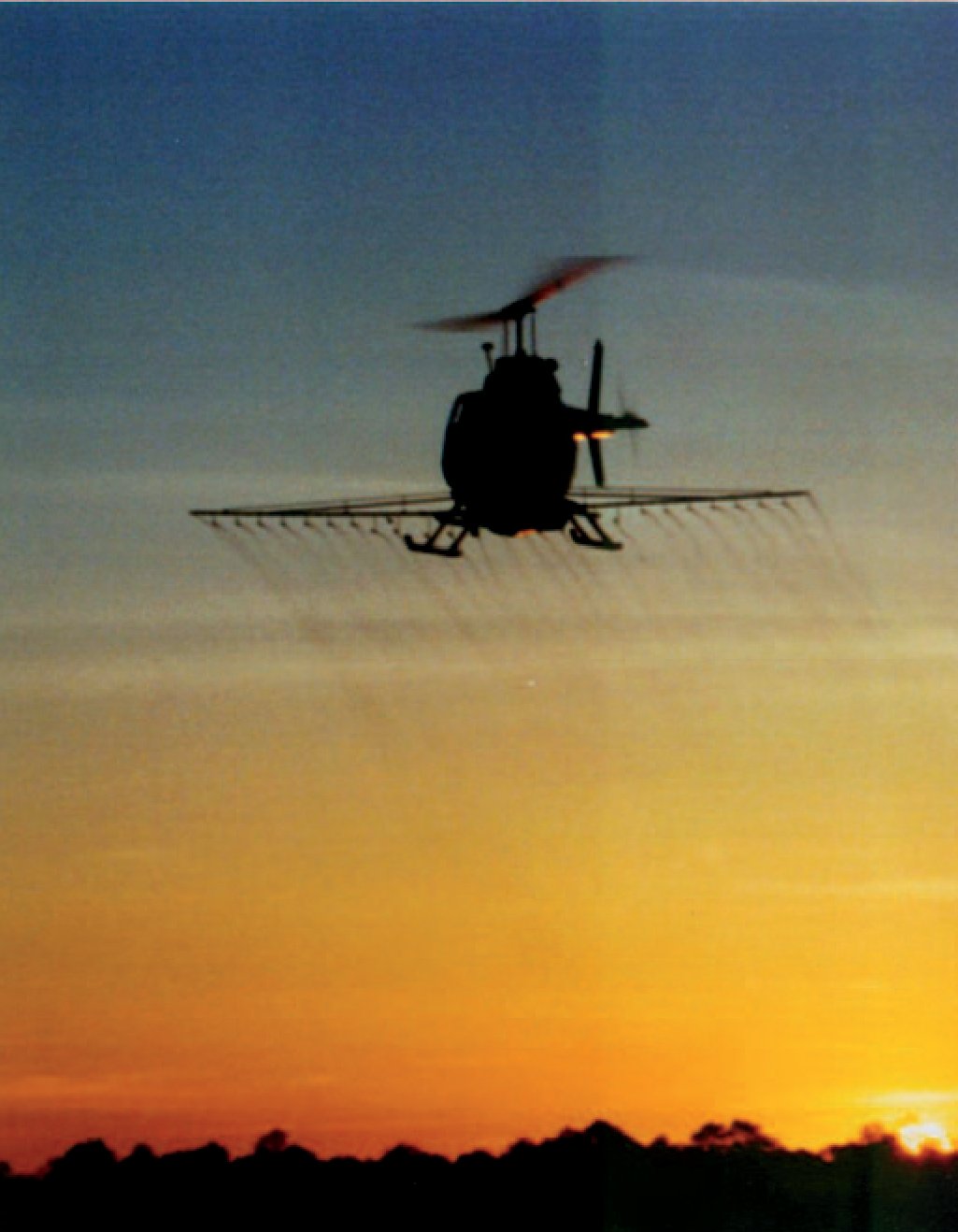
Herbicide applications using helicopters or skidders may be something new to most landowners. Unlike the common occurrence of aerial application in crop rotations, landowners who manage for a mix of forestry and wildlife habitat may only utilize one of these types of application every few years. There are many different reasons why landowners need an herbicide application on their property.
Landowners who want to have herbicide work on their property may be surprised how easy the process can be. Whether it is how to contract the work or what to expect, this article is aimed at answering a few of those questions. Contracting spray work on your property may be the answer to accomplishing some of your forestry and wildlife management goals.
When considering a herbicide spray program on your property the first step is to identify the need you have and start planning immediately. Getting your land sprayed in an effective manner takes time and mostly patience. If your intentions are to spray, start making arrangements with the person who manages your property, or if you are hands on, then you need to contract the work directly with a company which provides an application service.
Herbicide applicators start booking work early in the year, January 1. The sooner you contract with an applicator; you can rest assured that your property is in the logistics of that company to have your work performed. In the Southeastern U.S., there is not an abundance of applicators. All applicators work on a regional basis and usually have a longer range of travel than most landowners realize. Therefore, the applicator is working to effectively meet the needs of their customer, you the landowner, and work a well planned out route for the crews to follow.
The crew works on a basic timeline. However, throughout the spray season (June-November), weather by far is the biggest obstacle. When wind speeds reach in excess of 10mph, the job is shut down and the crew waits for the wind to slow. We do not spray in the rain, and shut down all operations if the rain is foreseen in the near future, i.e., 2 hours. As well, we fight the heat, such as the drought. And certain manufacturers require their products being sprayed before noon. Plants shut down in heat, therefore the herbicide may not have proper uptake. Many factors can slow down crews before they get to a job site, remember to have patience, the crew will get to you.
Types of Treatments
There are different types of treatments that landowners contract application for on their property. Herbaceous weed control is sprayed in the spring of the year to control broadleaf weeds and grasses in newly planted plantations. Generally the first spring after planting is when herbaceous weed control is applied. Site preparation is the most common application that is contracted in forestry. Site prep is after the trees have been clear-cut and the application is aimed at controlling hardwood trees and waxy competition. These treatments start in mid-June and end at leaf drop (fall). Release treatments begin as early as July 15 and also stop at leaf drop (fall). Release treatments control hardwood trees after planting if a site prep treatment was not done prior to planting. Mid-rotation treatments are sprayed on sites where hardwood competition is impacting the growth of older stands. Both release and mid-rotation treatments are either over-the-top of pines or under the canopy.
All of these applications are based upon the site situation and the landowner’s objectives. After reviewing the site and discussing the objectives with the landowner, a plan can begin. The type and amount of herbicide is then determined by the applicator in coordination with the landowner and the forester/manager. If the landowner is contracting directly with the applicator, then the applicator makes the best recommendation for the site which is called a site prescription. The site prescription consists of varying amounts of herbicides used in specific combinations to target the competition. The site prescription will also include the timing of the application, either early in the season or late.
Timing
The spray season for application kicks off in early February with herbaceous weed control. These treatments will run until mid-May. Early site preparation starts June 15. These site prep tracts were cut early the previous year and the vegetation is fully sprouted (hip high). August 1 is when the late session begins for site prep. Release spraying starts and overlaps with late site prep. Between the two, they will last until leaves on hardwoods begin to drop. This is the time when the majority of tracts in forestry are sprayed. It is essential to have your plan together early in the season. There are fewer acres that are sprayed early. If your tract is ready to be sprayed early, the window is greater in terms of timing to have an opportunity to burn, if desired. Applicators will book work as early as possible to ensure a completed job. Contracting your work later in the year puts your tracts behind other landowners who booked early in the season. If you know after the clear-cut your intentions are to spray, start working with your forester or applicator to ensure your site is sprayed.
Equipment
Helicopters are the work horses of forestry. What surprises most landowners is that we do not use fixed wing aircraft in forestry! We only use helicopters. Also, skidders or rubber tire tractors are utilized for ground applications. Ground backpack crews are utilized in certain situations mainly where a helicopter is not a good fit. An applicator will let you know when they look at your site whether or not you should seek an alternative method of application.
Contrary to popular belief, helicopters spray more acres and tend to be the cheapest per acre for application vs. a ground backpack crew. The reason is the production. A helicopter can spray 500+/- acres on a good spray day. A ground skidder can produce around 75-90 acres per day. And a large backpack crew can spray up to 50 acres per day. Production is the driver when determining costs. However, a ground crew may be needed where a helicopter is unable to go. Small areas that have sensitive areas will require a hand crew. But overall, the helicopter is the main application vehicle in the forestry industry.
Production
Application crews work on a logistical plan to optimize output. This in turn requires a tremendous amount of coordination on the ground. The application business is a very fluid environment. As I stated earlier, the weather affects the business every day. Rain and wind speed are the two most important factors in getting work completed. In years of hurricane activity, production can be impacted greatly. Most hurricane activity occurs in the fall of the year. Hurricane season coincides with late season spraying which is when the bulk of the acres are treated. That is a good reason to have your property scheduled for an early treatment starting June 15. It not only helps you to avoid bad weather delaying your application, but it opens up your window for burning. If you are planning to burn after your site prep treatment, earlier treatments are always better. You have more time throughout the growing season to burn your site after the spray job.
With the amount of acres that are sprayed in a single season, one of the most crucial factors of achieving a successful spray job is coordination and information exchange. When tracts are contracted, other tracts in the general area are lumped together to spray during the same time frame. A logistics coordinator plans the routes through the areas and picks up as many tracts as possible. This allows the crews to be more productive.
In general a crew consists of the pilot, a turnkey manager and one or two water trucks. The pilot is the boss of the crew and the job. If the pilot sees something from the air that we do not see on the ground, he has the final say in shutting down a job. Any sensitive areas need to be discussed ahead of the crew arriving on site. This enables the flow of information to get to the pilot so he knows what to expect. The turnkey manager is responsible for the herbicides arriving on site and directing the entire crew on the logistics of the jobs. He also coordinates water requirements from local sources. Depending on the crew, there may be one or two water trucks that are involved with the job. Usually one is placed with the helicopter and the second one is at the next tract awaiting the helicopter. This allows for production to be increased, cutting down on travel time waiting for a single water truck.
Maps
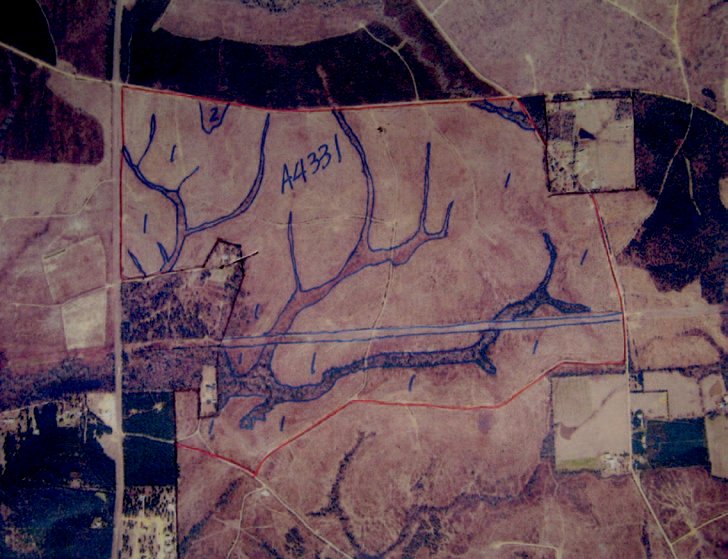
Applicators work off maps that landowners provide. The area manager visits the site ahead of the crew writing the prescription for herbicides and obtaining all the necessary site information. The crew and pilot rely heavily on the information that is provided to them. Therefore, the better the information, the smoother the job will flow. Good aerial maps and photos with the targeted spray areas delineated by lines are needed. If you can put in fire lanes prior to the spray it is always helpful but not necessary. GPS points are required to find the tract by both air and ground. As well, if certain areas on the tract should not be sprayed, it is important to have those marked on the map. Looking at a tract from the air is completely different than looking at it from the ground. You need to have any sensitive areas marked on the map, such as adjacent crop fields, food plots, houses, groves of oaks, ponds, anything and everything that needs to be avoided by the application. The maps are the pilot’s guide to the entire job. It is helpful to have a thorough map ready for the area manager upon arrival for the initial visit.
Latitude/Longitude
The latitude and longitude of the tract is how we find it. The pilot can fly straight to the tract and wait for the batch truck and crew to arrive. In that time he will fly the tract and look for anything out of the ordinary and can ask you about it before the job starts. As well, the crew finds the tract by the Lat/Lon coordinates. The area manager ensures the accuracy of the points visiting the site prior to the crew’s arrival. With GPS technology available, this is critical to performing the job.
Water bars
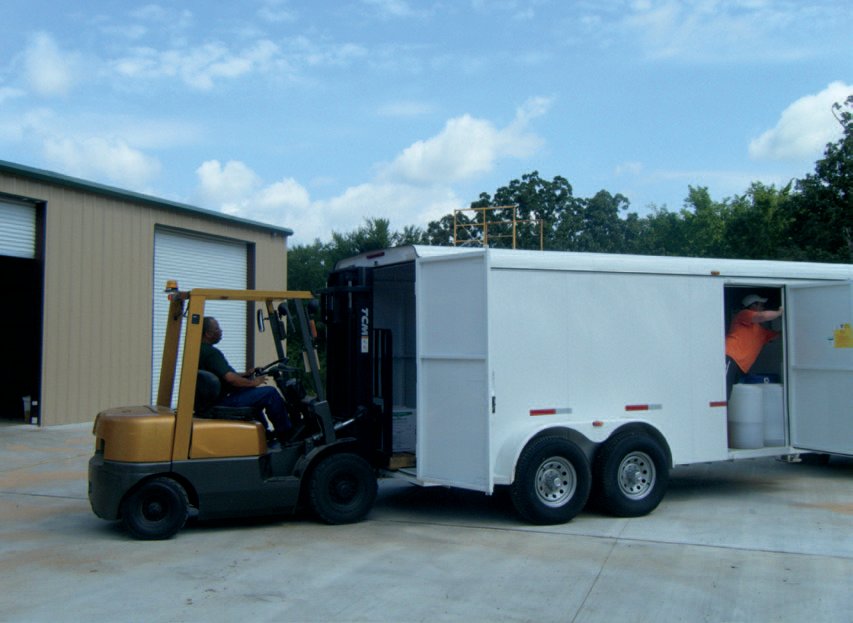
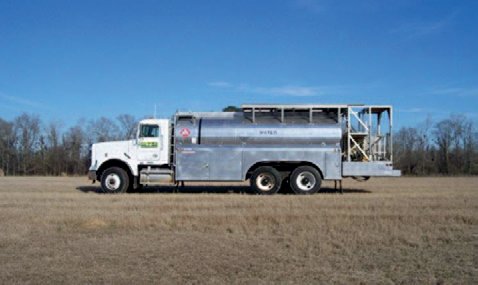
Water bars on tracts are extremely important for water diversion purposes. However, with aerial applications water bars are very difficult for the batch trucks to clear. The batch trucks carry the water to the site and usually they are 3000 gallon water trucks. The clearance is very low. So take into consideration when having aerial applications that the water truck needs to have access to the site. If there is no access without crossing large water bars, generally a LZ (landing zone) can be found on an alternate area or perhaps with permission of an adjacent landowner. When your site was logged, log trucks leaving a site have different clearance than a water truck. With the shorter axle, batch trucks cannot necessarily access the site the same way log trucks left. This needs to be discussed and determined prior to the crew’s arrival. The area manager will help with this and ensure proper access.
Water source
Most crews are familiar with local water sources. The water source comes from local water authorities, with permission granted prior to the application. Sometimes general information on a local water authority may be needed. The area manager will ask the landowner should this be needed. With the amount of water required to spray a site, water sources will be identified well before the application takes place. If your land is in an area where water is difficult to obtain, we will look for alternate sources further away.
GPS
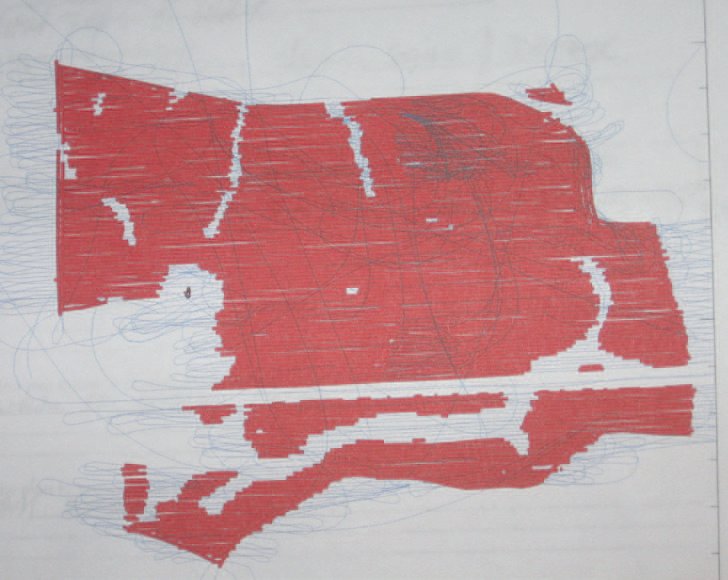
Sophisticated GPS systems are in both helicopters and skidders for tracking the spray job. The GPS accomplishes many goals. First, GPS identifies and confirms the site to be sprayed. The Lat/Lon that is provided before the spray job is matched to the equipment on board to ensure the accuracy of the location. Second, a GPS map is provided to the landowner after the spray job with the pattern of the application. This allows the landowner to see the areas of their property that were sprayed. If certain sensitive areas were to be left out, the landowner can see firsthand that they were not sprayed. The GPS guidance system guides the pilot or operator through-out the tract to ensure an accurate application.
Landing Zones
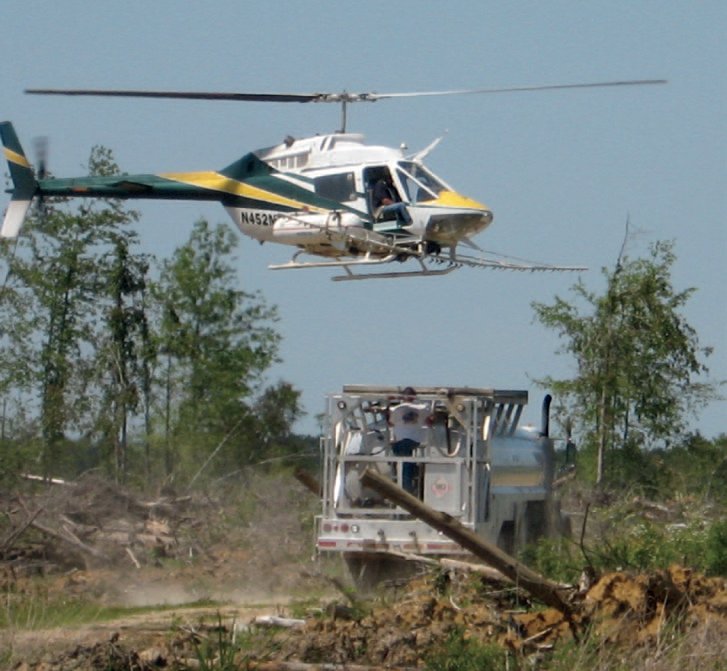
The LZ (landing zone) is where the batch truck, crew truck and helicopter congregate. This area is usually found on the tract. However, sometimes this area can be located off the specific tract to be sprayed. This is determined prior to the spray job to ensure entrance to the spray site. In the case of a LZ for a helicopter, several factors are examined. The pilot needs plenty of clearance up and away from the batch truck to both depart and land. What is important to know about a LZ is that helicopters do not lift straight into the air after loading. When they land on top of the batch truck and begin their lift, there is a sink of the helicopter which takes place. As they sink, they slowly begin to lift in a runway fashion. Note the picture of the sinking action by the helicopter; this is why a large area is required free of standing trees or any other objects.
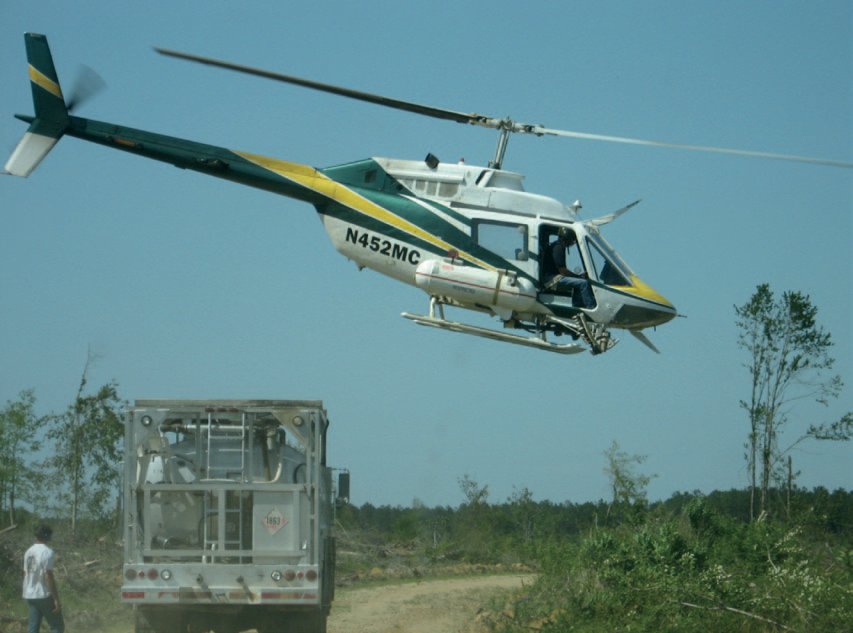
The helicopter will land directly on top of the batch truck to be refilled with a new load. A load will consist of 10 acres at a time if a 10 gallon per acre (GPA) mix is being used. If 15 gallons per acre (GPA) is prescribed then the load will be a little over 6 acres. If the tract is a perfect 100 acres at 10 GPA, then the helicopter will take off and land 10 times. This is why the LZ needs to be accessible on all sides of the batch truck. If large standing trees are in the way, sometimes a chainsaw will be used to fell trees to allow good access. Also, if a LZ is located on adjacent property, a good ferry length for the helicopter is less than one half mile. It’s important to know where a potential LZ could be located on either your property or with the permission of an adjacent landowner.
Costs
What is the cost for these types of applications? That is one of the most common questions that landowners ask associated with application. Each tract is looked at and a cost is given at that time. Costs are hard to determine without a site inspection and all the pertinent information about the type of treatment. Should a landowner commit to an application on their property, the area manager will visit the site and discuss all the possible options. If the landowner has a forester who will handle the application, then the forester can make the necessary arrangements to have the site visited and cost projections can be discussed at that time.
Successful Applications
As each landowner has his or her own set of objectives, the applications on your property may vary. Should you need help deciding what you should do, seek help and ask questions. Each day landowners are considering different techniques and methods to achieve their objectives. Those answers are available for you, so do not hesitate to ask. Remember, have patience and communicate your objectives and goals to your application company.