
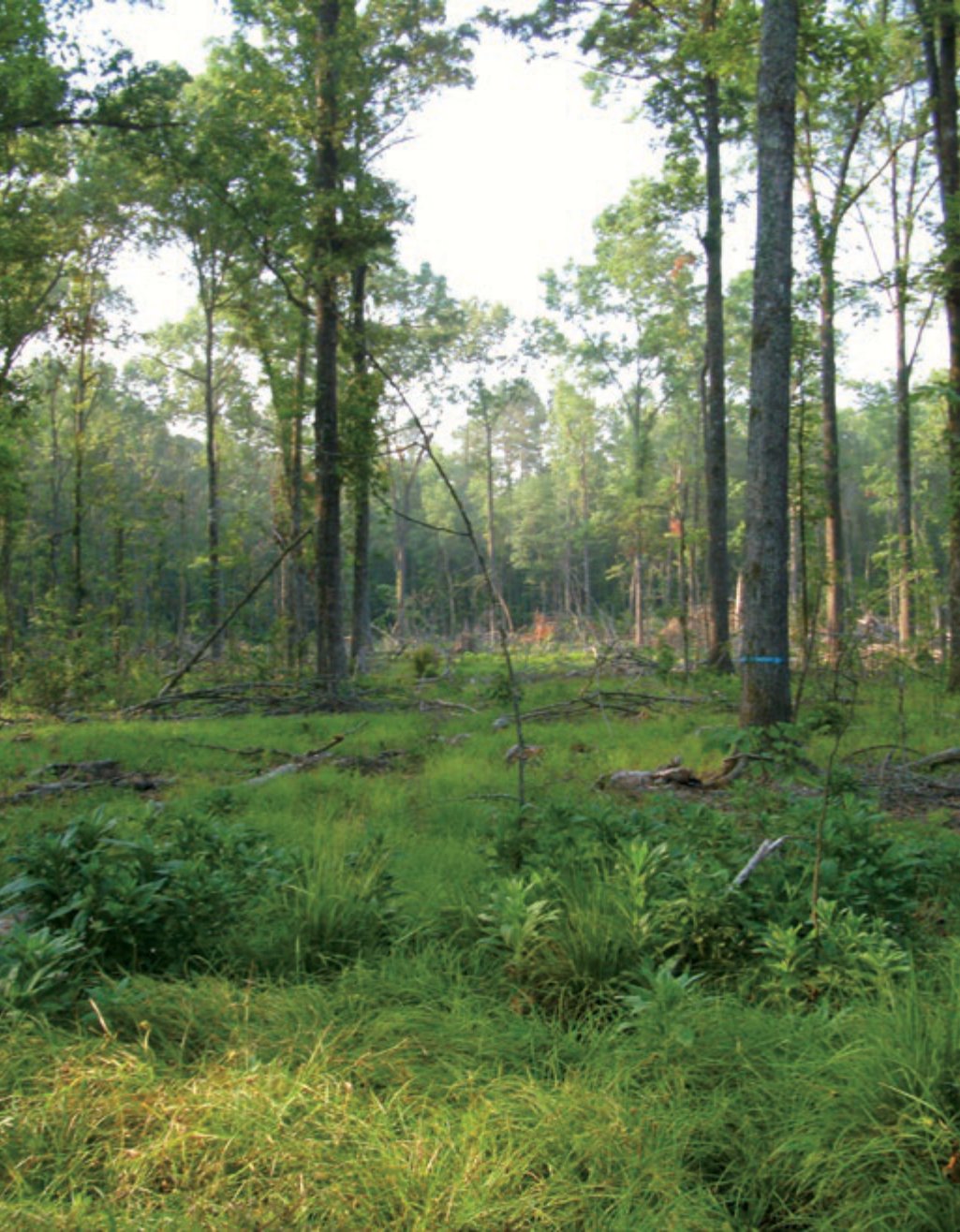
Acorns dropping from oak trees receive a lot of attention from nearby deer. And, anything that draws the attention of deer will certainly be of interest to deer hunters planning their next hunt and to landowners planning habitat or timber management. Oak trees and their acorn crops are great to have as part of deer habitat, but sometimes too much emphasis is placed on oak trees. They are great to have around as a “dessert” for deer and a commercial timber product, but presence of oak is not “required” for an effective deer management program. To fully understand this statement, you need to understand some biological background that determines what deer need nutritionally and when they need it. Additionally, you need to place habitat management efforts in the correct context.
Deer Physiological Demands and Related Nutritional Needs
The annual physiological demands of deer determine their nutritional needs and thus their habitat requirements. Demands differ for bucks and does, so we’ll describe them separately.
Adult bucks have two primary demands each year: the rut and antler growth. For bucks, the breeding season (or “Rut”) is characterized by increased daily movements and decreased feeding rate. The result is up to 25% loss of body weight. This loss takes place even in research pens with unlimited high quality forage, so our ability to mitigate it with food is limited. The post-rut period, in February to early March, is critical for bucks to recover from their rut losses and prepare for antler growth. The physiological and nutritional demands of antler production last from March through August. Generally, nutritional management for optimum antler production at a variety of ages should strive for an average intake of 16% protein. It is generally accepted that most southeastern deer forages that fulfill the animal’s protein requirement will also fulfill their energy requirement.
Adult does also have two primary demands each year: gestation and lactation. Demands of gestation are most critical from March until fawning. Lactation demands are critical from birth until fawns are weaned at about 3-4 months of age, which takes them into October in most of the South. Gestation and lactation protein requirements are adequately supported by a 16% crude protein diet.
To summarize this physiological and nutritional information, the most demanding and potentially limiting periods nutritionally for whitetails are from February through October. Habitat should provide an average diet quality of 16% crude protein during this period.
Deer Habitat Quality
Whitetails have amazingly flexible habitat requirements that allow them to live in a wide range of habitat types, from areas dominated by agriculture, to those with mostly forests, and even in semi-desert environments. The primary habitat requirement of concern in most areas is adequate quality and quantity of forage below 6 feet (i.e., food). Hiding and escape cover for fawns are also important. Both of these needs are best made available in forested areas through the process of timber harvest. Canopy removal during thinning and/or clear cutting makes sunlight available at ground level, which leads to deer forage production. Deer consume between 3-5% of their body weight every day and the best way to ensure year-round forage production is allowing the sun and soil to produce it naturally. If you can manage the forest such that sunlight can reach the ground, Mother Nature will take care of the rest.
Diet selection by deer changes in response to seasonal changes in forage abundance, quality, and metabolic needs of the animal. Deer eat a variety of food types throughout the year, including browse (leafy parts of woody plants), forbs (herbaceous broad-leaved plants, including agricultural crops), hard mast (acorns, pecans) and soft mast (persimmon, muscadine, blackberries), grass and mushrooms. As a general rule, we like to say that deer “need browse, prefer forbs, and relish mast.” They “need” browse because it is the most stable forage supply due to its relative independence from rainfall. Deer “prefer” forbs because they are more palatable and higher in protein than browse. Deer “relish” mast just like people relish dessert because it is highly palatable with moisture included. Typically, the most important dietary need that is often absent is forbs. Most of the forbs needed and desired by deer are classified as “shade intolerant,” which is fancy word for “can’t grow in the shade.” Think about the forest areas you hunt and if the canopy is closed, very little sunlight will reach the forest floor and production of forbs will also be low, if not absent altogether.
Acorns and other hard mast provide valuable energy supplies during autumn that contribute to building fat reserves for the winter, but typically provide only about 6% crude protein. The autumn energy source provide by acorns is extremely important in some areas of the country, such as the Appalachian Mountain Range (Alleghany Mountains, in the Southeast). In such relatively infertile soils where deer must deal with limited food during a relatively harsh winter, a bumper acorn crop can make the difference between twin fawns and a singleton, healthy birth weights and neonatal mortality, and even survival and death. However, more fertile soils preclude such dire situations for local deer populations. Autumn fat reserves are certainly important, especially up north, but in the South it is not as important as providing the 16% protein needed by deer during the remainder of the year.
Habitat that provides a steady supply of high quality forage (like forbs) year-round will certainly take care of any energy needs of the deer population. So how do we ensure our forests maintain a steady supply of forbs?
Forest Habitat Management
Aside from population control, forest management has the most important influence on deer populations over much of their range. The production of understory vegetation is related directly to a number of factors including site quality, forest type, and stand age and structure. Abundant deer forage is produced only when sunlight, space and nutrients are available. Timber harvest allows sunlight to reach the forest floor, creates soil disturbance and stimulates the production of desirable herbaceous vegetation, woody vines and other browse species which are of high nutritional value to deer and provide escape cover.
Young clear-cuts may provide abundant forbs, vines, woody browse and soft mast for a limited time, depending on the type of site preparation and release procedures used during planting. The type of stand establishment will affect available forage, and this effect is not necessarily consistent in all areas. For example, in the Lower Coastal Plain of Southeast Mississippi, removal of low quality woody vegetation by applying a chemical site preparation made sunlight, space and nutrients available for higher quality forbs, which increased forage production for deer. However, in a similar study in the Coastal Plain of North Carolina, forbs did not respond positively to woody browse removal. Additional relationships may be evident in other soil regions, depending on soil and plant quality.
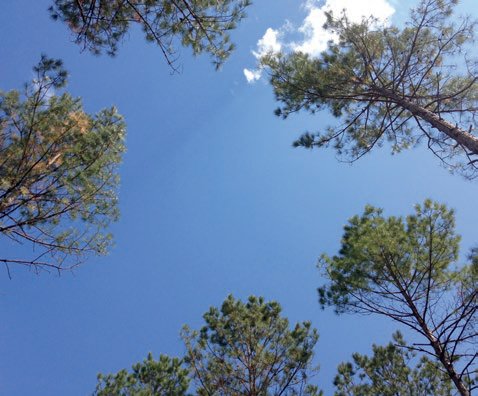
Production of understory forage declines dramatically with canopy closure. For example, in loblolly pine plantations in the Mississippi Coastal Plain nutritional carrying capacity declined from a high of 10-13 deer-days per acre at 1-3 years post establishment to only 1/2 deer day per acre following canopy closure at year 7. Carrying capacity will remain low until the stand is thinned for pulp wood, which typically occurs first at 13-17 years in southeastern pine plantations. Prescribed fire application following initial and mid-rotation thinning improves germination and growth of high quality herbaceous plants, further increasing food production for deer.
However, forage production, and thus habitat quality, will increase again when pine forests are thinned for their first commercial product at about 15 years (in loblolly pine). Greater forage production is promoted with additional thinning as trees reach saw timber size and as natural mortality thins the canopy. Silvicultural practices which emphasize interspersion and juxtaposition of different age forest stands generally optimize deer habitat. What this means for the deer manager is to stagger timber harvest and thinning in space and time across the property. This keeps the entire property from being in the same stage of timber growth, and avoids a boom-bust cycle of deer food. During stand establishment, and after a thinning, there will be increased deer forage, however, prior to the final harvest deer forage will essentially be absent from the forest. Thus, it’s best to have a patchwork of different timber stand ages to ensure you always have some good forage on the landscape you hunt.
Where they occur, acorns can be an important component of the fall and winter diet of deer. Because most naturally occurring oaks do not produce substantial amounts of acorns until they are at least 40 years old, rotation lengths of 100 years or more may be appropriate for some stands. Selection cuts that promote desirable mast production and crown growth of white and red oaks, persimmons, pecans, and other mast also are desirable.
In certain forest types, controlled or prescribed fire can be an important management tool. For example, in Southern pine types, fire can increase browse production and palatability, soft mast production, nutritional value of some forages, and the abundance of some important forbs. Controlled burning also may reduce parasite abundance, particularly immature stages of ticks. Most pine species and some oaks, such as post oak, have thick bark or cambium layers that allow them to survive mild understory fires without damage.
The role of a food plot program
Many hunters and deer managers don’t have the ability to implement the forest management techniques we have discussed simply because they don’t own the property they hunt – they are lease hunters. The authors of this article fall into this category – we know what needs to be done to produce good deer forage, but because we don’t own the land we are at the mercy of the landowner. In these cases habitat management becomes a combination of deer population control and a good year-round food plot program.
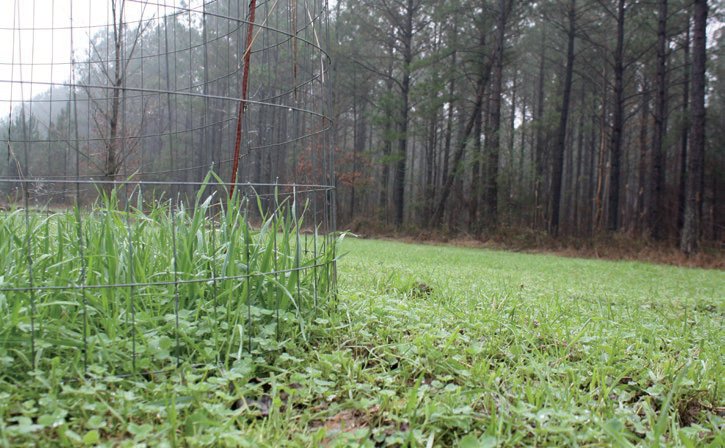
So how many deer need to be harvested on your property to keep the population in check with the available habitat? Well, there’s no good answer because it varies from place to place and over time, but here are some general guidelines. First, enlist the help of a deer biologist if you have one available. They can typically do a browse survey (evaluate relative foraging pressure on deer forages) one afternoon and look at your deer harvest data and use this information to provide you with some general guidelines. Second, examine the deer harvested on your property and make note of body condition – do they have a layer of fat? Also, use your food plot program to determine if you have too many deer.
The success of a food plot program goes hand and hand with deer numbers. There’s just no way to accomplish your objectives of improving deer diet quality if you have too many deer! If year after year you fail to establish a warm- or cool-season food plot you have too many deer. Make sure every food plot has an exclosure cage so you can determine how much forage was produced versus how much is being consumed – this will usually tell you all you need to know.
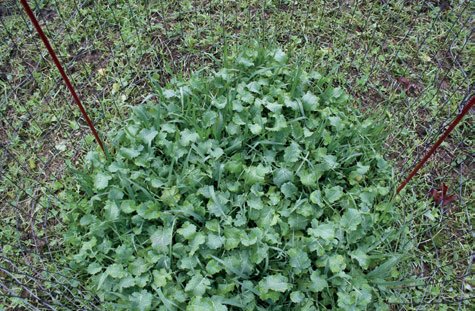
To raise deer diet quality on a property and to fulfill all the seasonal requirements we described earlier in the article you need to establish a year-round food plot program. Simply having some “green fields” in the fall and winter is not enough. These plots are good for seeing and harvesting deer, but not for improving diet quality, and subsequently deer body weight, antler size, and reproduction.
There are a myriad of food plot plants to match just about any situation in terms of deer density, soil quality, etc., but here are some choices that have worked well for us. In the fall, a good mix is oats, forage wheat, and crimson clover. This is a very economical mix that will work in most every situation and will provide deer forage from November thru March. The addition of brassicas (like forage rape), Austrian winter peas, and red or arrowleaf clover are very good plants to include in the mix too.
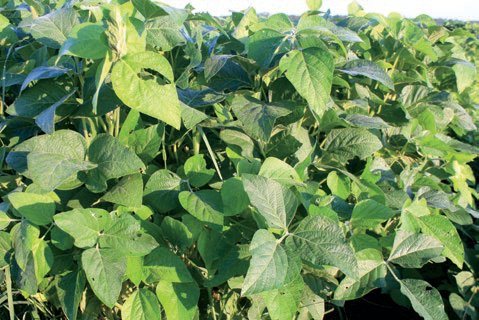
Good warm-season food plot choices include forage soybeans, cowpeas, lablab, deer vetch alyceclover, corn and milo. Keep in mind that if you have a high deer density or smaller plots (<10 acres) soybeans can be difficult to establish. If this is the case you may want to consider cowpeas, lablab, or deer vetch (American joint vetch) as they are more browse tolerant. Alyceclover may be the best choice for heavy deer densities and smaller plots because it is the least preferred of these warm season forages.
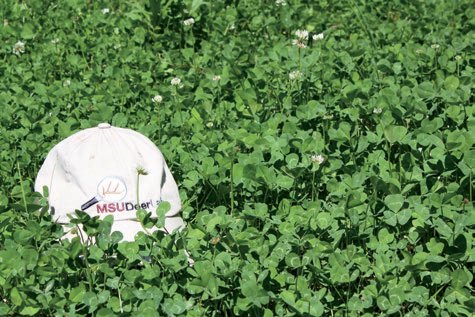
The best perennial food plot is likely alfalfa, but this plant can be very difficult to establish and is very time consuming to maintain if you want to get several years of good production (which is the very reason to plant a perennial). The most common perennial food plot choice in the Southeast is white clover because it is relatively easy to establish and if you continue to fertilize with P & K and keep the weed competition low with timely herbicide applications you can get many years of production. Forage chicory is another good plant and is often planted in combination with white clover.
For planting rates please refer to the publications listed at the end of this article or download our free iPhone app “DeerPlotApp” from the iTunes store.
Habitat Management Context
Deer need a seasonally and annually stable supply of food that fulfills their protein requirements. Opening of the forest canopy via timber harvest is the primary mechanism for production of the forages that will provide a nutritionally adequate and stable deer habitat in regions dominated by forests.
Where present, oaks and other hard mast producers are an important component of timberland and wildlife habitat from the perspectives of future timber values and landowner preferences. However, from a deer biologist’s point of view, in most regions we are more concerned with the year-round availability of forage within the reach of a deer than about acorn production.
So, let’s place “acorn management” within the proper context. When planning your deer habitat management program, prioritize your efforts to produce year-round natural forage quantity and quality using timber harvest and old field management. During timber harvest, every effort should be made to promote and retain oaks and other hard and soft mast producers where they are present. Then, consider a mix of seasonal and perennial food plots. And, if you have the extra money available, you can also include some special plantings of oaks for hard mast and fruit trees for soft mast. So, remember, the foundation of your deer habitat management program is production of a year-round supply of palatable, high-quality forage. While doing the timber management needed to produce quality forage, manage for oaks and other mast producing species to provide a deer a palatable source of energy during the fall and winter months.
References
Food plot reference material – all are free for download on the web
- A Guide to Successful Food Plots, University of Tennessee
- Effective Food Plots for White-tailed Deer in Alabama, Alabama Department of Conservation
- Supplemental Wildlife Food Planting Manual for the Southeast, Mississippi State University