
In the first part of this series, we discussed some of the history, techniques, and theory upon which the study of wildlife genetics is built. After reading the initial article, you should appreciate that current techniques provide researchers with several useful genetic markers and allow the use of numerous types of starting material(s) including blood, tissue, hair, feathers, feces, etc. You should also keep in mind the terminology introduced, as we will rely on several important terms defined in the first section.
In this second part of the series, we will discuss a number of cases in which genetic techniques have been used to study or manage wildlife populations, and we will try to focus on current and future management implications resulting from this work. Although our discussion will focus largely on game species, we will begin with an example that discusses a non-game, large carnivore.
Management of the Florida Panther
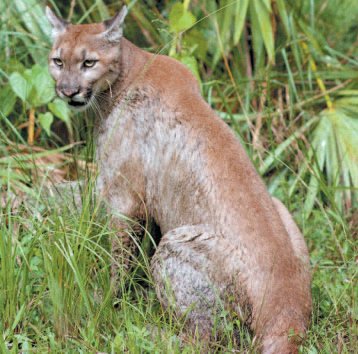
The Florida panther (Felis concolor coryi) is a relatively clear and well-known example of the impact that knowledge of genetics can have upon a managed wildlife population (Figure 1). Since the mid to late 1900s, the loss of suitable habitat within the Southeast caused Florida panther populations to decrease drastically in size and extent. Currently, Florida panthers are believed to exist only in remnant habitat found within an area surrounding the Everglades.
As a result of this drastic decrease in population size, genetic diversity (variation as measured by genetic markers) in the panther population decreased. This loss of genetic diversity, combined with small population sizes, likely led to the random fixation of deleterious alleles within the panther’s genome. In other words, fewer and fewer individuals available to mate resulted in a situation where genetic defects were incorporated into the existing population of Florida panthers. These defects are not unlike those seen among humans as a result of inbreeding (mating between close relatives).
In many cases, the effects of losses in genetic variation and/or inbreeding are not immediately negative. In fact, populations can typically withstand these negative effects over short time-periods, provided they contain a large number of individuals. However, the situation for panthers in Florida was quite different. Genetic defects incorporated into the population resulted in panthers with undescended testicles; decreased sperm counts; and misshapen, non-functional sperm. Structural defects discovered in several panther hearts may also have resulted from the decrease in genetic variability. Finally, decreases in genetic variability are known to result in increased disease susceptibility, so these panthers were also at greater risk of becoming infested by parasites or killed by disease. In a population that is already greatly at-risk (due to the small number of individuals within the population), the reversal of these effects was required to ensure the survival of the species.
It was determined, again using genetic techniques, that the degree of difference between North American panther subpopulations was low, and in 1995 eight female panthers from Texas were released into the area occupied by the Florida panther. Panthers from Texas had high levels of genetic diversity relative to Florida panthers; they were believed to be the closest, existing relatives of the Florida panther; and they did not exhibit the reproductive problems seen among their Floridian relatives.
As a result of these releases and subsequent breeding between Texas and Florida panthers, many of the defects exhibited by the panthers in Florida were greatly reduced. Hybrid kittens that resulted from a Florida male mating with a Texas female had higher than average survival, and it is thought that hybrid individuals survived longer and produced more offspring than their non-hybrid counterparts.
Although these introductions reduced the occurrence of harmful genetic defects in the population, managing its genetic component did not solve every problem. The Florida panther is certainly not “out of the woods” yet, and management of the population’s genetics is no substitute for continued management and expansion of the available habitat. However, knowledge of genetics and use of genetic techniques greatly increased the short-term likelihood of Florida panther survival and persistence. By removing these immediate concerns, managers were able to focus on long-term management actions including both the maintenance of current habitat and the acquisition of new habitat.
Genetics of white-tailed deer
Among certain classes of genetic markers, a single allele may be inherited from the mother and a single allele from the father. An allele is a variable form of a gene – mammals, birds, and many plants have 2 alleles for each gene present within our genome. Provided that these alleles can be identified for a number of genes, we are able to determine the mother and father of an offspring. This is largely identical to “paternity testing” which determines the father of an offspring given that we know the mother. Among wildlife species, we must often determine both the father and the mother of each offspring.
A study conducted by Randy DeYoung at Mississippi State University and his collaborators utilized this class of markers to do exactly what is previously described. This study discovered that, among captive white-tailed deer (Odocoileus virginianus), multiple paternity (siring of offspring in a single litter by 2 or more males) occurred at a relatively high rate (25%). Among deer, this behavior was unknown prior to this study, and these results were a landmark finding.
Depending on your viewpoint, this knowledge may appear academic at best or unimportant at worst. However, you should consider that often seemingly unimportant knowledge of reproductive systems can be incredibly beneficial. For example, one of the important developments in deer management, Quality Deer Management or QDM, is based upon sound knowledge of deer reproductive behavior. The occurrence of multiple-paternity among deer may prove to be another fundamental piece of the management puzzle, and it may help us manage deer in new, more efficient, more biologically sound ways.
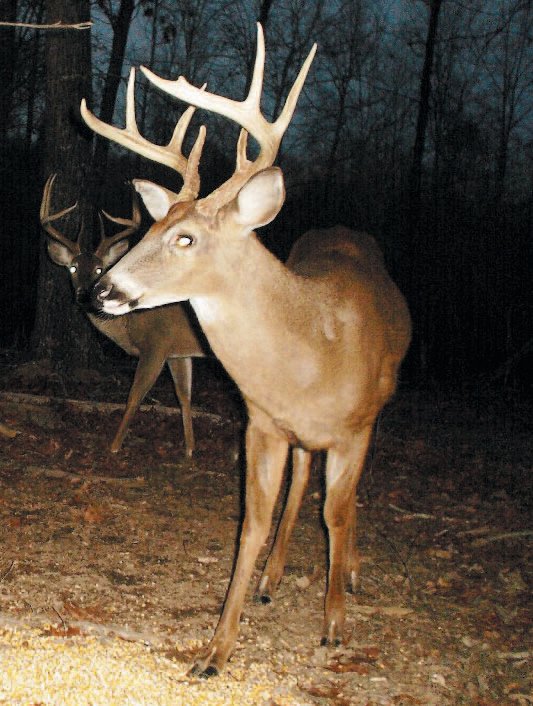
For example, the rate of multiple paternity in a population may be an indicator of a population’s overall genetic “quality” (Figure 2). In circumstances where this quality is low or variable, females may choose to mate with multiple males. This behavior increases the probability that at least one of the female’s offspring (in twin litters) is sired by a high-quality mate. Managers could potentially use periodic measurements of these rates to gauge the overall genetic “quality” of the population they manage. Herds with low rates of multiple paternity may be of higher quality than herds with high rates. Unfortunately, we don’t fully understand the rate, role, and function of multiple paternity in wildlife populations – so management actions utilizing this knowledge have yet to be developed. There is also an additional catch – we do not currently know the relationship between the genetic quality of an individual or population and those criteria commonly valued by hunters (antler size, shape, and mass, for example).
In contrast to the Florida panther, genetic data and knowledge of genetics have not “solved” a management/biological problem. Rather, these results have provided us knowledge upon which to build new theories and base additional research. Future research in this area will focus on the application this knowledge to the development and testing of novel management practices.
Deer and localized management
In many cases, we can also use genetic techniques to evaluate existing hypotheses or current management strategies. Along with his collaborators, Chris Comer at the University of Georgia used genetic data to investigate a model of deer behavior, developed during the early 1990s, termed the “rose-petal model”. This hypothesis states that social groups of does exist across the landscape with each individual group being composed largely of relatives (i.e. the group is composed more of mother-daughter, full sibling, grandmother-granddaughter, or half-sibling pairs than expected by chance).
At the management level, the rose-petal hypothesis implies that intensive removal of individual does from a social group will result in a long lasting (10 year) reduction in density for the particular area inhabited by that social group. In other words, in areas plagued by deer overabundance, managers may want to focus on an intensive, local removal of deer rather than a broad-scale, less intensive effort.
In order to evaluate the applicability of the theory to the Southeast, Chris and his collaborators radio-tagged and collected samples for genetic analysis from deer on a large study site in South Carolina. They used a class of genetic markers identical to those used in Randy DeYoung’s study. In addition to allowing the determination of the mother(s) and father(s) of particular offspring, these genetic markers can also be used to determine other familial relationships (e.g. siblings, first-cousins, second-cousins).
After collecting and analyzing both their radio-tag and genetic data, these researchers came to the conclusion that the rose-petal hypothesis, as it is currently stated, did not appear to apply to deer on their study site. In other words, they found that while older does did appear to stay within the same general area, additional does in close proximity did not appear to be close relatives. Therefore, the rose-petal model may not apply to the population studied, and management actions based on the rose-petal model may not be applicable on similar areas throughout the Southeast.
In contrast to the multiple paternity study, in which new behaviors were identified, this genetic research sought to investigate an existing management-related theory. The results, while surprising, indicate that a localized management strategy, based on the rose-petal mode, may be much less useful than initially thought. Furthermore, it implies that management actions based on the model may not be warranted in typical southeastern habitats. Along with the prior examples, the flexibility and contribution of genetic analysis to wildlife management should start to become evident.
Wild Turkey Subspecies and Hybridization
Genetic studies are certainly not limited to mammals. Along with her collaborators, Emily Latch at Purdue University used genetic markers to investigate patterns of Wild Turkey subspeciation and hybridization. Put another way, Emily looked at the existence and location of wild turkey subspecies throughout the state of Kansas.
This study determined that Eastern wild turkeys tend to inhabit Eastern Kansas with Rio Grande turkeys found in central and western Kansas. Interestingly, this research identified 2 areas in which the results were different from their expectations: an area in east-central Kansas where turkeys appeared to be Eastern+Rio Grande hybrids and another area at the southwestern corner of the state where the turkeys appeared to be Merriam’s+Rio Grande hybrids.
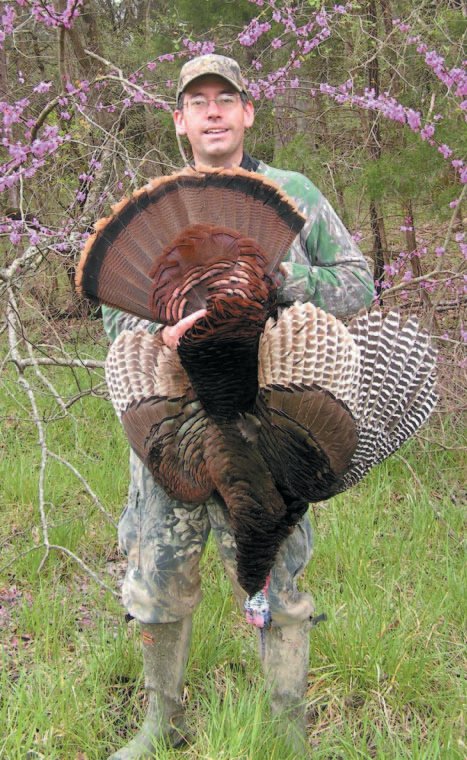
From a management standpoint, this becomes very important if you begin to think about translocation of turkeys for reintroduction to certain areas. As most of you know, the now phenomenal turkey populations we enjoy throughout the Southeast are a result of careful management by state game agencies and the re-introduction of turkeys to many areas from which they had disappeared (Figure 3).
Results from this study underscore the importance of knowing the location and genetic makeup of the source population used for translocation. If we want to reintroduce pure, Eastern turkeys to an area, we need to ensure the individuals we are relocating are actually a pure subspecies rather than a hybrid strain (which may be very similar in appearance). This is not only true for turkeys – it extends to other species we may translocate and reintroduce in the future.
A somewhat extreme example should clarify why this is important. Consider for a moment that we want to translocate turkeys to an area where they are present in very low numbers. Prior to taking this management action, we must identify a source population from which to collect the individuals being translocated. We should also ensure these individuals are: (1) genetically similar to turkeys in the area of reintroduction and (2) genetically “healthy” (have high levels of genetic diversity). Genetically similar individuals may be better adapted for survival and reproduction in local habitats than genetically dissimilar individuals. Genetically diverse individuals should be more resistant to disease or parasites, produce healthier offspring, and, through reproduction, reduce the negative effects of small population size on the resident individuals.
Although we could translocate genetically dissimilar individuals, these may have different breeding, feeding, or predation avoidance behaviors that render them unsuitable for translocation to the new habitat. Additionally, these dissimilar individuals may be at greater risk of disease outbreak or parasite infestation because they do not possess local, genetic adaptations that help maintain the health of individuals already present on the reintroduction site. If we reintroduced genetically dissimilar birds, the results could be catastrophic – many of the translocated birds may die or they may put resident birds at risk by diluting the resident population’s genetic adaptations to their local environment.
With this final example, the flexibility and power of genetic techniques should be evident. In this case, we can use genetic techniques to directly inform a future management decision by: (1) identifying a similar source population for a translocated species, (2) investigating the genetic “health” or genetic variability of both source and resident populations, and (3) provided it is our goal, allowing us to investigate the genetic effects of translocated individuals on the local population. Given use of these techniques in this way, we are able to make an informed, intelligent decision and monitor the outcome. In doing so, we maximize our benefits and minimize the risks associated with our actions.
Summary
In the preceding article, we have shown how genetics, genetic techniques, and genetic data can be used to aid the management of a rapidly declining population, identify unknown reproductive behavior, develop new hypotheses for further investigation, evaluate existing models of behavior, identify subspecies and hybrid zones, and guide the reintroduction of a species.
You may still be wondering how all of this affects landowners, hunters, natural resource managers, and/or biologists? As mentioned in many articles you have read, particularly Wildlife Trends, times are changing. The management of many species today is drastically different from management of the same species 50 years ago. Landscapes are becoming more fragmented and patches of managed land are smaller. We are beginning to be much more concerned with population structure, population size, individual dispersal, mating systems, inbreeding effects, and maintenance of genetic diversity. As a result, management increasingly focuses on actions taken to address these population features, and genetic techniques often allow us to investigate these features, better understand them, and make sound management decisions given our knowledge.
In certain cases, new management techniques (translocations, removals, sex-specific harvest schemes) are necessary to properly manage a particular patch or to bring native species back to a particular, well-managed area. In other cases, traditional management techniques are perfectly suitable. In all cases, we should be aware of both the short- and long-term effects of the techniques we use across the landscape. Genetic analysis is one tool among many that allows us to investigate these effects.
Genetic information is not a panacea, however. In some cases, the direct applicability of genetic data to a specific problem is evident. In others, the applicability of genetic data is currently unknown because: (1) we lack additional knowledge allowing us to fully understand the system in which we are working, or (2) we have not determined the best way to apply our knowledge to a management scenario.
It should also be remembered that these tools, like many others, are no substitute for sound biological knowledge, quality habitat, and continued habitat management. Provided quality habitat exists and when used in concert with other management techniques, genetic information can help to ensure the sound management, long-term persistence, and sustainability of our wildlife populations.
Additional Information
Here we have provided several examples illustrating the utility of genetics and genetic techniques to the field of wildlife management. This brief summary has only scratched the surface of the research being conducted in this area. Genetic techniques are currently being used with many other species as a part of numerous research projects. At the University of Georgia, several researchers are conducting genetic research among: Northern Bobwhite, bobcats, black bears, opossums, raccoons, Eastern Bluebirds, and loggerhead sea turtles.
If you would like to learn more about our research, please visit: http://gallus.forestry.uga.edu/lab. If you would like to learn more about some of the studies used as examples in this article, please visit the Molecular Genetics Core Laboratory of Randy DeYoung, (http://users.tamuk.edu/karwd00/Research.htm) or the website of Olin Rhodes’ for more on Emily Latch’s research (http://www.agriculture.purdue.edu/fnr/html/faculty/Rhodes/index.htm).