
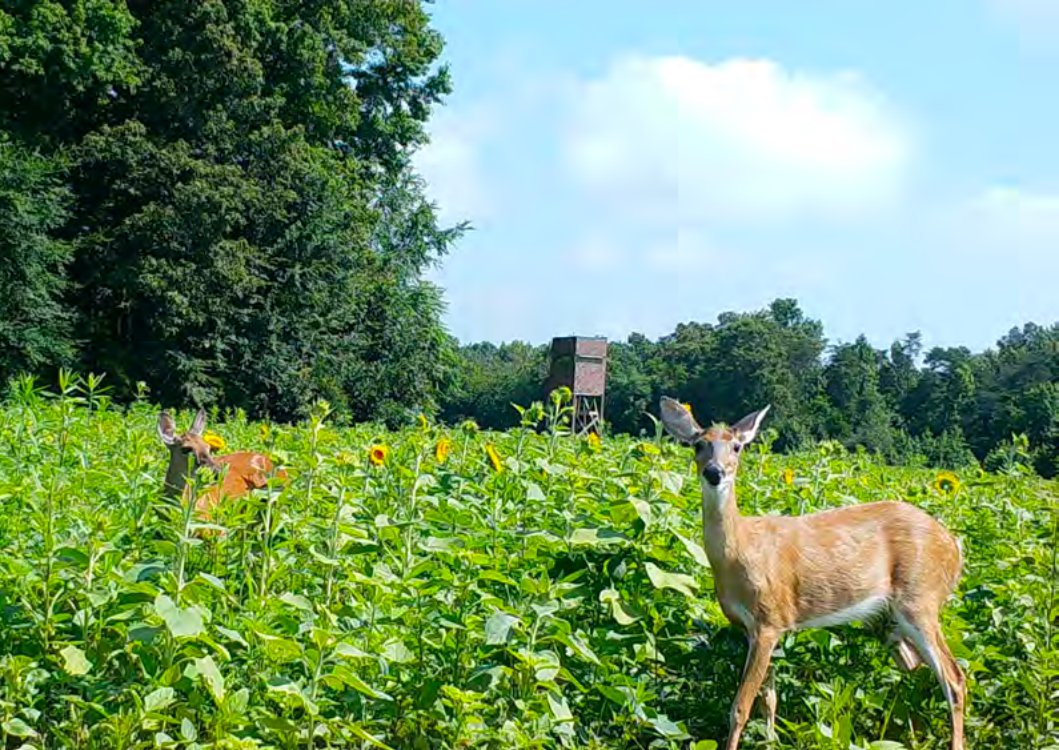
The main question I get asked on a weekly, if not daily, basis is “what should I plant for deer?”. For a deer manager, the response is often “well, it depends” and is followed by a series of questions to help determine land use practices on the specific property, as well as neighboring lands, deer density, seasonal shifts in populations, timber and native and invasive plant management practices, harvest goals, and time and equipment limitations to name some of the most basic factors. Taking this brief description and included variables of the specific property, a manager can then give some pointed advice on different forages that can be planted to meet the goals provided by the client, as well as to overcome any limiting factors provided by the property, local wildlife, equipment, etc. With all this said, I’ve developed a new answer over the years that attempts to invoke a certain response by information seekers to open the door to a new way of thinking when it comes to feeding wildlife. In short, my response is “Everything.” When I provide this answer to the greenest land manager or new hunter all the way to the well experienced versions, I often get a puzzled look, with the reply, “everything?”. I often give a smile and say “yep, everything!”. The goal of this interaction with hunters and deer managers is to plant a seed of thought that wildlife, deer in particular, thrive in highly diverse plant communities, and we, as stewards of land and wildlife, should strive to produce these diverse plant communities. I also take this response a step further and say, “don’t think of feeding wildlife in terms of what can I plant but in terms of what can I provide?”. By shifting your focus from planting to providing, you can not only use the practice of planting food plots, but create high-quality and highly desirable food sources through prescribed fire, removal of invasive plant species, managing timber on large and small scales, the planting of wildlife preferred trees and shrubs, and even controlling deer and other wildlife populations to ensure that the remaining animals are provided with more resources. By shifting your thoughts from just planting to providing, it opens up new possibilities and methods that allow a land manager to expand his scope and use all of his land to feed deer, and other wildlife species.
Whitetail Nutrition
Studies conducted by Mississippi State University have shown that deer need to consume up to 6%-8% of their body weight a day in green foliage to maintain a healthy body weight condition. According to that math, a 150 lb. deer can eat from 9-12 lbs. of forage a day. That is a lot of food, and although the amount, type, and quality of forage consumed will vary according to the time of year, this quantity of food can be a major challenge for a manager to provide. Also, forage quality is key when feeding whitetails. When deer have to consume low-quality forages, when high-quality forage isn’t available, it takes longer for the low-quality forage to be digested, thus limiting the total amount of food that a deer can take in. This alone can limit how many nutrients a deer can intake and will severely impact the overall health of the animal. Also, protein requirements are often discussed when talking about whitetail nutrition. Deer have varying levels of protein requirements depending on their age, growth stage, time of year, reproductive cycle, etc. To put it in short, if you can provide deer with a diet that includes 20% protein year-round, and especially in the growing season, deer will thrive. The obvious goal for any individual that wishes to maximize the quality of wildlife, especially deer on their property, would be to provide year-round nutrition to meet these daily requirements in forage. Taking a holistic approach of what plants can we provide versus what forages we can plant will help hit this mark.
Forage Selectivity/Nutritional Wisdom
In whitetails, it can be seen that they have strong preferences in certain plants, in regard to selecting one plant to forage on and completely disregarding another. Deer are concentrate selectors that choose to forage on the most nutrient rich and palatable parts of plants. This tends to be the growing parts of plants and deer will browse around, selecting this specific forage. That said, deer have strong preferences for certain plants, both planted and native. In the Mid-South planted crops such as soybeans, Alfalfa, clovers, oats, and corn seem to be the highest selected plantings consumed by deer. Native plants such as asters, prickly lettuce, young ragweed, and strawberry bush are highly selected. The criteria for deer selectivity, as we know it, is based on the nutritional content of the plant (which often depends on its growth stage, time of year, etc.), palatability, and its availability across the landscape. It’s obvious that we want to provide our deer with the highest-selected plants possible but often it’s hard to know exactly what specific nutrients an individual deer needs at a certain time. That’s where providing very diverse plant communities comes into play. By providing lots of diverse plants, we allow the deer to use their nutritional wisdom to select the type of nutrients they need at the time. Nutritional wisdom is simply a deer’s ability to choose what types of plants to eat at any given time that will provide them with a proper balance of nutrients to maximize body condition and everything that goes with that. A deer’s first goal is to survive above everything else and it has developed this nutritional wisdom to ensure just that. By targeting diversity as our main goal in providing food for wildlife we allow the animals to put this nutritional wisdom to work and select the exact plant with the proper nutrients according to what their body is craving.
Diverse Wildlife Plantings
Creating a diverse food plot system on your farm can, and often will, involve some trial and error to meet the specific conditions on your property and the wildlife’s needs. That said, there are tactics that can be utilized on any property to provide diversity when planting wildlife forages.
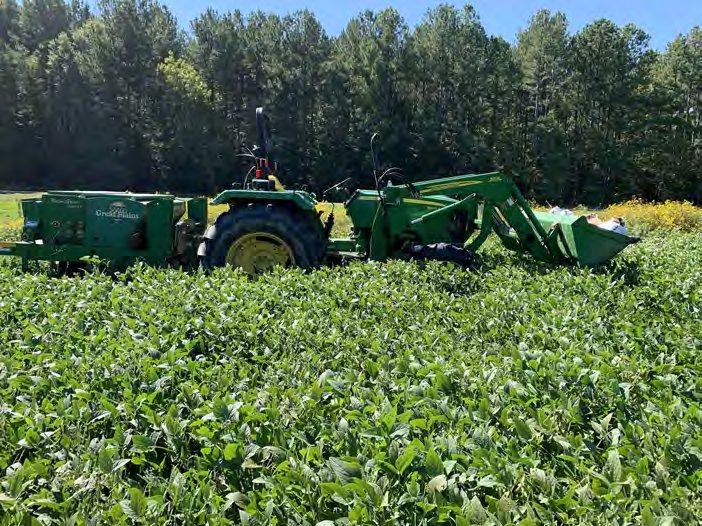
In this article, whitetails will be the main focus of our food plot planting and for good reason. More food plots are planted for whitetail deer than all other game species combined. With whitetail being the main focus, providing year-round quality nutrition is the goal. In order to achieve this on the majority of properties, warm and cool season plantings are the norm. My go-to warm season planting is soybeans due to the highly nutritious and selected forage and grain they produce. Depending on species, varieties, maturities, fertilization, and growing conditions, soybeans can produce upwards of 7,000 lbs. per acre of high-quality forage and 2,000 lbs. of highly selected grain per acre. As far as production of high-quality forage and nearly year-round availability of such, soybeans are hard to beat when it comes to a high-quality planting. Soybeans also match the stress periods of late summer and late winter that deer often encounter by providing great forage in the form of leaves in summer and grain in winter.
The main issues I see when it comes to planting soybeans and getting them to maturity is over grazing by deer early on after planting. Soybeans are very susceptible to early browse pressure during the first couple of months after planting. Combine this browse pressure with low fertility and poor growing conditions, such as drought, and you can have a plot failure in a hurry. Providing enough acreage of soybeans (in most areas 5+ acres) that the local deer can’t decimate, or if you have local farms in the area planting soybeans also can be a great help in keeping soybean plots from being over grazed early and allowing them to provide forage while still meeting their full potential. As stated earlier, soybeans are very highly selected by deer, and it’s no surprise that they can often eat them to death.
Soybeans also allow managers lots of flexibility in weed control. Many varieties are glyphosate tolerant, and newer varieties are even Dicamba tolerant, allowing further post-emergent weed control. Also, there are many pre-emergent herbicides labeled for soybeans that can be applied to prevent weeds and grasses from emerging into plots and becoming a problem. For these reasons soybeans can also be a great choice to clean up past weed problems produced by farmers or managers.
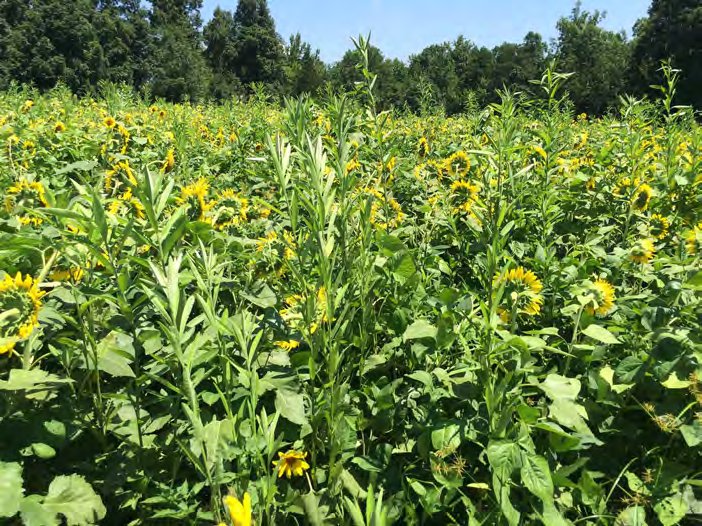
In areas where soybeans can’t be grown due to plot size limitations or high deer densities, my go-to is a blend of forage cowpeas, lablab, sunn hemp, sunflowers, and a touch of buckwheat. All these plants are foraged on by deer and will provide a unique set of nutrients on to the landscape. Although these plants are highly selected, they aren’t as highly selected as soybeans and most handle browse pressure better. They do a great job of quickly establishing and providing food and cover. This blend is also all legumes and can be sprayed with grass herbicides to limit grass competition.
Also having plantings of grass crops that will provide energy sources in fall through late winter, such as corn or grain sorghum, are great ways to increase diversity in your planting program. Like soybeans, corn has lots of post and pre-emergent herbicides listed to help with weed and grass control. Corn is very highly selected for its grain and can be an excellent source of nutrition and attraction for wildlife. Grain sorghum has similar qualities as corn but does have less herbicide flexibility and less grain production than corn. That said, it also has fewer nutrient requirements and is less expensive to plant and manage overall.
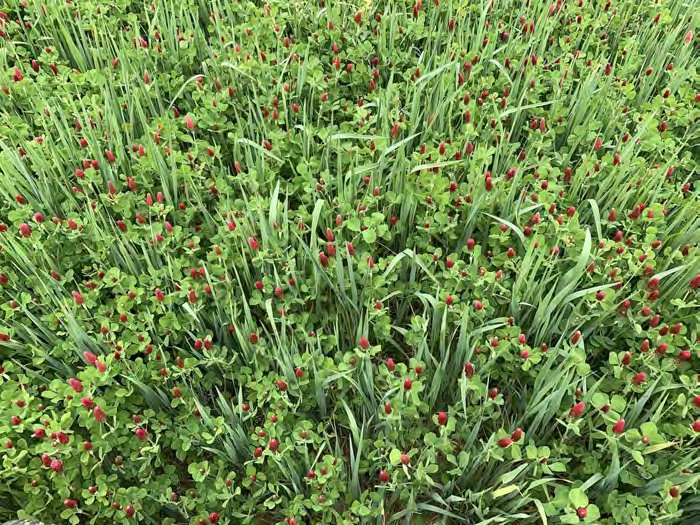
My go-to cool season blend in larger fields is a blend of cereal rye, annual clovers such as crimson, berseem, and balansa, brassicas such as kale, radish, and turnips, along with forage oats and wheat. This diverse blend of fall planted crops likes full sun, is highly attractive, produces forage soon after planting in early fall, and will continue to do so through late spring, and also helps with soil health. I often either no-till drill this blend in early fall into spring plots such as the blend of cowpeas and other legumes mentioned earlier or soybeans that did poorly and didn’t produce grain. If I want to plant this blend into a good stand of soybeans that produced lots of hard seed or a stand of corn, I simply broadcast it into the spring plantings ahead of a good rain. Using this broadcast method, we tend to use 25%-50% more seed than normal due to less consistent germination by spreading the seed on top of the ground. In the case of standing soybeans and corn, you’ll have the best of both standing grain and diverse green forage underneath the standing grain. This is a huge benefit to deer that they can access lots of different forage in one location. As a deer manager, it allows us to get maximum forage production out of one plot versus having just standing grain or fall planted plots alone. It’s also great for soil health by keeping living roots in the soil as much as possible and helping to prevent erosion.
In smaller plots that would get browsed to death in either spring or fall planted forages I like to use perennial clovers. If the plot is a bottomland heavy soil that holds moisture, a blend of ladino clovers, a touch of red, and chicory do well. In a drier ridgetop or sunnier plot, I’ll often use a blend of durana clover, Alfalfa, red clover, and a heavier dose of chicory. Both of these plantings will produce well in their respective conditions/sites and add another mix of diversity on the landscape. Clover is often the first planting to green-up in early spring and, from the Mid to Deep South, will provide forage year-round. Chicory is highly selected and often is producing in droughts when the clover is dormant. Alfalfa shines in the hot and dry also and is very highly selected and nutrient dense. Another tactic I use is to no-till drill 40 lbs. or broadcast 50 lbs. of forage oats into my established perennial clover blends. This adds even more forage that will persist through winter and helps to remove excess nitrogen in the plot produced by the clovers that will fuel future weed/grass growth.
Another great fall planting that can be utilized in larger dry and sunny sights is a blend of annual clovers (Balansa, berseem, crimson, arrowleaf, and red), Alfalfa, chicory, and beardless wheat. It’s planted in mid fall and the components in this blend will produce high-quality, diverse forage through late summer most years. This blend can be a great alternative to spring blends if the establishment of spring plantings can’t be realized.
Other fall plantings of oats, wheat, annual clovers, winter peas, and brassicas are great as well to increase diversity of species and fill in any holes in planted nutrition. These fall food plots are typically followed by a spring crop or allowed to go fallow to provide cover and natural encroachment of native plants.
Be sure to keep in mind that your food plot plantings should always be changing in order to meet the requirements of your local wildlife, farming practices around you, timber management, and planting conditions. For example, if you have a drought in early summer you may have to re-plant forage crops in late summer or plant different fall crops in fall to be sure you can meet the nutritional requirements of your deer. Not getting into a one-size-fits-all plan and keeping diversity at the fore front is key.
Native Plants
The real stars of the diversity world for wildlife are native plants. Deer have been documented to eat over 400 plant species in the Southeast region of the country alone. Going back to the selectivity of whitetails, we know that deer prefer certain plants over others, but we should strive to keep these diverse native plant communities thriving to allow them to use their nutritional wisdom and select the plants that include the nutrients they require to balance their health. The great aspect of producing lots of diverse native plants is that it’s often easy and cheap. There is typically no inputs of seed and fertilizer involved and can be as easy as simply doing nothing and allowing nature to take its course. The most widely utilized method of encouraging native plant growth in the Southeast is managing timber. In the Southeast, every opening that is left to its own devices will eventually revert back into closed canopy forest. This closed canopy forest will eventually block the sunlight and limit the disturbance needed to create the early successional plant communities that deer need to forage on to thrive. By conducting a timber harvest, whether it be a clear cut, micro clear cut, thinning, etc. you can open up the forest canopy, allowing sunlight to reach the forest floor. The sunlight, coupled with the ground disturbance provided by forestry equipment or prescribed fire, will allow a myriad of plants to germinate and grow that would have been suppressed in the closed canopy timber. This plant community can be maintained with prescribed fire, physical disturbances (such as disking), or even herbicide application. Point being that the native seedbank will respond with more diverse plant communities than we could ever plant in a food plot. The key is providing the right conditions to allow it to do so and to maintain this plant community with disturbance and herbicide. Also, it can be as easy as not doing anything in order to create diversity. For example, we often allow native plants to repopulate the previous year’s corn or wheat plantings. Plants such as ragweed, asters, pokeweed, and others tend to re-colonize these plots and provide great forage and cover while boosting diversity. Another method includes removing certain plants such as sericea lespedeza, tall fescue, or Japan grass, to name a few. By removing these plants and often causing disturbance through fire or disking, the native plant community can respond and often will produce plants beneficial to wildlife.
Planting Trees/Bushes
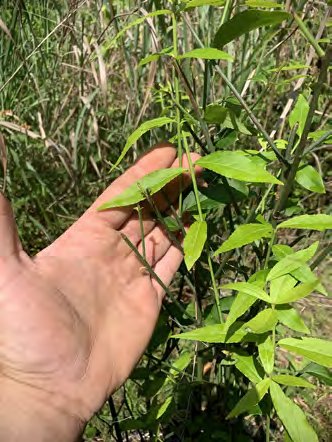
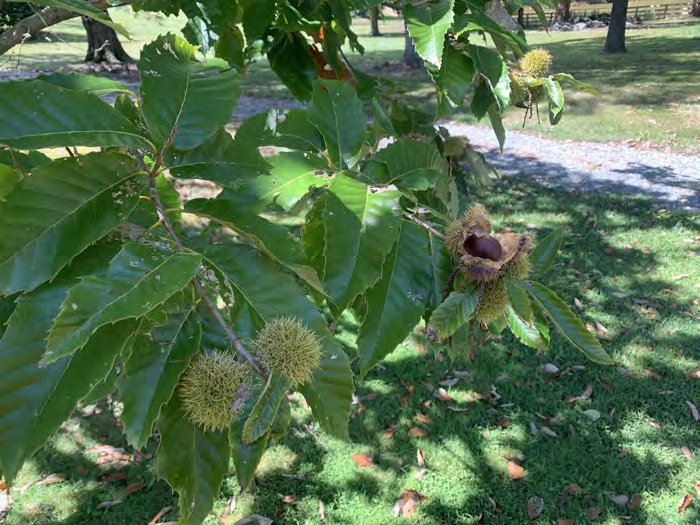
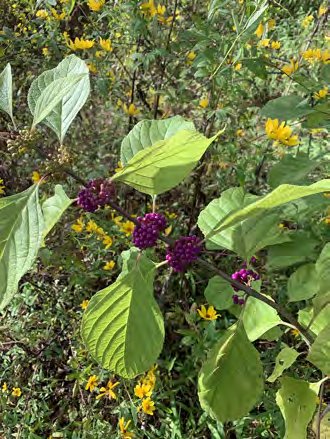
Another diverse planting I like to offer on farms is fruit and mast producing trees and bushes. Trees such as apples, crabapples, pears, persimmons, plums, and chestnuts, and bushes such as Allegheny chinkapin, strawberry bush, Chickasaw plum, beauty berry, and others, offer another diverse food source for deer to consume. Often these plantings will provide high levels of certain nutrients/vitamins at different times of the year when they can be scarce on the landscape elsewhere. Again, this thought of providing these unique food sources allows deer to do what they do best and use the nutritional wisdom that they have built up over many generations and have allowed the most fit of the species to survive and thrive. These tree and shrub plantings also add a unique food source to farms that deer will often seek out and travel to when they are available. Also, once established, trees and shrubs tend to not require lots of maintenance over a given year (especially compared to food plots).
Deer Density
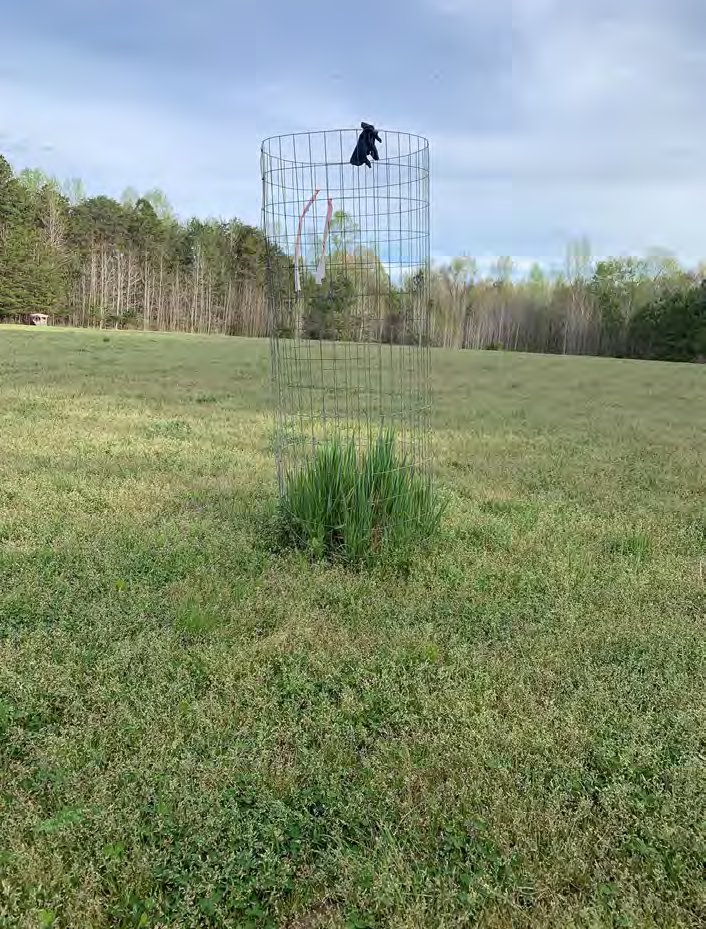
Deer density is also a huge factor that will determine how diverse of a diet a manager can provide to his deer herd. Deer tend to decimate highly selected plants and often can completely remove them from the landscape. In the Mid-South one plant I often look for on a new farm to gauge for deer density is strawberry bush. Strawberry bush is very highly selected by deer and is common in the timber and field edges of the Mid-South. If strawberry bush isn’t present, it often means that the local forage quality and overall habitat is very poor, we are dealing with a high deer density, or worse, both. By simply keeping the deer density in check with the specific property’s habitat and carrying capacity, you will be providing the remaining deer and other wildlife with more resources. Yearly trail camera surveys, in-field sightings, keeping harvest records, and regular maintaining of trail camera data are great ways to gauge population densities and sex ratios that will allow managers and property owners to make wise decisions on lowering and maintaining deer numbers.
Conclusion
In conclusion, the main takeaway from this article should be that diversity is key for healthy deer and wildlife in general. Wildlife has a great resource in their ability to use their nutritional wisdom and we, as land managers and stewards of wildlife, should strive to create diverse plant communities to allow them to use this gift year-round. This article barely scratches the surface of possibilities in how to provide these plant communities, but books such as Forest Plants of the Southeast and Their Wildlife Uses by James H. Miller and Karl V. Miller, A Guide to Wildlife Food Plots and Early Successional Plants by Craig A. Harper, Nourishment by Fred Provenza, Managing Early Successional Plant Communities for Wildlife in the Eastern US by Craig A. Harper, and many others can be valuable resources in understanding diversity, nutritional wisdom, and how to apply this knowledge practically for wildlife.