
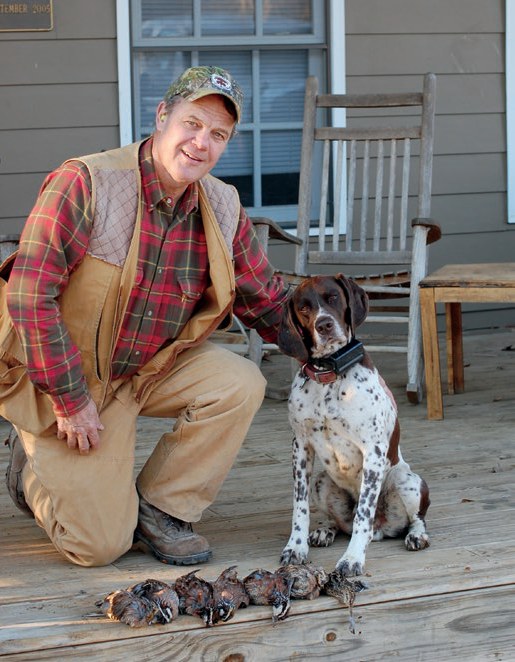
The ultimate goal of many people interested in wildlife management and hunting is to own their own land. Many of the subscribers to Wildlife Trends are already landowners and I would guess that many of those that aren’t, are working towards the goal of land ownership. The great thing about owning the land that you hunt on and manage is that your objectives and priorities are the ruling factor. Be they wildlife habitat and management, timber income, hardwood or pine management, you get to make the decisions on what ranks highest on the priority list and when and where these activities take place. With this comes a large responsibility to be a good steward of the land and practice good conservation in your management. Most forest landowners with a wildlife interest, however, typically want to do the right thing, are dedicated conservationists and, while income may be a strong consideration, do not have maximizing income as the highest priority.
The intangible value of enjoying your timberland through recreation, hunting, spending time with family and friends, etc. is significant but hard to put a dollar value on. The enjoyment of learning about wildlife behavior and habitats, types of management and wildlife response, watching fawns or turkey poults (the fruits of your labor) in your woods or plots, or seeing seedlings that you planted grow and mature are a huge reason people enjoy owning and managing land. Although harvesting a good buck, working several gobbling birds in a morning, or watching a staunch bird dog on point is the goal of most wildlife management regimes, it is our opinion that well managed, diverse properties with abundant game and lots of stand diversity have much higher land values as well. While owning land for pure investment and timber income is a perfectly legitimate land use, those that integrate good wildlife management practices into their schemes get a premium price when the land is sold compared to tracts without much diversity.
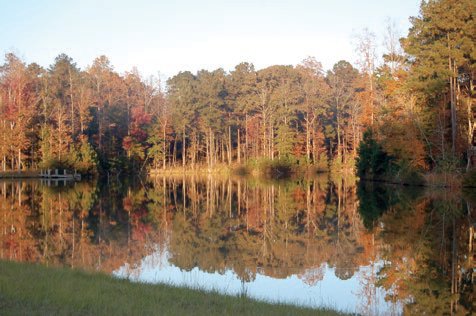
So how do you go about integrating these two goals of maintaining good, healthy wildlife populations while still growing healthy, vigorous timber stands? Well the two, generally, combine quite well. Managing for some species of wildlife does take more sacrifice from a timber standpoint and more complexity in management than others. Take bobwhite quail for instance. Maintaining long-rotation, mature pine stands at a low stocking rate with significant percentages of the property in non-income producing openings can be a costly venture with significant opportunity cost forgone from the timber income end. Managing for deer or turkey with a more heavily forested environment allows landowners to grow more timber while still maintaining adequate understory plants and the ability to produce significant income. Simply stated, wildlife management WILL take some sacrifices with a portion of the property in non-timber producing openings and some timber stands carrying less trees-per-acre than high volume producing forests. However, there are some advantages to these sacrifices such as the fact that trees tend to grow faster and healthier at lower stocking rates, thereby reducing risk of damage by insects and/or disease. In addition, utilizing wildlife oriented practices like understory herbicides and burning, further increase growth rates by reducing competing vegetation as well as reducing risks associated with wildfires.
How to Get Started
It is important in the early stages of property management to properly plan for why, what, when, and how you will go forward. Planning for what wildlife and timber species to target in your management scheme helps reduce costs later in the process. Efficiency in goal setting and accomplishment is important and following “old-wives tales” and the advice of your dentist or barber may prove costly. Utilizing the services of professional foresters and wildlife biologists can save a landowner money in steering them away from unneeded practices, toward sensible activities that will reach a specific goal, as well as help in getting the most out of timber sales, etc. While there are some professional wildlife biologists available, there are also a number of consulting foresters with some wildlife knowledge. The closer you can get to getting both in one package, the better off you are. Landowners need to research their choices and ask for references. Consultants need to understand the trade-offs and be fully knowledgeable of how timber management affects wildlife habitat and visa-versa.
Planning considerations should be relatively detailed for the whole property and include both long-term as well as short-term goals. Trees are a long-term investment and realizing full income potential for most species will take at least 3 decades considering today’s technologies in wood growth and utilization. Growing a mature 5.5 year old deer only takes 5.5 years. Growing a healthy 5.5 year old deer with a good rack takes an abundance of quality deer habitat and available forage for its full life. Considerations for property limitations such as terrain, soils, etc will make a huge difference in what species of trees to plant and what opportunities are available to you for wildlife openings. Upland areas with sands or gravels and an interest in quail management might make Longleaf pine a good choice for plantings. Fertile bottomlands with deer and turkey goals might make any variety of hardwoods the trees to plant. Considering both the land limitations with what wildlife species to target, allows you to decide what timber species and density is compatible.
It goes without saying the absolute first step in the planning process is determining the landowner’s objectives. After the objectives are established a thorough property evaluation of what you are starting with is the next step. This evaluation includes a good map showing roads, timber type/species/stands, ponds, creeks, stand history and age, etc. The last piece of information needed to begin preparing the plan is to get an understanding of the landowner’s tolerances and level of commitment. Planning for what to do in both open land and woodland for any given species or group of species is the most important part of the plan itself. The amount of open land needed is different for different wildlife species as well as the intensity with which you will manage that species. While we will be concentrating on woodland management, what you plant in openings makes a big difference as well. There is a lot of information out there (especially in past Wildlife Trends articles) on what to do in wildlife openings, so we won’t go into that arena.
Not only does the amount of woodland on a property make a difference, but the age of stands, species mix and average size of stands also changes the wildlife dynamic. For pure timber income and fiber production, having a 1,000 acre stand of even-aged, closed canopy pine, with no hardwood competition is fine, easy to manage, and may produce a good income stream over time. However, even this scenario can limit potential returns due to the lack of stand diversity which can lead to selling timber in a poor market and it will produce very little wildlife habitat, aesthetics, nor high land price like a well managed, diverse property would. At the other extreme, a 1,000 acre tract of land broken into 100 – 10 acre “stands” and openings might produce the most diversity and high wildlife value, but becomes impractical to manage well, nor do the timber sales bring highest value. Somewhere in between lies a happy medium that depends on your objectives. Achieving this balance is hard and requires more time and effort but in our opinion is worth the effort because this type of property does tend to increase wildlife value, land value, and aesthetic value. Having a property broken up with wide hardwood creek bottoms, pine stands of multiple species, densities and ages with different management regimes applied usually produces the best mix.
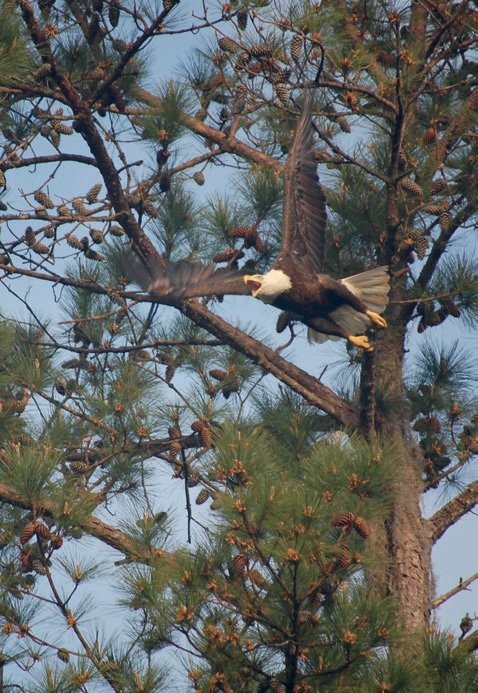
Timber operations as related to the commercially important wildlife species are what this series will concentrate on. What is done in your timber stands has a huge effect on property values, timber values, and wildlife values for years to come so no activity should be taken lightly. To keep a stand of timber healthy and productive, conducting regular harvest and other management activities is necessary. Well managed timber stands are not those that are left for nature to take its course. Thinning, burning, clearcutting, replanting, herbicides, woodland grinding, pruning, fertilizing, etc. all have a place and significantly affect timber and wildlife values of a stand and, therefore, the property as a whole.
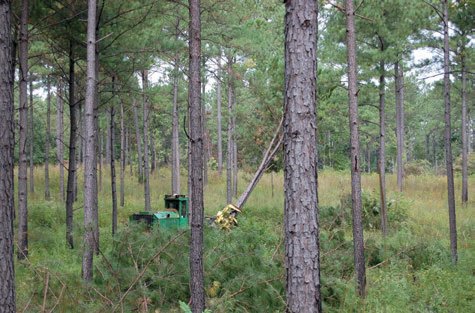
Thinning and clearcutting have a huge impact on the quantity and quality of understory vegetation, which is the backbone of your wildlife habitat. This is most pronounced in residual thinning densities left in pine stands and midstory sapling control. Maintenance of this understory with herbicides, mechanical clearing and fertilizing is an important part of the program. You need to decide on how much of these low growing understory plants you need, but bear in mind that the majority of deer forage is made up of these woodland plants and how much you have and how well they are growing has a direct bearing on how healthy your deer herd is.
These understory plants also make or break a quail population. It is where all quail nesting and most fall/winter cover occurs. It is where turkeys nest and raise their poults as well as find much of their feed. What you do in your woodlands directly affects these “early successional habitats” and therefore all of your wildlife populations.
In the following parts of this series we will discuss Pine management, Hardwood management, and reforestation and their effects on wildlife populations.